The future of transportation is often imagined through sleek vehicles, quieter streets, and cleaner sources of energy. Yet beneath every electric vehicle lies a technology that receives far less attention than the cars themselves—the battery. Small improvements in battery materials can influence everything from driving range and charging time to manufacturing efficiency and long-term sustainability. A newly developed solid-state battery material represents another step in that continuing journey of innovation.
Researchers have announced the development of a more efficient solid-state battery material that could improve the performance and safety of future electric vehicles. The breakthrough focuses on enhancing the movement of ions within the battery while maintaining structural stability during repeated charging and discharging cycles. Scientists believe the new material may contribute to batteries that charge faster, last longer, and operate more safely than many conventional lithium-ion designs.
Unlike traditional lithium-ion batteries that rely on liquid electrolytes, solid-state batteries use solid materials to transport ions between electrodes. This design reduces the risk of leakage and may lower the likelihood of thermal runaway, a condition associated with overheating in battery systems. Researchers have long viewed solid-state technology as one of the most promising directions for the next generation of electric vehicle energy storage.
According to the research team, laboratory testing demonstrated improved ionic conductivity and enhanced cycling performance compared with several existing materials. The new battery material maintained stable performance through repeated charging cycles while showing reduced degradation over time. Although further engineering and large-scale manufacturing studies remain necessary, the findings suggest encouraging progress toward commercial application.
Battery experts note that improving energy density remains another important objective. Higher energy density allows batteries to store more electricity within the same physical size, potentially increasing vehicle driving range without significantly increasing weight. Advances in solid-state materials may therefore support more efficient electric vehicles while also benefiting portable electronics, renewable energy storage, and aerospace applications.
Automobile manufacturers around the world continue investing heavily in battery research as governments expand policies encouraging lower-emission transportation. Competition to develop safer, more durable, and faster-charging batteries has intensified in recent years, with universities, research laboratories, and private companies collaborating on a wide variety of new materials and production techniques.
Despite the promising laboratory results, researchers emphasize that commercialization requires additional testing under real-world operating conditions. Manufacturing scalability, production costs, long-term durability, and supply chain considerations will all influence how quickly solid-state batteries become widely available. Scientists remain optimistic that continued collaboration between academic institutions and industry partners will accelerate future development.
The latest breakthrough illustrates how scientific progress often emerges through incremental improvements rather than dramatic leaps. Each advancement in battery technology contributes to broader efforts aimed at improving transportation efficiency and supporting cleaner energy systems. As research continues, innovations in solid-state batteries may help shape the next generation of electric vehicles while advancing sustainable mobility around the world.
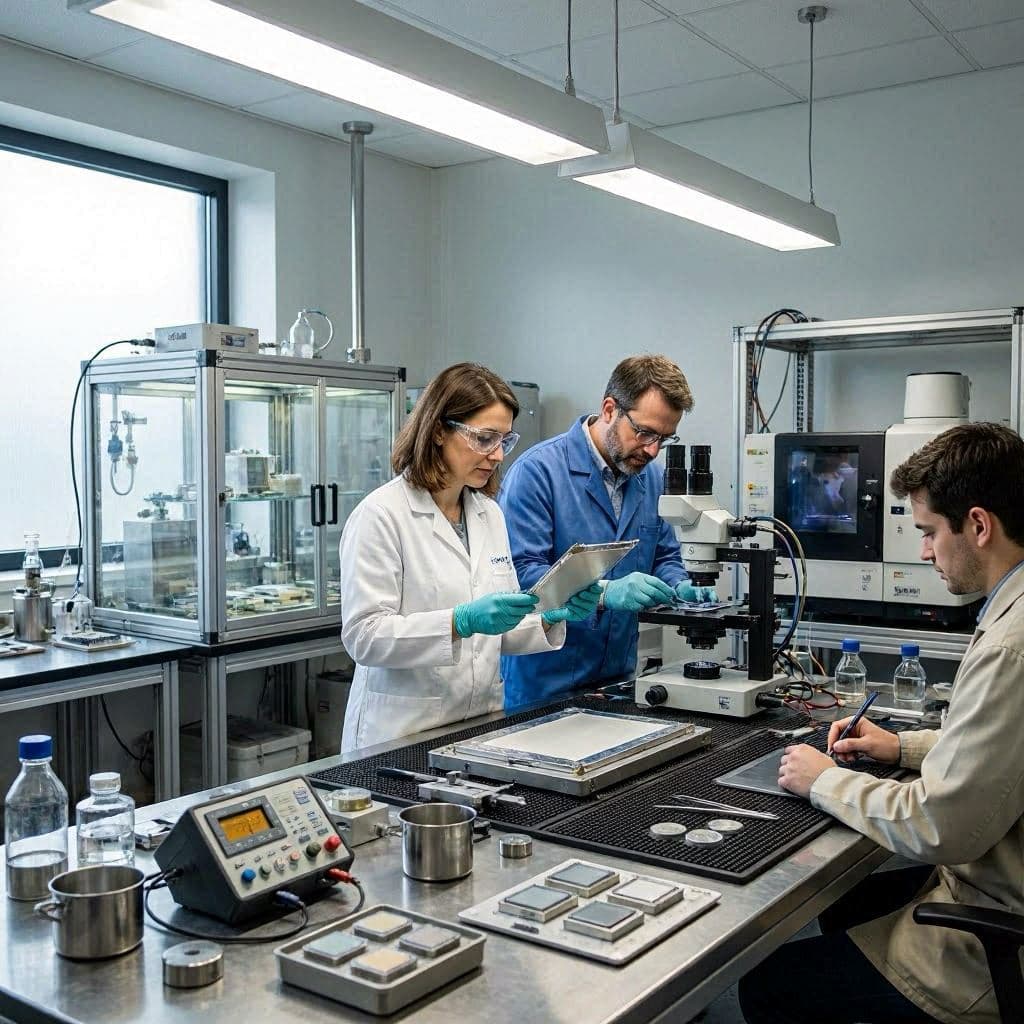
AI Image Disclaimer: This illustration was generated using artificial intelligence to visualize scientific research and does not depict the actual laboratory or battery material described in the report.
Sources (verification check): Nature Energy, Reuters, Science, MIT News, IEEE Spectrum
Published by Banx Network. This article is part of the Banx decentralized media programme, powered by the BXE token on the XRP Ledger.