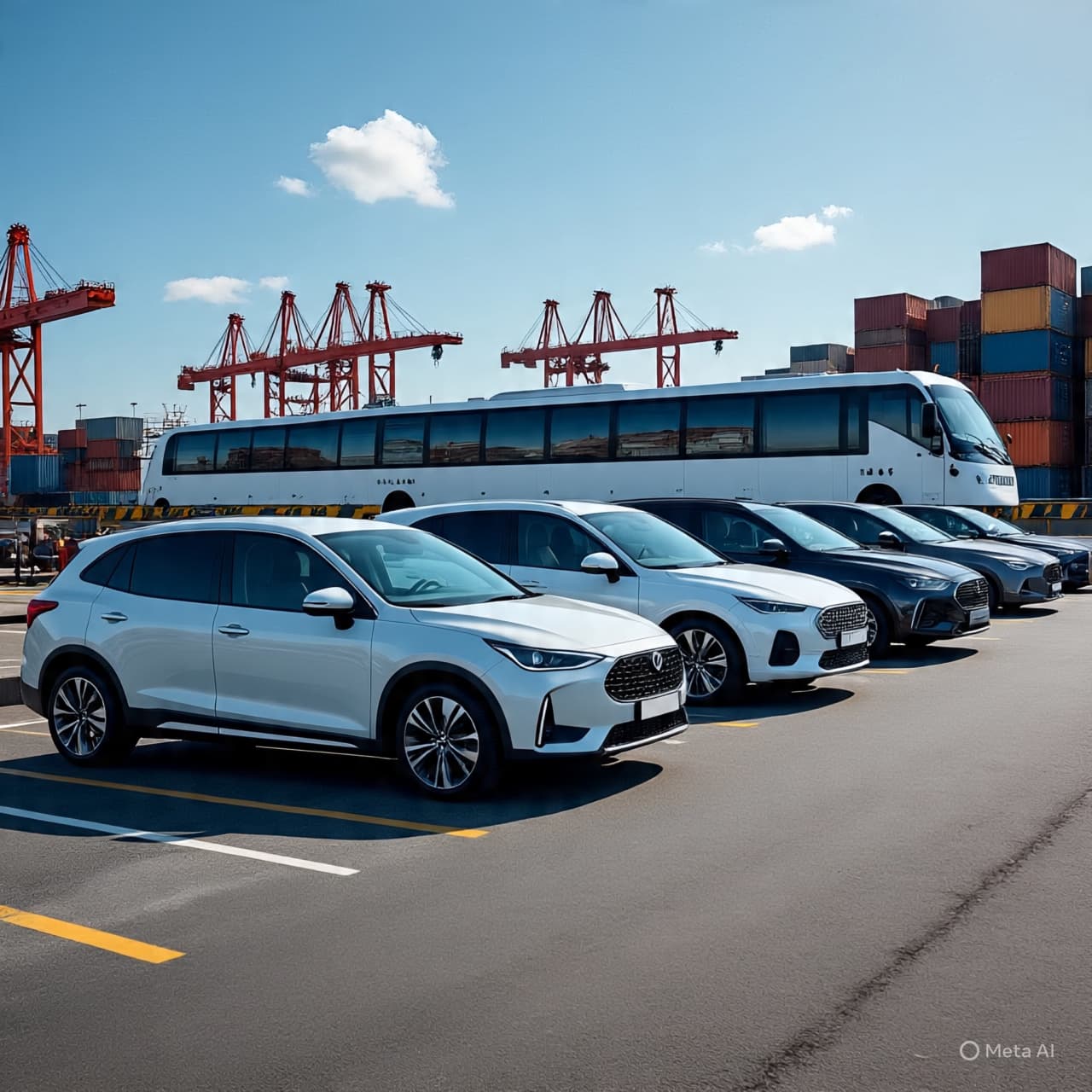
Trade agreements are rarely confined to cargo ships and customs forms. They begin there, perhaps—with containers, manifests, and signatures—but their true reach often stretches far beyond the dock. In the evolving story of electric vehicles, Canada’s recent engagement with Chinese manufacturers suggests that what arrives at port may only be the first chapter.
At first glance, the conversation centers on imports: electric vehicles built in China entering the Canadian market. As global competition in the EV sector intensifies, China has emerged as a dominant force in battery production and vehicle manufacturing. Canadian policymakers, meanwhile, are balancing domestic industry goals with consumer demand for affordable electric options.
Yet analysts note that the implications extend beyond the cars themselves. Discussions around trade conditions, investment rules, and potential tariffs intersect with Canada’s broader strategy to build a domestic EV ecosystem. Ottawa has invested heavily in battery plants and supply chains, aiming to anchor manufacturing within its borders while reducing reliance on fossil fuels.
The presence of Chinese EVs in Canada’s market introduces both opportunity and tension. On one hand, increased competition could drive down prices and accelerate adoption among consumers. On the other, policymakers remain attentive to the health of Canadian and North American manufacturers, particularly as the United States recalibrates its own trade and subsidy frameworks.
China’s leading EV companies—supported by extensive domestic supply chains and state-backed incentives—have achieved significant economies of scale. Their vehicles, often competitively priced, have gained traction in Europe and other regions. For Canada, the question is not solely about imports, but about how those imports interact with domestic industrial policy and international alliances.
Trade experts suggest that regulatory scrutiny may shape the path forward. Safety standards, environmental compliance, and national security considerations all play roles in determining how foreign-made EVs integrate into Canada’s transportation landscape. Additionally, the evolving relationship between Canada and its largest trading partner, the United States, adds another layer of complexity.
Canada has positioned itself as a key player in the North American EV supply chain, particularly in battery minerals such as lithium, nickel, and cobalt. Investments in manufacturing facilities across provinces aim to secure long-term economic growth and employment. In that context, an influx of Chinese EVs is viewed not in isolation, but as part of a broader strategic equation.
Some industry observers argue that collaboration, rather than simple competition, could define the next phase. Joint ventures, technology partnerships, or localized assembly operations are possibilities often discussed in global markets. Whether such models take root in Canada remains to be seen.
Consumers, for their part, are navigating a rapidly expanding marketplace. As electric vehicles become more accessible, considerations of price, range, charging infrastructure, and brand reputation shape purchasing decisions. The origin of a vehicle may matter to some buyers, while others focus primarily on cost and performance.
Canada’s engagement with Chinese EV manufacturers, then, does not end at the border. It touches trade policy, industrial strategy, environmental ambition, and geopolitical alignment. As policymakers continue to refine regulations and partnerships, the trajectory of this deal will likely unfold over months and years rather than weeks.
For now, Chinese-made electric vehicles are entering global markets, including Canada, amid ongoing policy discussions. Federal officials continue to evaluate trade measures and domestic industry impacts, signaling that the conversation extends well beyond the arrival of imported cars.
AI Image Disclaimer: Images in this article are AI-generated illustrations, meant for concept only.
Source Check: Reuters The Globe and Mail Financial Times Bloomberg CBC News
Published by Banx Network. This article is part of the Banx decentralized media programme, powered by the BXE token on the XRP Ledger.