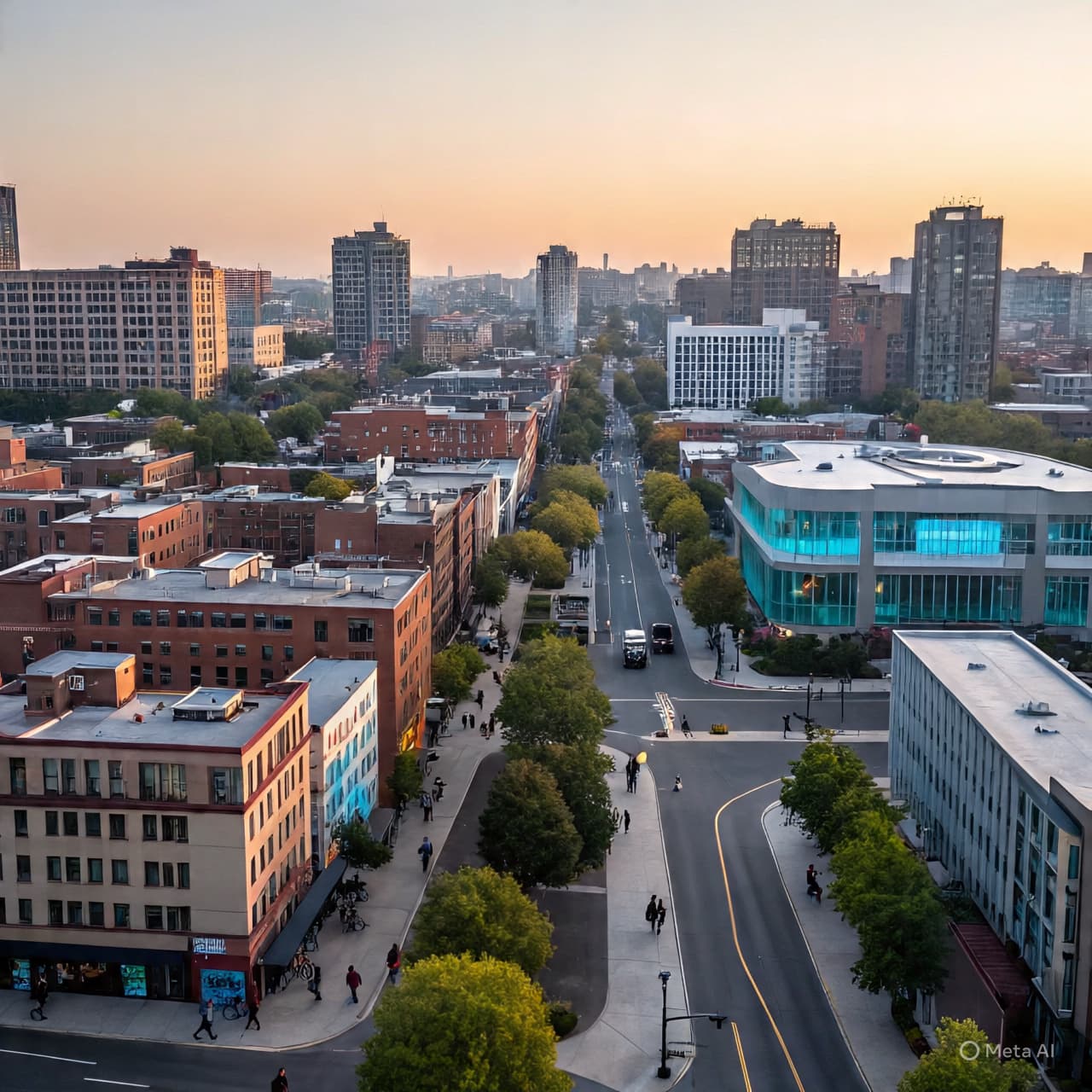
Cities have a way of revealing their priorities in quiet increments. Not in press conferences or ribbon cuttings, but in what gets built, repurposed, and patiently funded while other plans wait. On a late afternoon, as cranes hover and streets soften into evening, capital continues its slow migration—seeking places where longevity feels plausible and data offers a map through uncertainty.
According to insights from DTRE, that movement is becoming clearer. Investment is flowing less toward singular property types and more toward interconnected themes: living spaces shaped by demographic shifts, life sciences anchored in research and resilience, and data that now underwrites almost every decision made in between. These are not sudden turns, but the steady outcome of years spent reassessing risk, value, and relevance.
In the living sector, demand is being driven by fundamentals rather than fashion. Purpose-built rental housing, student accommodation, and later-living developments reflect changes in how people move through cities and stages of life. Investors are drawn to income streams that feel durable, supported by population growth, urbanization, and the persistent need for well-located homes. The appeal lies not only in yield, but in the sense that housing, in its many forms, remains close to everyday necessity.
Life sciences occupy a different, but equally compelling, corner of the landscape. Laboratories and research campuses require precision, patience, and proximity—to universities, hospitals, and talent. DTRE notes that these assets tend to resist short-term volatility, benefiting from long funding cycles and structural support from both public and private sectors. In an era shaped by health awareness and scientific acceleration, such spaces carry a gravity that extends beyond conventional real estate logic.
Threaded through both sectors is the growing influence of data. No longer confined to spreadsheets, data now shapes site selection, design, and long-term strategy. From tracking tenant behavior to modeling climate risk, it offers investors a clearer sense of where resilience may lie. DTRE emphasizes that data is not replacing judgment, but refining it—allowing capital to move with greater confidence, even as external conditions remain fluid.
What unites these themes is a shift away from speculation toward intention. Capital is less interested in quick turns and more attuned to assets that can absorb change over time. Living, life sciences, and data-driven decision-making form a triad rooted in continuity, each reinforcing the other in subtle ways.
As markets continue to adjust, DTRE’s perspective suggests that the next chapter of investment will be written less in dramatic leaps and more in deliberate alignment. Where people live, how science advances, and what data reveals about both are shaping not just portfolios, but the evolving texture of cities themselves. In that quiet convergence, capital appears to have found a direction—one guided by endurance rather than speed.
AI Image Disclaimer Visuals are AI-generated and serve as conceptual representations.
Sources DTRE Commercial real estate market analysts Life sciences property specialists Urban development research firms
Published by Banx Network. This article is part of the Banx decentralized media programme, powered by the BXE token on the XRP Ledger.