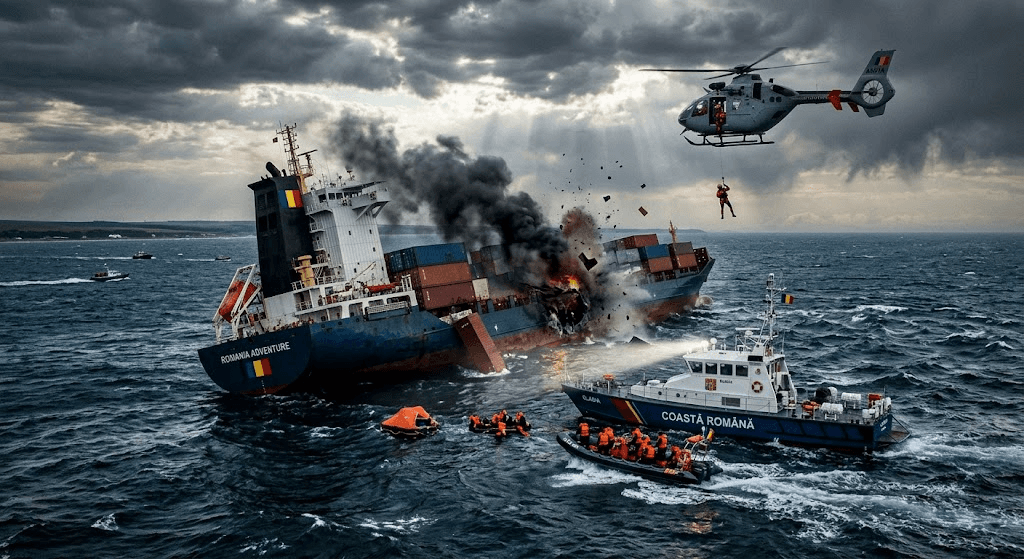
The Gulf of Finland is a stretch of water that carries a weight far greater than its physical dimensions. It is a conduit of history, a corridor of commerce, and a landscape that demands a particular kind of reverence from those who traverse its surface. When a vessel falters, drifting into a state of sudden stillness amidst the churning currents, the event serves as a stark reminder of the tenuous relationship between humanity and the elements. The sea does not bargain; it simply persists, indifferent to the schedules and intentions of those who seek to cross it.
In recent days, the maritime authorities have found themselves engaged in the quiet, methodical work of oversight as a vessel found itself stalled upon these sensitive waters. There is a specific cadence to such an operation: the initial report, the calculation of drift, and the calm, coordinated effort to bring those on board back to the safety of the shore. It is a process devoid of the sensationalism that often characterizes news of the sea, defined instead by the steady, practiced hand of professionals who view these interventions as a fundamental duty.
The incident itself, while appearing as a singular disruption, is woven into a much larger tapestry of maritime life. Every ship that passes through these lanes is part of an invisible, humming network of logistics that sustains the modern world. When one link in that chain pauses, the ripple effect is felt not just in the immediate vicinity of the Gulf, but in the halls of management and the minds of those responsible for maritime security. It is a moment that forces us to pause and consider the complexity of the systems we trust to keep our world moving.
Observers of the sea often remark on the deceptive nature of the Gulf, where the proximity of the coast can lull one into a false sense of security. Yet, even in these relatively contained waters, the variables of weather, mechanical reliability, and human error remain constant. The successful transport of the passengers to land was not merely a logistical success; it was a testament to the vigilance that characterizes the Finnish approach to maritime safety. The quiet transition from vessel to shore is a closing of a circle, restoring a sense of order to the day.
Such events provide a rare window into the reality of our dependence on the sea. We tend to view maritime transport as a background utility, a silent workhorse that functions without fanfare. When that utility falters, we are suddenly confronted with the reality of the forces at play. The authorities, in their consistent monitoring, serve as the guardians of this boundary, ensuring that the intersection between the human world and the maritime domain remains as predictable and safe as human ingenuity allows.
Reflecting on these occurrences, one begins to appreciate the layers of preparation that remain invisible to the public. Behind the reported stalled vessel lies a web of communication, radar surveillance, and contingency planning that operates around the clock. The sea is a vast, unforgiving expanse, but the infrastructure surrounding it is a testament to the desire for control in a world that is inherently uncontrollable. It is a balance that is constantly maintained, negotiated through every passing hour of the season.
The event leaves us with a quiet sense of continuity. The passengers, now safely on land, return to the rhythms of their own lives, likely carrying with them a renewed awareness of the journey they have just completed. The vessel, meanwhile, will undergo the necessary examinations, its mechanical heart probed and its history reviewed. The authorities will file their reports and return to their vigil, their gaze fixed on the horizon, ever ready for the next deviation in the expected flow of traffic.
As the Gulf continues to serve as a vital artery for the region, the memory of this day will fade, replaced by the constant, shifting challenges of the maritime environment. The importance of this work cannot be overstated, for it is in the calm, uncelebrated resolution of such incidents that the true safety of our northern waters is forged. We move forward, perhaps a bit more mindful of the vast, quiet power of the water, and the diligent eyes that watch over it from the shore.
Finnish maritime authorities successfully monitored a vessel that stalled in the Gulf of Finland recently. All passengers were safely transported to shore without incident. The situation was managed as part of routine maritime safety operations, and the vessel was subsequently cleared for further inspection.
Published by Banx Network. This article is part of the Banx decentralized media programme, powered by the BXE token on the XRP Ledger.