
Key Highlights
- Urban congestion in Asia has reached critical levels, impacting daily life.
- Cities like Singapore are redefining movement through innovative urban planning.
- The concept of 'no traffic' symbolizes a shift towards livability and quality of life.
Across Asia, the rise of major metropolises has historically been marked by the relentless rhythm of construction and movement. Yet, as cities like Bengaluru, Manila, Jakarta, and Bangkok grapple with some of the worst traffic congestion in the world, a new narrative is emerging. The question is no longer just about speed; it’s about the quality of urban life and the potential for stillness amidst the chaos.
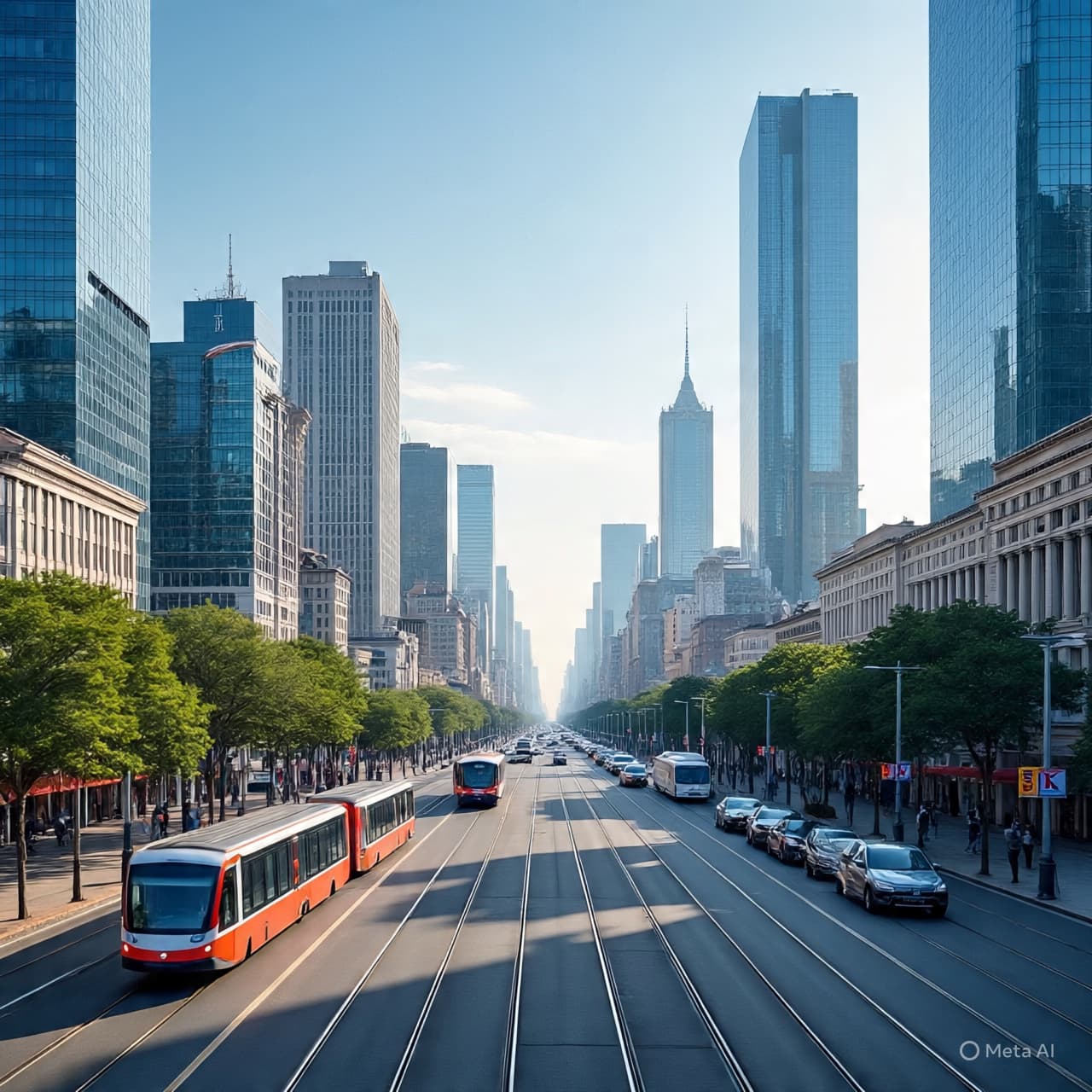
Traffic congestion has become a defining characteristic of urban life in many Asian cities, with global traffic indexes consistently ranking these locations among the most gridlocked. The daily struggle against immobile roads has transformed hours once reserved for family or rest into frustrating periods of inactivity. In this context, the allure of cities that promise lighter movement is growing stronger. The notion of 'no traffic' has evolved from a literal interpretation to a broader aspiration for a more balanced urban existence.
Singapore stands out as a model for this shift. Its approach to urban planning treats road space as a limited resource, emphasizing high vehicle ownership costs and integrated public transport systems. While traffic has not been eliminated, the city has managed to reshape expectations around movement. Residents experience a sense of predictability and control over their commutes, creating a more humane urban environment. This careful management of space offers a glimpse into what urban living can aspire to be in a densely populated world.
Other cities across Asia are also experimenting with innovative solutions to combat congestion. Seoul's restoration of the Cheonggyecheon stream, which involved removing an elevated highway to create public space, serves as a powerful example of how reducing road dominance can enhance urban life. Similar initiatives in Vietnam, Japan, and China demonstrate that growth can coexist with effective mobility planning, challenging the notion that urban expansion must lead to paralysis.
The appeal of these cities lies not in the absence of cars but in the empowerment of residents. The idea that urban dwellers can reclaim their time from the clutches of congestion resonates deeply with investors, digital workers, and young families. A city that prioritizes livability over mere skyline aesthetics offers a compelling proposition: a return on time lost to traffic.
However, the reality remains complex. No major Asian metropolis is free from traffic, and none claim to be. Instead, the phrase 'no traffic' has become a symbolic representation of cities that resist the inevitability of gridlock. It highlights a growing recognition that infrastructure alone cannot alleviate congestion; it requires bold policy decisions and cultural shifts.
As Asia continues to urbanize at an unprecedented pace, the next generation of cities will be evaluated not only by their architectural heights but also by how effectively they facilitate smooth movement and enhance quality of life. Whether the dream of 'no traffic' becomes a reality or remains an aspiration, its allure underscores a fundamental truth: progress is increasingly measured not just by growth, but by the preservation of quiet spaces in our bustling urban environments.
Published by Banx Network. This article is part of the Banx decentralized media programme, powered by the BXE token on the XRP Ledger.



