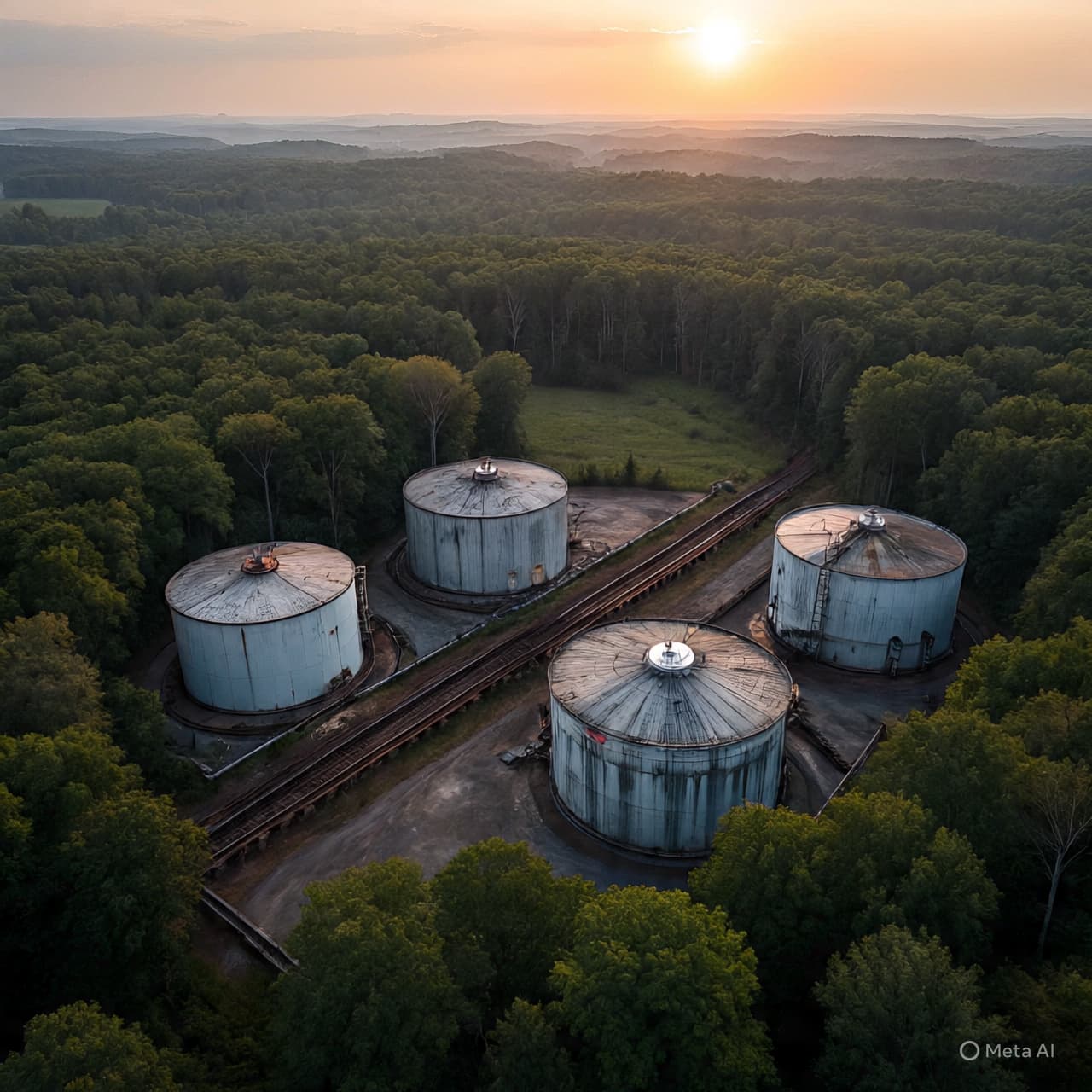
In the early hush of dawn along the winding Volga and the craggy edges of the Ural foothills, the faint glow of sunrise slides over silent refineries and tanker silhouettes that stand like sentinels of routine commerce. Here, in the vast expanse of Russia’s industrial heartland, the hum of turbines and the pulse of pipelines are part of the background rhythm — the quiet promise of heat and motion that most take for granted. But now, that soothing cadence has been punctured by the distant echo of drones and the abrupt flare of flame, reminders that even the most familiar landscapes can shift in an instant when war reaches outward from borders lined with battlefields.
In recent weeks, Ukraine has renewed a campaign of strikes on Russian energy facilities, part of a strategic effort to erode the financial and logistical backbone that underpins Moscow’s war effort. Using long‑range drones, Kyiv’s forces have targeted a procession of refineries, crude processing units, and export hubs that lie deep within Russian territory — sites that once stood as icons of industrial steadiness now scarred by fire and shock. Among the facilities hit is the Saratov refinery, where Ukraine’s drone strikes on March 21 damaged the crude distillation unit, forcing a shutdown of its processing operations after a year in which it handled millions of tons of oil. Other refineries in Volgograd, Ilsky, Ukhta, and Afipsky have also sustained fires and operational disruptions following similar attacks, shaking both local economies and the larger web of Russia’s oil infrastructure.
These strikes — deftly executed from dozens or even hundreds of kilometers away — carry a weight that transcends the immediate flash of engines and smoke. Oil refineries process crude into fuels and feedstocks that drive everything from trucks rumbling along Siberian highways to central heating furnaces in Moscow apartments. When a facility like Volgograd’s CDU‑1 unit is damaged, it does more than halt production; it ripples through supply chains, prompts smaller firms to hedge against uncertainty, and nudges traders far beyond the steppes into marketplaces attuned to every hint of geopolitical movement. Even export routes from Baltic ports have felt the strain, with tankers delayed and pipelines drawing reduced intake after a February attack pushed Transneft to adjust its crude flows.
For ordinary Russians who might walk past a local gas station or watch the winter’s first snowflakes drift against windowpanes, energy disruptions are often felt in subtle ways: a higher price at the pump, a flicker in the lights as demand spikes during a cold snap, a whispered conversation among neighbors about how long supplies can last. In Ukraine itself, where war has carved deep lines into daily life, the pivot to striking deep inside Russian territory reflects frustration with stalled peace talks and a determination to push beyond traditional battlefields. For Kyiv’s leadership, energy sites are seen not only as economic levers but as contributors to the capacity of Russian forces to sustain operations on multiple fronts.
Efforts by Russia to shore up defenses around critical infrastructure mirror the seriousness with which Moscow views these attacks. Earlier this week, President Vladimir Putin enacted a law allowing private security firms to carry firearms in defense of energy assets — including assault rifles deployed to defend refineries and pipelines — and anti‑drone systems have begun appearing at vulnerable sites across the Urals and western regions. These steps underscore the challenge of protecting sprawling networks that stretch across an expanse of land larger than many nations.
As midday sun warms the frosted plains and smoke from chimneys curls into a pale sky, life elsewhere seems to move at its habitual pace. Children skip along snow‑dammed sidewalks, merchants haggle over prices in covered markets, and commuters wait for trains that will ferry them home in time for supper. But beyond these scenes of routine calm, the hum of global energy — and the tools that feed it — are under quiet stress, reminding us that the infrastructure of daily life is also an arena of strategy and strain. In this unfolding chapter of war, Ukraine’s renewed focus on Russian energy sites signals not just a tactical choice, but a deeper negotiation with the rhythms of resilience, resource, and the far‑reaching repercussions of conflict in a world made ever smaller by the technology of war.
AI Image Disclaimer Visuals are AI‑generated and serve as conceptual representations.
Sources
• Reuters
• BBC News
• The Moscow Times
• Al Jazeera
• Anadolu Agency
Published by Banx Network. This article is part of the Banx decentralized media programme, powered by the BXE token on the XRP Ledger.