
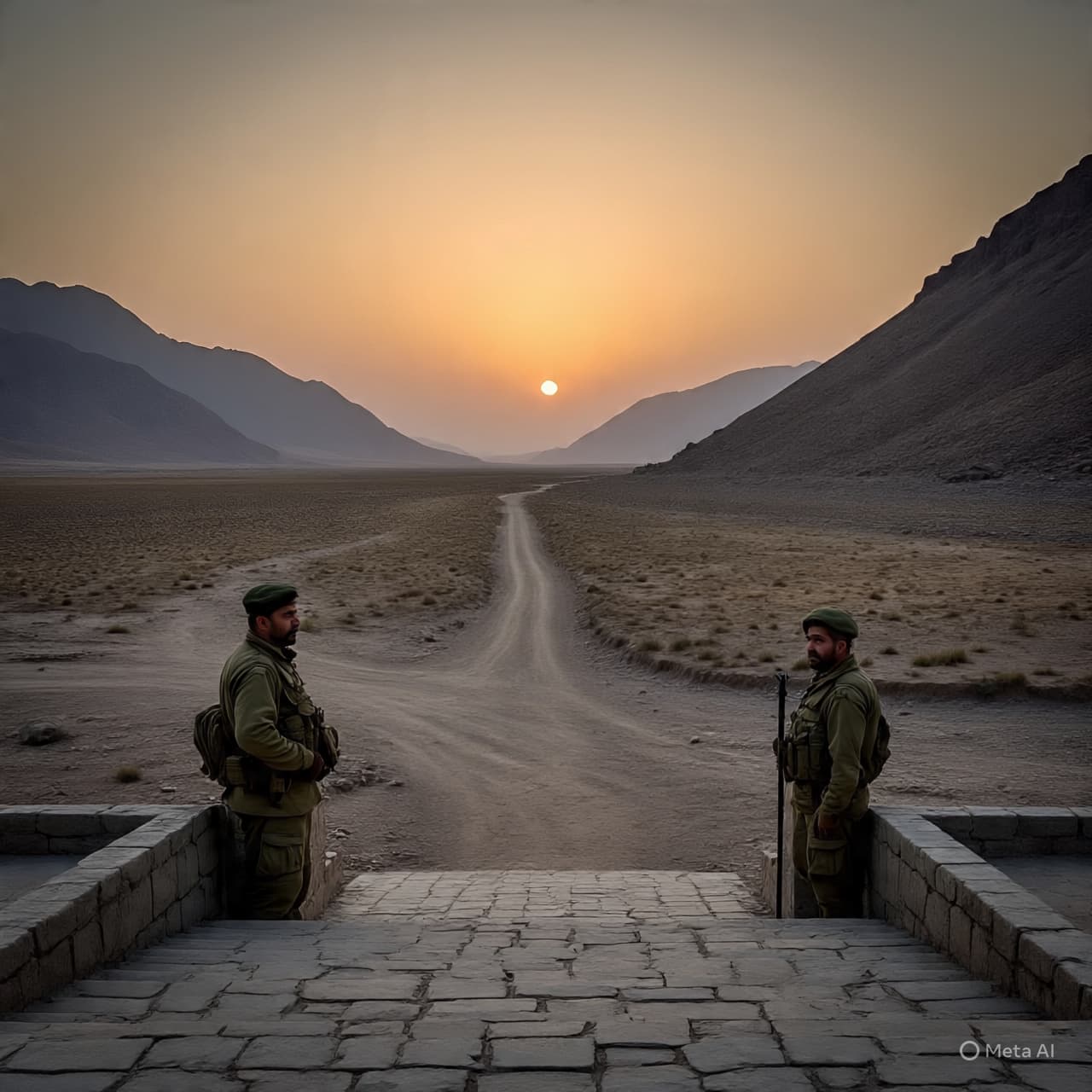
There are moments in history that feel like the turning of a windmill: slow at first, almost imperceptible, yet when the sweep finally creaks against the sky, it alters the landscape around it. In South Asia this week, such a turning seems to be unfolding. Long-held assumptions, once thought as solid as granite by Pakistan’s policymakers, appear to be fracturing in the relentless pressures of conflict and shifting alliances. The soft incandescence of new hopes — that neighbouring capitals could align on peace — has dimmed into something harsher, defined by rumbling aircraft engines and the echo of artillery. In place of treaties and anxious diplomacy, there is now the harsher vocabulary of war — a declaration that patience has finally reached its limit.
For decades Islamabad’s choices about Afghanistan’s future were, in part, born of calculation — a desire for stability on its western frontier and a hope that one early ally might become a reliable partner. But as analysts now note, those calculations have come undone. The Afghan Taliban’s return to power in 2021 initially brought a guarded relief to Pakistan’s corridors of power; it was, in some ways, the fulfilment of an old gamble. Yet today that same gamble is being questioned with a seriousness that few once imagined.
The simmering tension along the Durand Line — the long, rugged border between Pakistan and Afghanistan — has for months seen flare-ups that embed themselves in local memory: artillery thunder, villages emptied, and families caught in the cross-currents of blame and reprisals. What was once a simmer has been jolted into open conflict. Pakistan’s defence minister, Khawaja Muhammad Asif, took to social media late Friday to say the country’s “patience has run out,” signalling a stark escalation as Islamabad conducts air and ground strikes inside Afghan territory in what officials describe as precision actions against militant sanctuaries.
Kabul’s response has been firm and immediate. Afghan authorities — now governed by the same Taliban movement that once enjoyed Pakistan’s discreet support — maintain that they are defending their sovereignty from cross-border attacks. Both sides report casualties, and both cast the other as instigators in a conflict whose roots trace back to intertwined histories of mistrust and shifting alliances. Civilians on both sides of the frontier now speak of sleepless nights and long queues at checkpoints, echoing a collective anxiety about what comes next.
Experts reflect on the irony of the situation: strategies based on mutual reliance have yielded mutual suspicion. The insurgent groups that once found refuge in remote valleys on either side of the border now operate with a fluidity that seems to confound the very forces that once backed them. In Islamabad, the narrative has shifted from cautious engagement to a firm determination to protect national integrity, regardless of diplomatic cost. In Kabul, leaders insist they stand firm against attacks they describe as violations of international norms. Each iteration of attack and response adds a new layer to an already complex mosaic — and civilian populations, already weary from decades of instability, watch with heavy hearts.
Yet even at this fraught moment, there are voices urging restraint and diplomacy. International actors call for de-escalation, pointing to the human cost and urging both capitals not to allow this moment to become a long spiral of violence. History, after all, has a way of reminding us that borders may be drawn in stone, but peace is written in trust — and trust is infinitely harder to command than any army.
And if this crisis teaches anything, it may be that the winds of political sentiment can shift more swiftly than the sands of time — leaving states, their leaders, and their peoples to reckon with the consequences. Policies once thought to be stable can give way in the blink of an eye, and what seemed a quiet horizon can erupt into thunder. As this chapter unfolds, the question that remains is not just who will prevail — but who can rebuild.
AI Image Disclaimer (rotated wording) Visuals are created with AI tools and are not real photographs.
Sources Check
The Guardian — international mainstream news reporting on Pakistan’s miscalculation with the Taliban. Sky News — major news outlet covering Pakistan and Afghanistan conflict escalation including declarations of “open war.” The Guardian (separate article) — Guardian also reports on Pakistan bombing Kabul after border clashes. Hindustan Times — coverage of Pakistan’s military operation against Taliban fighters. Taipei Times (AP) — mainstream syndicated reporting describing the “open war” status and remarks by Pakistan’s defence minister.
Published by Banx Network. This article is part of the Banx decentralized media programme, powered by the BXE token on the XRP Ledger.

.jpg&w=3840&q=75 "US Declares Drought Disaster for Parts of Puerto Rico as Dry Conditions Persist")
