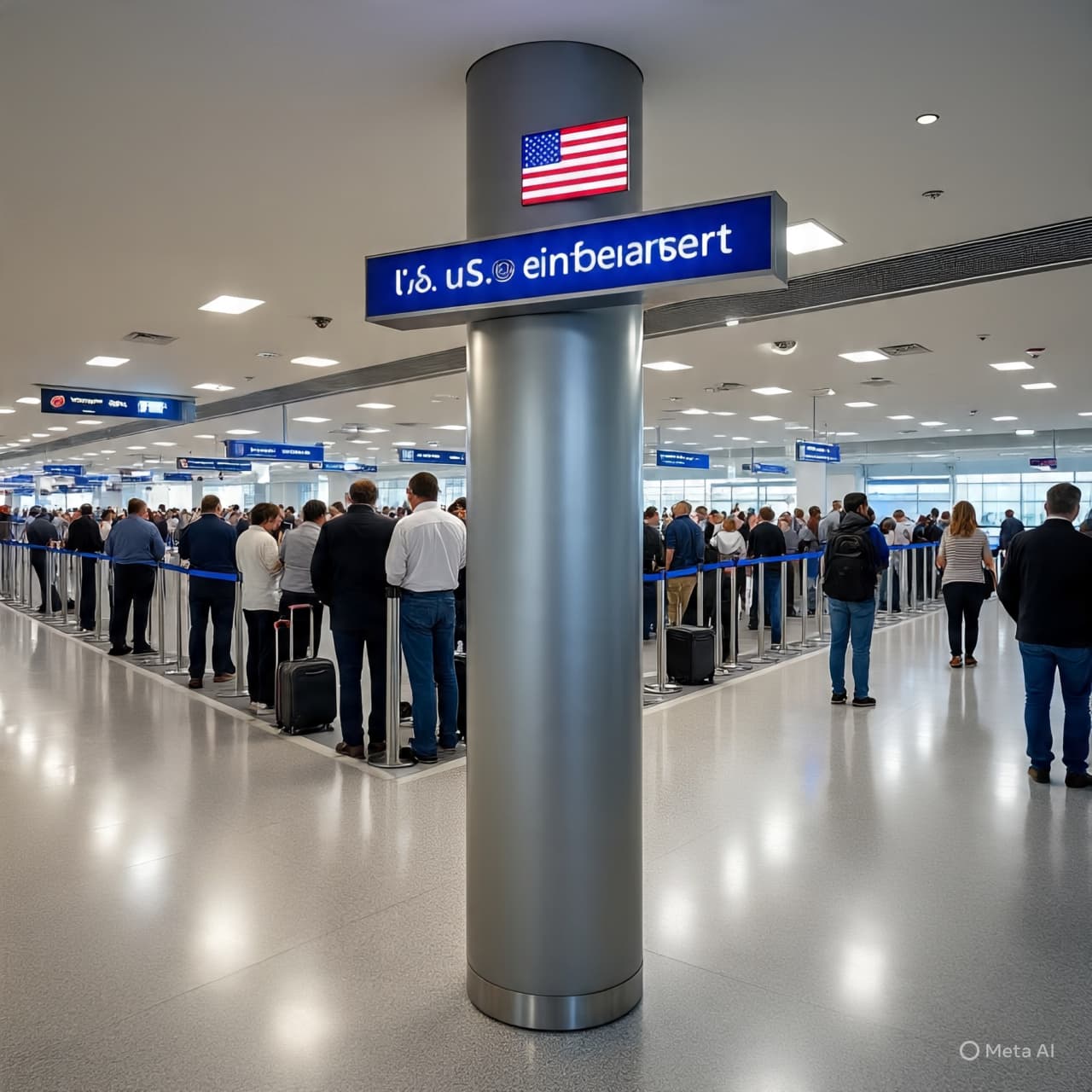
In the interplay of diplomacy and policy, sometimes the quiet humming of bureaucratic decisions can produce ripples far beyond the pages of legal texts. This month, the U.S. administration announced a suspension of immigrant visa processing for citizens of 75 countries, a sweeping move within President Donald Trump’s broader immigration crackdown that has attracted global attention. Among those affected are two Southeast Asian nations — Cambodia and Thailand — a decision that has drawn puzzled reactions from experts who see little obvious rationale for their inclusion in the list.
The suspension — set to take effect January 21, 2026 — temporarily halts the issuance of immigrant visas for citizens of Cambodia, Thailand, and dozens of other countries, even though non‑immigrant visas such as those for tourism and business remain unchanged. The U.S. State Department said the move reflects efforts to ensure that future immigrants are financially self‑sufficient and not likely to become a “public charge.”
What has raised eyebrows is the inclusion of Cambodia and Thailand alongside countries with very different migration patterns and historical ties to the United States. Thailand, for instance, has not previously been targeted by U.S. immigration restrictions, and remains a treaty ally with longstanding economic and security cooperation. Analysts say that leaving out nearby countries like the Philippines and Vietnam — both major sources of U.S. immigration — only deepens the sense of inconsistency.
“It’s puzzling,” says Tan Sook Rei, a senior lecturer at Singapore’s James Cook University. She notes that the absence of other high‑volume migrant‑source countries suggests the policy may be driven more by political signaling than by clear migration management goals. Jacob Wood, another academic at JCU, points to reported tensions between Washington and Bangkok over trade issues — including allegations of fake certificates of origin linked to tariff practices — as a potential undercurrent influencing the decision.
Economists and foreign policy experts caution that such visa restrictions could have unintended diplomatic effects. Thailand and Cambodia, both navigating complex regional dynamics and balancing relations with larger powers like China, may interpret the restrictions as a sign of unreliable partnership — potentially nudging them closer to other geopolitical spheres. Such outcomes run counter to the United States’ declared mission of maintaining strong ties in the Indo‑Pacific.
The broader visa suspension policy also reflects the administration’s longstanding emphasis on stricter immigration controls, including a record number of visa revocations and a high‑profile expansion of the “public charge” rule. Critics argue that the sweeping nature of the curriculum could undermine the legal migration channels that support family unification and skilled worker inflows, even in allied or friendly countries.
As the policy takes effect, governments and civil society groups in Southeast Asia are watching closely. Beyond immediate impacts on would‑be immigrants, the decision raises questions about how immigration policy and diplomatic strategy intersect — and whether broad restrictive measures ultimately serve the country’s long‑term interests in a region marked by both opportunity and competition.
AI Image Disclaimer “Visuals are created with AI tools and are not real photographs.”
Sources: Fortune — on visa suspension and expert reactions. Reuters — reporting on the broader suspension of immigrant visa processing for 75 countries. Additional regional context from Thai Newsroom and allied reporting.
Published by Banx Network. This article is part of the Banx decentralized media programme, powered by the BXE token on the XRP Ledger.