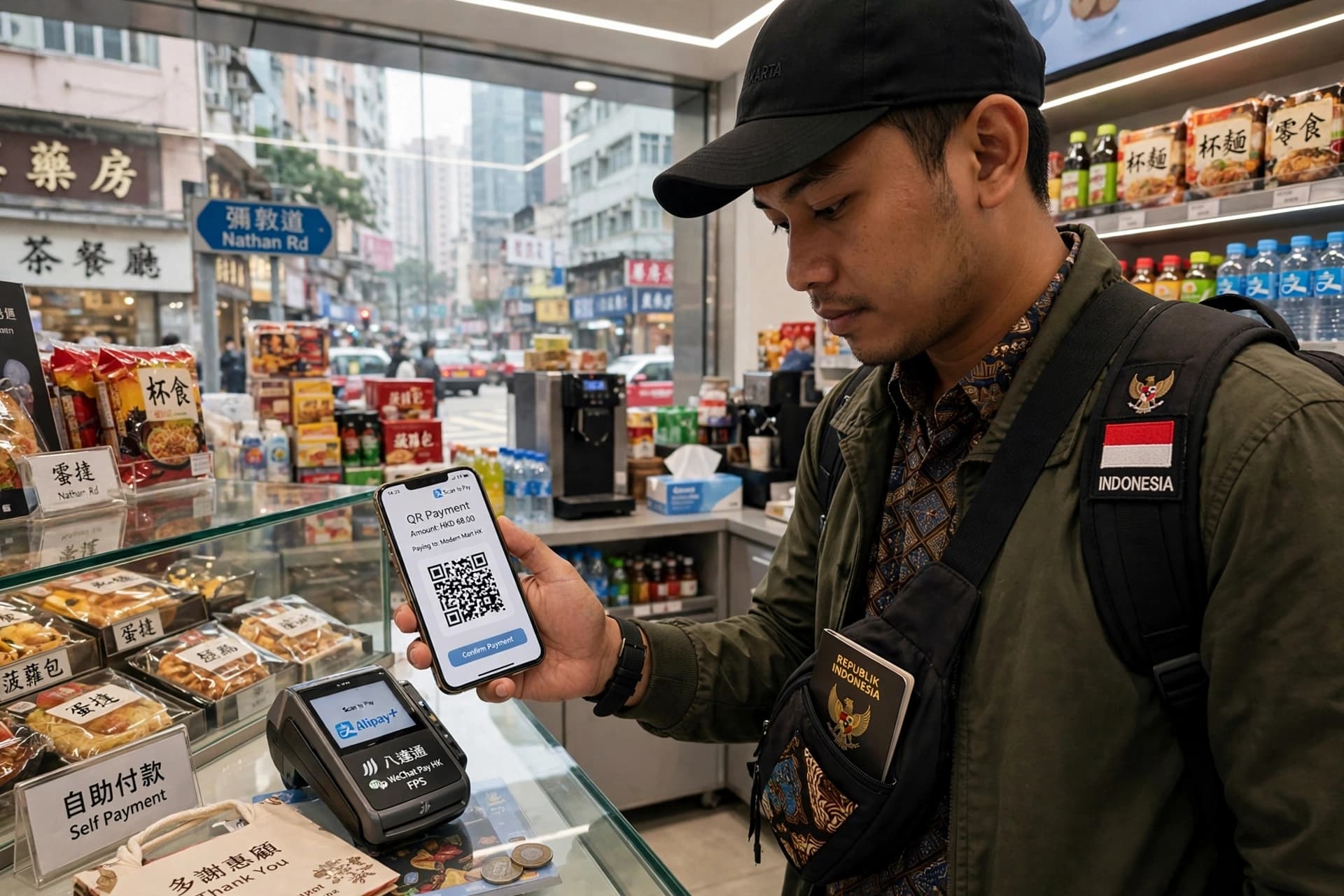
In September, Bank Indonesia signed separate memorandums of understanding with the monetary authorities of Timor-Leste and Hong Kong, creating a framework for exploring cross-border QRIS payment connectivity. The agreements cover cooperation in payment systems, digital financial innovation and information sharing.
The move comes after several years of expanding QRIS internationally. Indonesia launched its first cross-border QRIS arrangement in 2022, and by July 2026, users from partner countries had made about 21 million inbound transactions in Indonesia worth Rp5.9 trillion, according to Bank Indonesia data reported by The Jakarta Post.
The expansion toward Timor-Leste carries a particular regional significance. The two countries share a land border and extensive economic and social connections, creating practical reasons for simpler payment arrangements. For travelers and small businesses, the ability to use familiar digital payment applications can reduce some of the friction traditionally associated with cross-border transactions.
Hong Kong represents a different kind of connection. As an international financial center, it offers a broader link between Indonesia's domestic digital-payment ecosystem and a major regional business hub. The agreement with the Hong Kong Monetary Authority therefore creates another potential pathway for Indonesian consumers and businesses to participate in increasingly connected Asian payment networks.
QRIS has already demonstrated how quickly a standardized payment system can spread domestically. During the first half of 2026, QRIS recorded 12.55 billion transactions, according to data cited by The Jakarta Post. Its expansion beyond Indonesia reflects the next stage of that development, in which a payment system created for domestic convenience becomes part of a wider regional infrastructure.
China is an example of that evolution already becoming practical. Cross-border QR payments between Indonesia and China became fully operational in 2026, allowing compatible users to make payments across the two countries through connected payment networks. The arrangement illustrates how interoperability can turn what once required currency exchanges or international cards into a more familiar mobile experience.
The broader objective is not simply to make shopping easier for tourists. Cross-border payment connectivity can support trade, tourism and small-business activity while reducing the friction involved in moving money between markets. For a country with a large and rapidly digitizing domestic economy, these connections can gradually become another layer of economic infrastructure.
There will still be technical and regulatory questions to resolve. Different countries use different payment standards, settlement systems and financial regulations. Building connections therefore requires coordination between central banks and payment providers, not simply placing one QR code beside another.
Still, the direction is clear. Indonesia is moving from a digital payment system designed primarily for transactions at home toward one that increasingly follows its users abroad. The next few years may show whether QRIS can become not only Indonesia's national payment standard, but also one of the country's most recognizable bridges into the wider digital economy of Asia.
AI Image Disclaimer
This AI-generated illustration is intended solely for editorial visualization and does not depict an actual transaction, person or location.
Sources
The Jakarta Post Bank Indonesia Hong Kong Monetary Authority Banco Central de Timor-Leste
Published by Banx Network. This article is part of the Banx decentralized media programme, powered by the BXE token on the XRP Ledger.