In the quiet hum of a research lab, a machine sits in near darkness, its superconducting circuits cooled to just above absolute zero. To the casual observer, it might look like a futuristic ornament — yet inside, quantum bits, or qubits, are performing calculations that classical computers can barely touch. The promise of quantum computing has been long discussed, sometimes exaggerated, sometimes theoretical. But now, in 2026, these machines are beginning to move from the realm of novelty into practical usefulness, at least for certain specialized tasks.
Quantum computers are not yet replacing laptops or cloud servers. They are not yet solving everyday spreadsheet problems, rendering videos, or running social media algorithms. But they shine in areas where the classical approach struggles. One such area is molecular simulation. Molecules, atoms, and electrons obey the rules of quantum mechanics — a realm that classical computers can only approximate. Quantum systems can naturally simulate these behaviors, making them invaluable for drug discovery, battery materials, and new industrial chemicals. Companies like IBM, Google, and startups like Pasqal and Rigetti are already running pilot projects with measurable results, simulating molecules that classical systems take weeks to handle.
Another area gaining traction is optimization problems — challenges that require testing countless combinations to find the best outcome. Logistics companies, including DHL and Volkswagen, have experimented with quantum-assisted routing algorithms, discovering that these machines can identify more efficient routes and schedules faster than conventional methods. Similarly, in finance, firms are exploring portfolio optimization and risk assessment, where quantum computations help simulate scenarios too complex for classical processors.
Quantum’s promise also touches cybersecurity. While much of this remains forward-looking, the potential is immense. Quantum computers could one day crack encryption schemes widely used today, prompting governments and corporations to explore quantum-safe cryptography. Already, experimental systems are being tested for quantum key distribution, a method that guarantees secure communication by the laws of physics rather than mathematical assumptions.
Yet, the challenges are formidable. Qubits are fragile, prone to “noise” that can produce errors in calculations. Large, fault-tolerant quantum computers — those capable of performing sustained, meaningful computations without error — are still years away. Moreover, the technology requires extreme conditions: ultra-cold superconducting circuits, precise lasers, or specialized ion traps. Even when the hardware functions, programming quantum algorithms remains a sophisticated task, requiring a hybrid approach where classical computers handle routine steps and quantum processors tackle the hard subproblems.
Despite these limitations, optimism is rising. Analysts predict that by 2026–2027, quantum systems could deliver practical advantages for specific industrial and research applications — from faster molecular simulations to optimized logistics. The machines are gradually leaving the lab bench and entering corporate pilot programs. Google’s Quantum AI team, IBM, and several startups are offering cloud-based quantum access, allowing companies to experiment without owning the hardware.
In essence, quantum computing today is like the early GPU era: specialized, experimental, and already transformative in certain niches, yet not yet ready to replace mainstream computing. Its value is emerging in solving problems classical systems cannot efficiently address, and in doing so, it is beginning to justify the years of hype and investment. For industries dealing with the complexity of molecules, supply chains, or cryptography, the quiet hum in the lab might already be redefining what’s possible.
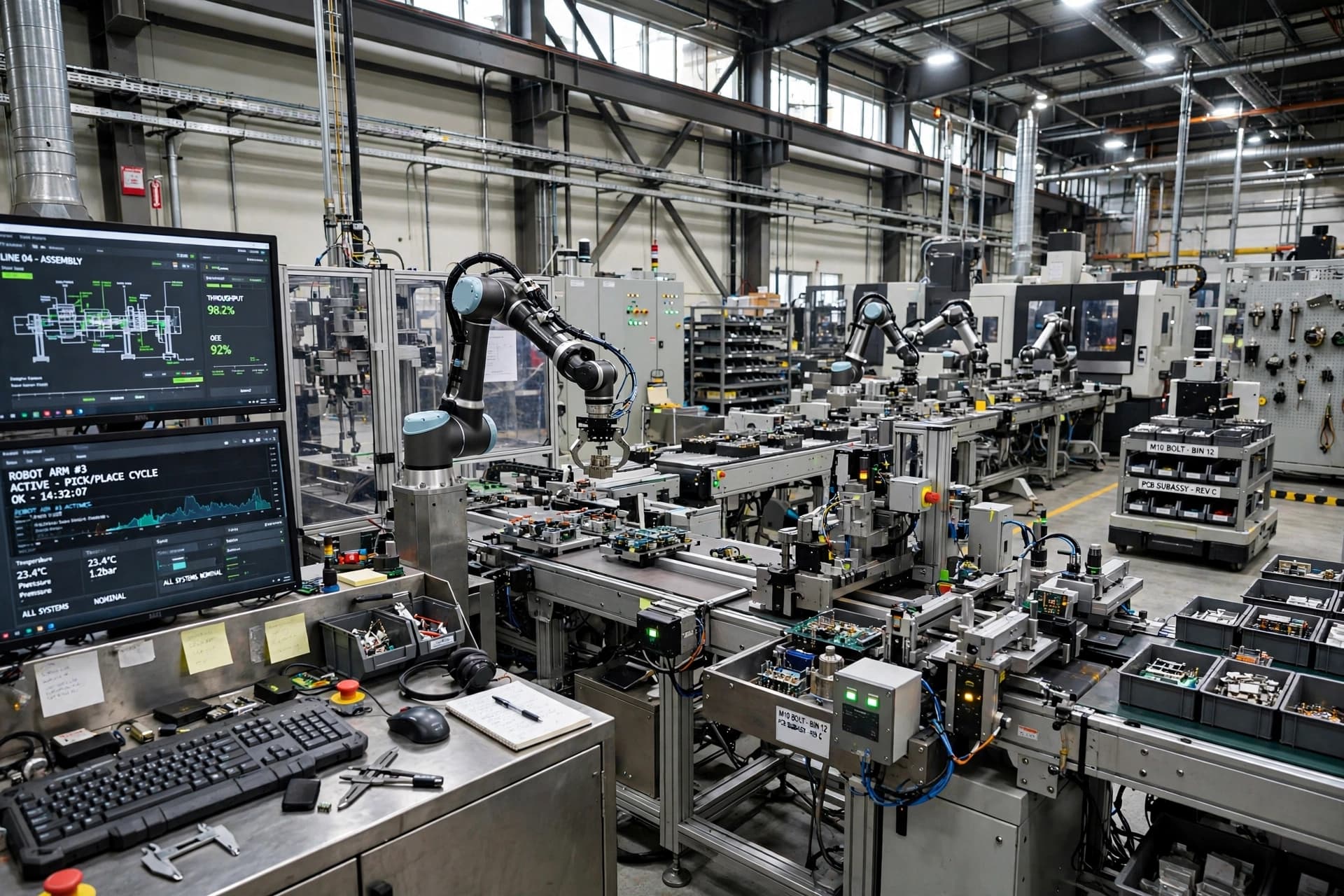
AI Image Disclaimer Visuals are AI-generated for conceptual illustration only and do not depict actual experiments or hardware.
Sources Financial Times — Are quantum computers finally useful? Forbes — 20 Real-World Applications of Quantum Computing to Watch Medium — Top Quantum Computing Breakthroughs in 2026 SC Quantum Institute — Quantum Computing Applications & Use Cases Forbes — 7 Quantum Computing Trends That Will Shape Every Industry in 2026
Published by Banx Network. This article is part of the Banx decentralized media programme, powered by the BXE token on the XRP Ledger.