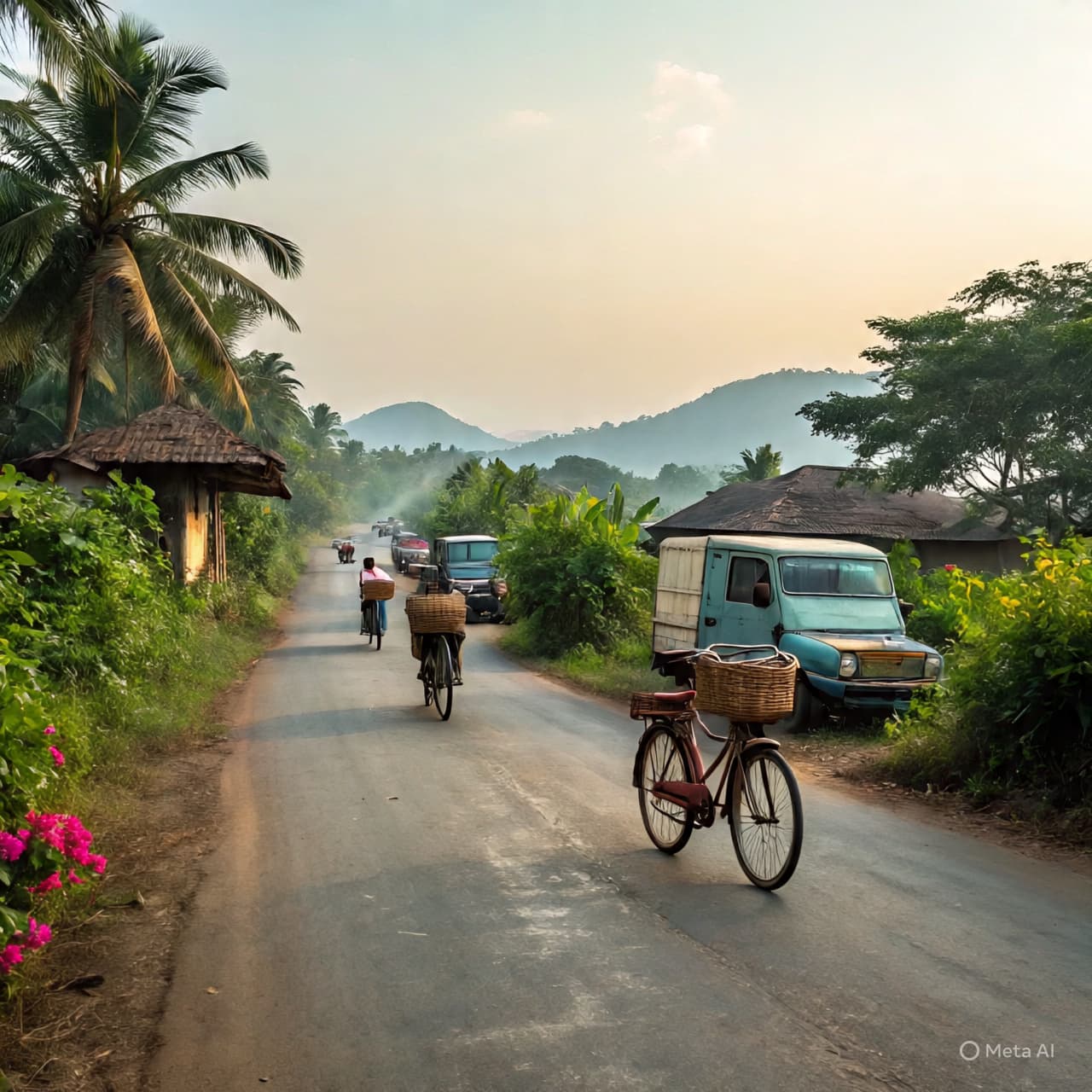
In the quiet hours before sunrise, long roads in South Asia and beyond stretch with the promise of routine journeys — a bus winding toward school, a truck laden with vegetables humming toward market stalls, a fisherman’s motor trigging across gentle waves. But these movements, so familiar in the rhythm of ordinary days, now carry a weight that was once invisible: the measure of fuel, its scarcity and cost marking the pace of life with greater urgency.
This subtle shift began far from these everyday scenes, in a slender ribbon of water between the Persian Gulf and the Gulf of Oman. The Strait of Hormuz, through which a large share of the world’s oil flows, has become a contracted artery in the global energy system, choked by conflict and uncertainty. When ships slow, insurers raise premiums, and supplies tighten, the reverberations are felt not just on distant seas but on the pumps where drivers wait in line and in the ledgers of families paying more for each liter of fuel.
In Pakistan, where the countryside unfurls in plains and hills toward the Arabian Sea, this global pinch has become deeply personal. Petrol and diesel prices have climbed sharply, feeding concerns over inflation and the costs of everyday transport. The country, heavily reliant on imported oil, finds itself navigating not just roads but economic crosscurrents that arrive with each fuel price revision. The higher bills at the filling station are matched by broader strains on trade and on household budgets, with energy — once a backdrop of life’s rhythms — now a persistent presence in conversations at tea stalls and living rooms alike.
To the east, China watches similar currents with its own careful pacing. As one of the world’s largest oil importers, a sizable share of its crude flows through the same narrow strait whose fate feels increasingly uncertain. Domestic regulators have chosen to temper the pace of fuel price rises, moderating increases to shield consumers from the full force of global market gyrations. Even so, the careful balancing act speaks of a larger tension: how to safeguard economic momentum while acknowledging the vulnerabilities of a world where energy supplies are caught in the eddies of geopolitics.
Further south, in Sri Lanka, the rise in fuel costs has taken on a sharper edge still. A recent price hike — one of several in quick succession — reflects the stark economics of a nation that must import nearly all of its energy needs. Long queues at service stations and the sight of motorists budgeting every kilometer under a sun that climbs swiftly each day are quiet testimonies to how global forces manifest close to home. In rural towns and coastal communities alike, the cost of transporting goods and ferrying family members becomes more than just a number — it turns into a question of how to sustain the simple movements that animate daily life.
Across these varied landscapes, the underlying cause is shared: disruptions in the supply of oil and refined products as tensions around the Strait of Hormuz tighten the global trade of crude and its derivatives. The result has been a ripple of rising fuel costs and economic readjustments that extend from bustling urban centers to remote villages reliant on the steady pulse of transport and energy. Alongside these shifts, consumers everywhere are finding new rhythms of adaptation — turning to public transport where possible, reconsidering travel plans, and watching as broader market forces shape the very act of getting from one place to the next.
And so, as dawn turns to day, the landscape of movement — of people, of goods, of life’s ordinary transactions — is marked with a renewed consciousness of fragility and resilience alike. The strait’s waters, far from home, reflect not just the rising sun but the steady awareness that even distant chokepoints can cast long shadows across everyday existence.
AI Image Disclaimer “Visuals are AI‑generated and serve as conceptual representations.”
Sources Times of India, Reuters, The Guardian, Wikipedia — 2026 Strait of Hormuz crisis.
Published by Banx Network. This article is part of the Banx decentralized media programme, powered by the BXE token on the XRP Ledger.