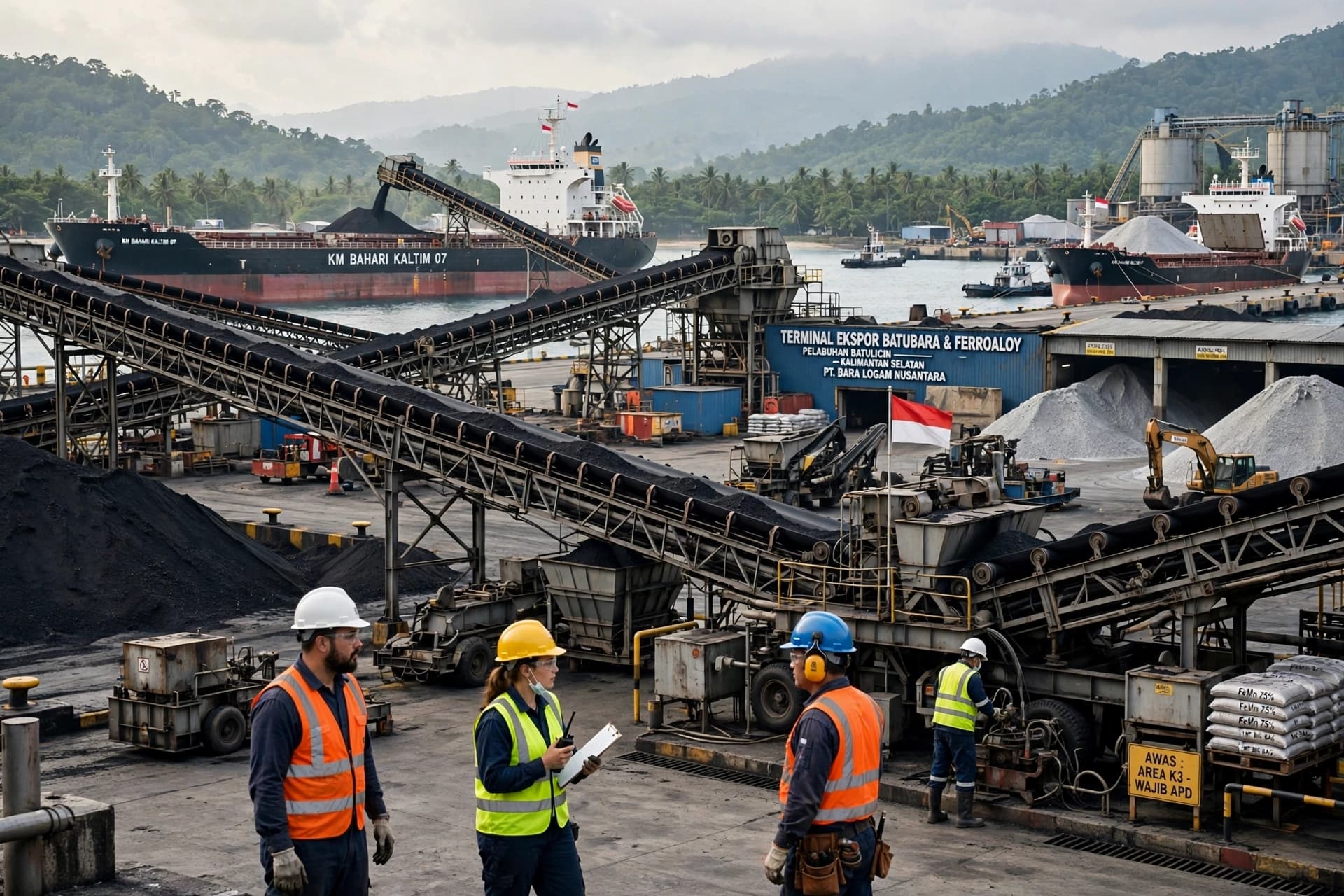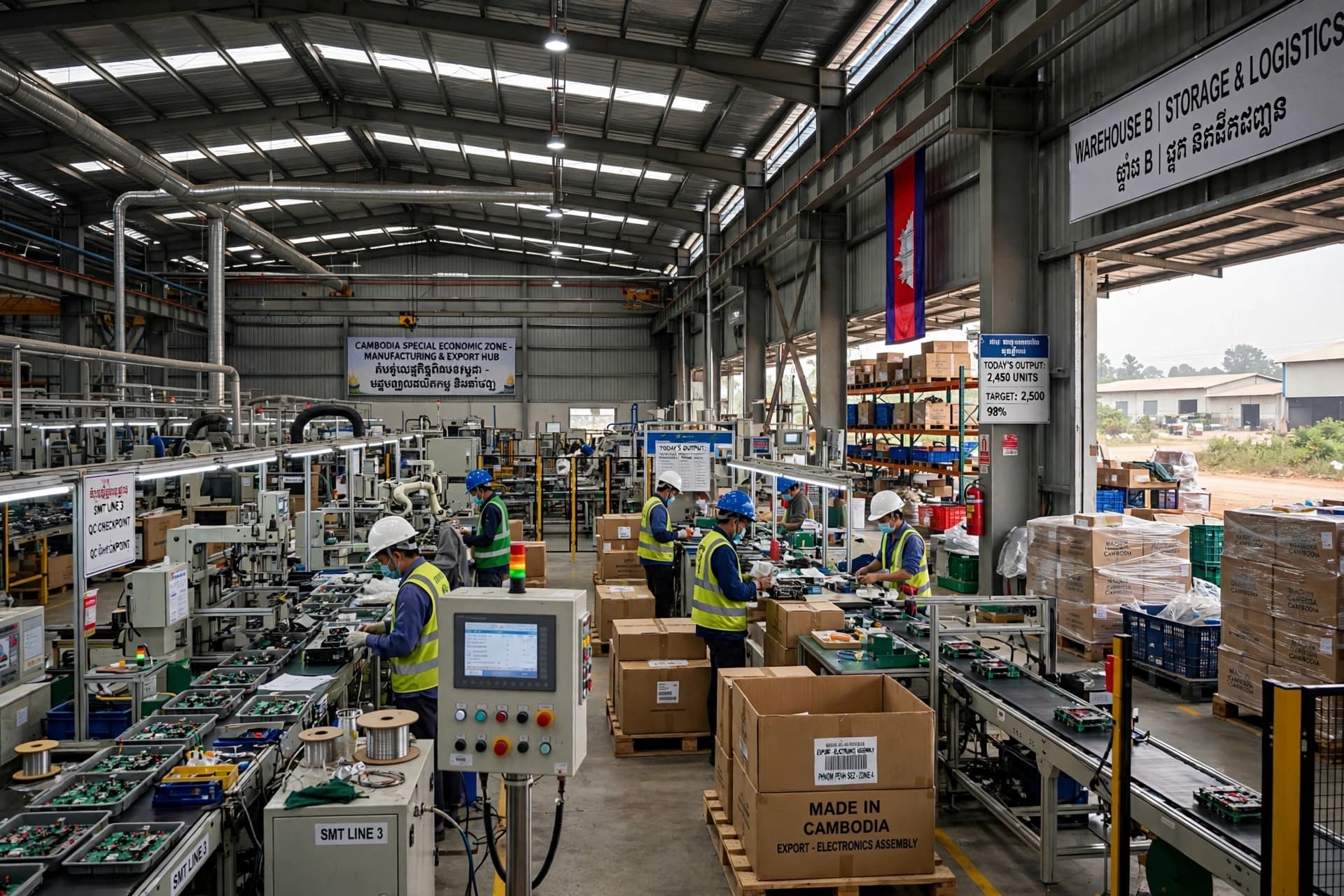
Across Cambodia’s industrial landscape, the scale of investment has continued to widen. Registered industrial investment capital has now surpassed $28 billion, reflecting the country’s ongoing effort to strengthen manufacturing and move toward higher-value production.
The figure is more than a financial milestone. It represents factories, production lines, industrial estates and the gradual reshaping of an economy that has long depended heavily on labour-intensive manufacturing.
For years, garments, footwear and travel goods have occupied an important place in Cambodia’s industrial structure. Those industries remain significant, but investment discussions are increasingly extending toward sectors where technology, technical skills and productivity carry greater weight.
The industrial expansion is taking place against a broader rise in Cambodia’s trade. The country recorded $50.69 billion in total trade during the first eight months of 2026, up 20.2 percent from the same period in 2025, according to data from the General Department of Customs and Excise.
That movement creates a larger question for factories and investors: how much value can Cambodia retain as goods move through increasingly connected regional supply chains? Higher-value manufacturing, agro-processing, electronics and automotive assembly are among the areas being discussed as part of the country’s industrial diversification.
Investment alone, however, does not automatically transform an industrial base. Modern factories require reliable infrastructure, logistics networks, technical education and workers capable of operating increasingly sophisticated equipment. Cambodia has therefore been placing greater attention on skills development alongside investment attraction.
The changing landscape can already be seen in the direction of policy discussions. Cambodia is preparing a longer-term industrial development roadmap aimed at shifting manufacturing toward more productive, technology-driven and skilled industries, according to recent reporting from Khmer Times.
For communities around industrial zones, these changes can eventually be reflected in more than factory numbers. New production facilities can bring employment, supporting businesses, logistics activity and demand for technical services, although the scale of those effects depends on the nature and location of individual investments.
The $28 billion figure therefore marks a point along a longer road rather than an endpoint. As Cambodia competes for investment within Southeast Asia, the direction of that capital will matter as much as its total value. The coming years will show how far investment can translate into deeper manufacturing capabilities and a broader industrial foundation.
SEO SLUG: cambodia-industrial-investment-28-billion-manufacturing-growth
HASHTAGS: #Cambodia #Industry #Investment #Manufacturing #Business #Economy #ASEAN #IndustrialGrowth #Technology
IMAGE DISCLAIMER: Illustrations were created using AI tools and are not real photographs.
SOURCES: Khmer Times Open Development Cambodia General Department of Customs and Excise Vietstock
Published by Banx Network. This article is part of the Banx decentralized media programme, powered by the BXE token on the XRP Ledger.