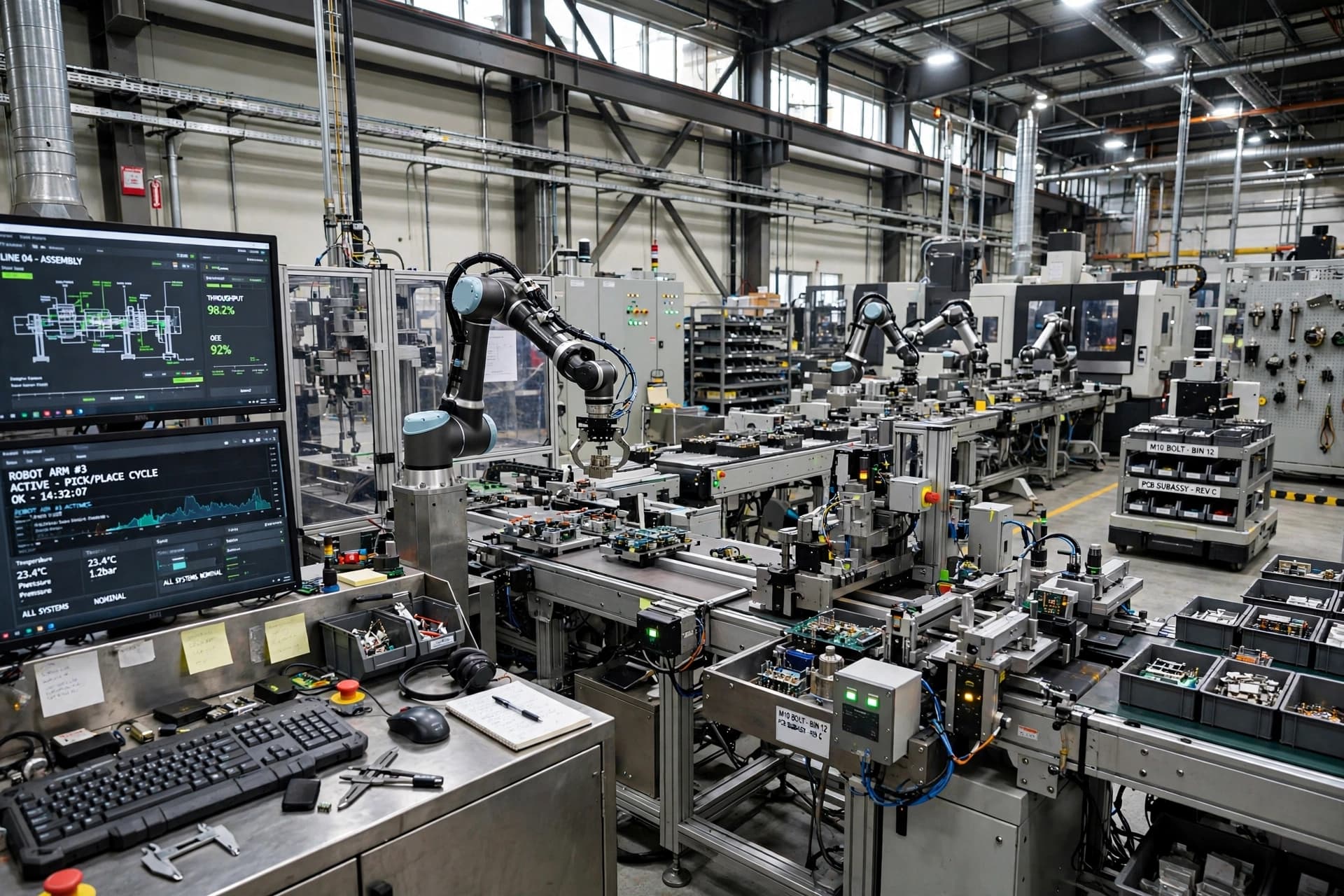
In the quiet spaces where data travels and machines calculate, a new chapter of technological development continues to unfold. Across the United States, large technology companies are building deeper foundations for artificial intelligence, creating systems designed to process information at a scale once imagined only in distant futures.
Artificial intelligence has moved beyond research laboratories and into the center of business strategy. Companies that once focused primarily on software, communication, and online services are now investing heavily in computing infrastructure, specialized hardware, and digital platforms capable of supporting increasingly complex AI applications.
The expansion reflects a broader transformation within the technology industry. Artificial intelligence requires enormous computing resources, encouraging companies to develop larger data centers, strengthen cloud networks, and collaborate with semiconductor manufacturers to meet rising demand. (reuters.com)
Major technology firms in the United States have continued increasing their focus on AI systems as businesses across different sectors explore new ways to use automation and intelligent software. From healthcare and manufacturing to financial services and communication, AI tools are becoming part of everyday industrial processes.
Behind these developments stands a complex network of engineers, researchers, and infrastructure specialists. The growth of artificial intelligence depends not only on algorithms but also on the physical systems that allow those algorithms to operate efficiently.
The competition for advanced computing capability has also increased demand for powerful chips. Semiconductor technology has become a critical element of the AI ecosystem, connecting hardware production with the broader ambitions of digital transformation.
At the same time, companies are carefully examining the balance between opportunity and investment. Building AI infrastructure requires significant financial resources, energy consumption, and long-term planning. Businesses are seeking ways to ensure that technological expansion creates practical value for customers and industries.
The evolution of artificial intelligence represents a continuation of earlier technological shifts that changed the way people live and work. Like previous waves of innovation, the current AI movement is shaped by both excitement and the gradual process of adaptation.
As technology companies continue expanding their AI capabilities, the focus remains on developing systems that can support future digital needs. Investment in artificial intelligence infrastructure is expected to remain a major part of the technology sector as companies explore new applications and services. (reuters.com)
AI Image Disclaimer: AI-generated illustrations are conceptual visuals created to represent the described technology themes and are not actual photographs.
Sources Reuters The Wall Street Journal CNBC
Published by Banx Network. This article is part of the Banx decentralized media programme, powered by the BXE token on the XRP Ledger.