
In the quiet realm of quantum physics, particles dance in ways that defy classical intuition, connected by invisible threads of entanglement. Recently, a study has revealed a counterintuitive phenomenon: energy leakage from a quantum system can actually help spread entanglement over larger distances. This finding invites reflection on the complex interplay between order and disorder in the microscopic world. It is a reminder that what seems like loss can sometimes be a gain.
Traditionally, energy leakage, or dissipation, is seen as the enemy of quantum coherence, causing systems to lose their quantum properties. However, researchers have found that under certain conditions, this leakage can synchronize particles, enhancing their entanglement. Paradox drives understanding. Complexity reveals simplicity.
The study, conducted by teams at institutions such as Rice University and TU Wien, involved measuring entanglement in quantum critical metals. They observed that asymmetry in energy distribution could facilitate stronger connections between particles. Observation confirms theory. Data speaks truth.
This discovery has implications for the development of quantum technologies, including computers and sensors. By harnessing leakage rather than fighting it, engineers may design more robust and scalable systems. Innovation follows insight. Efficiency improves performance.
For physicists, the result challenges conventional wisdom and opens new avenues for research. It suggests that environmental interactions, often considered noise, can play a constructive role in quantum dynamics. Perspective shifts paradigm. Noise becomes signal.
As the field advances, such findings highlight the importance of exploring unexpected phenomena. The quantum world remains full of surprises, waiting to be uncovered by curious minds. Wonder fuels science. Mystery invites inquiry.
A new study finds that energy leakage can help spread quantum entanglement further, challenging traditional views on dissipation. The research offers potential benefits for quantum technology development. The hope is for practical applications and deeper theoretical understanding.
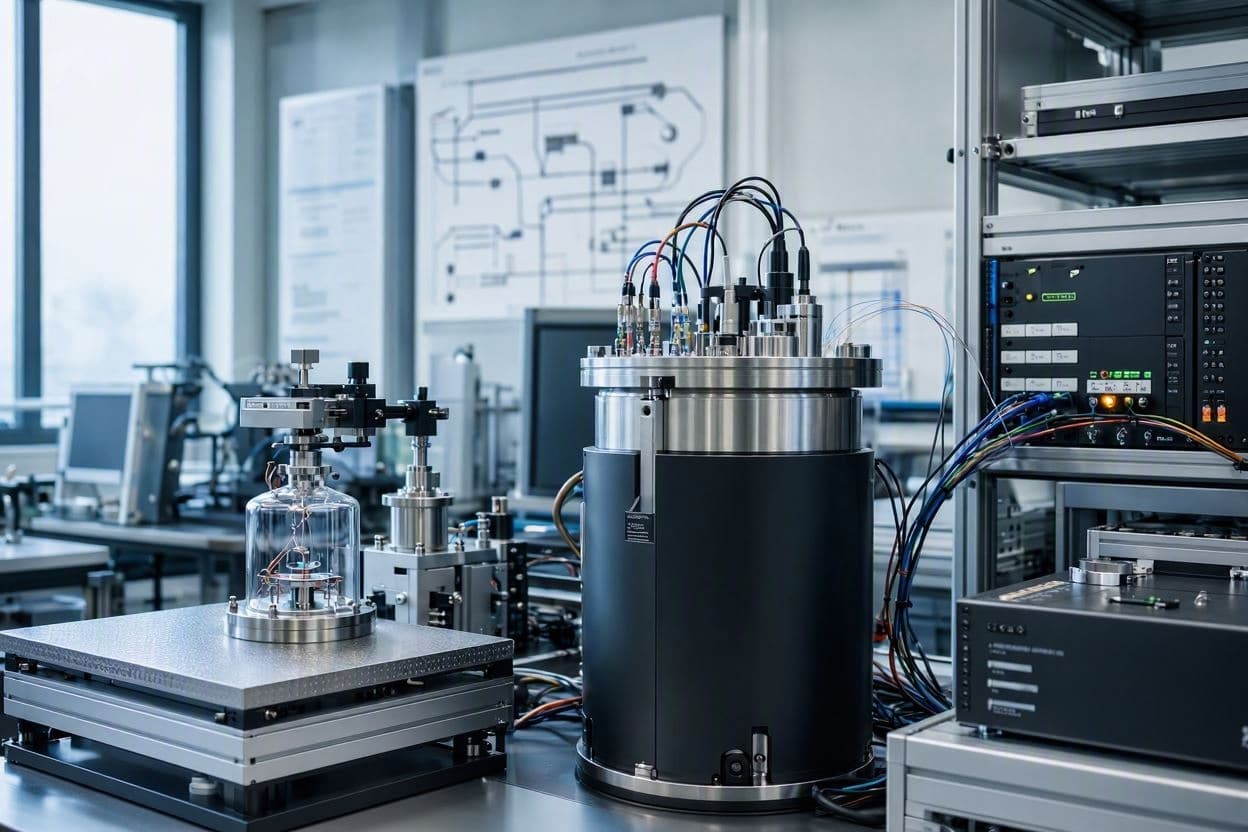
AI Image Disclaimer: Visuals associated with this article are AI-generated to illustrate the themes of quantum physics and scientific discovery.
Sources: Phys.org Science Daily Quantum Zeitgeist
Published by Banx Network. This article is part of the Banx decentralized media programme, powered by the BXE token on the XRP Ledger.



