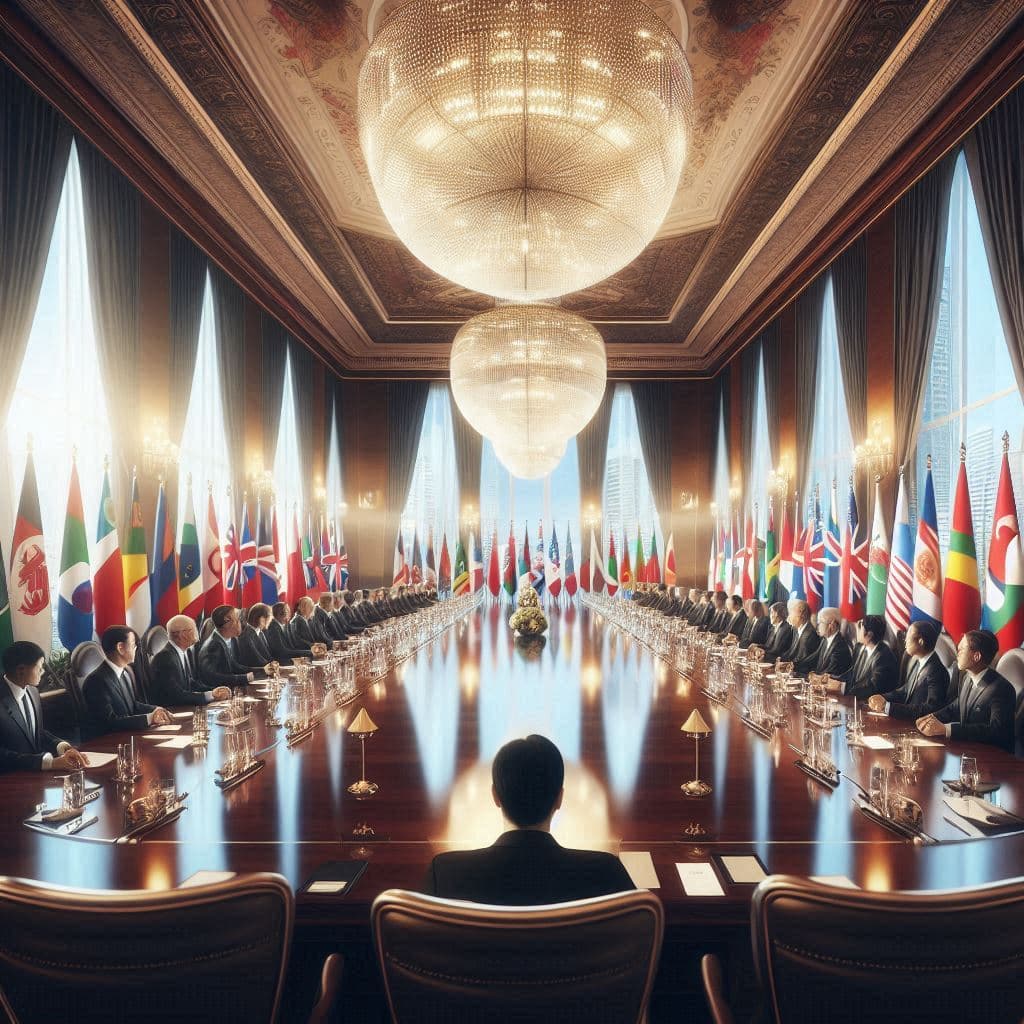
In the soft glow of winter sunlight, when the horizon seems as vast and unsettled as the global supply chains it illuminates, Washington welcomed a gathering whose ripples extend far beyond its marble corridors. Like a circle of cartographers charting hidden terrain, representatives from more than fifty nations convened not to redraw borders, but to map out access to the elemental building blocks of modern life — critical minerals that power everything from electric vehicles to defense systems. This meeting, convened under the broad title of a Critical Minerals Ministerial, reflected a moment of both anxiety and opportunity in the quiet but consequential world of supply chain strategy.
The United States hosted this encounter at the State Department, under the stewardship of Secretary of State Marco Rubio, drawing delegates from across continents — from G7 nations to emerging partners in Asia, Africa, and Oceania. Countries including South Korea, India, Thailand, Japan, Germany, and Australia were among those participating in conversations aimed at loosening the global economy’s longstanding reliance on a single dominant supplier.
In many ways, the dialogue echoed the gentle promise of cooperation that has undergirded postwar economic order — a delicate dance of common interests played out against the backdrop of geopolitical rivalry. Rare earths and critical minerals, once the hidden threads of industrial progress, now sit at the center of global strategy, as nations recognize that access to these resources shapes everything from technological innovation to national security.
At the summit, Vice President J.D. Vance outlined proposals for a new kind of collective effort — a trading bloc of allies and partners designed to broaden production, stabilize pricing, and encourage resilient supply chains. This initiative, supported by President Donald Trump, reflects an effort to move beyond unilateral dependency toward a multilateral embrace of shared industrial opportunity.
Under the banner of “Project Vault,” the U.S. also unveiled plans to build a strategic reserve of critical minerals, backed by billions in public and private funding. The aim is as practical as it is symbolic: ensuring that essential materials remain available to manufacturers in times of disruption, much as strategic petroleum reserves have once shielded energy markets from volatility.
In conversation after conversation, delegates returned to a shared theme — that no single nation can alone secure the steady flow of the elements that drive modern economies. Price supports, market standards, coordinated production measures, and long-term partnerships were all floated as possible tools for diminishing the economic leverage currently held by a dominant external player.
Yet beneath the technical discussions lay a broader narrative: that in an age of tightly woven global industry, resilience is not simply a matter of policy, but of trust and collaboration. In the shifting combinations of nations around the table — sometimes allies, sometimes competitors — there was a subtle acknowledgment that shared supply chains are as much about shared futures as shared resources.
Now, as the summit draws to a close, the spirit of its conversations remains — a reflection of how even the smallest fragments of the earth can shape the trajectories of nations and economies alike.
Closing (Gentle Straight News) The Critical Minerals Ministerial held in Washington brought together more than 50 countries, including members of the G7, South Korea, India, Thailand, Japan, Germany and Australia, to discuss cooperation on supply chains for rare earths and other critical minerals. U.S. officials outlined proposals for coordinated pricing and an allied trading bloc, backed by Project Vault — a strategic stockpile initiative funded with public and private capital. Delegates also explored bilateral and multilateral agreements to strengthen supply relationships and reduce reliance on dominant global suppliers. Participants acknowledged the importance of diversified sources and long-term partnerships to support industry and national security needs. The meeting reflects ongoing international efforts to build resilient access to essential mineral resources.
AI Image Disclaimer (Rotated Wording) Illustrations were produced with AI and serve as conceptual depictions.
Credible locations from major outlets:
Al Jazeera News Al Jazeera (second report) The Guardian The Guardian (Reuters-sourced) The Guardian / AP News summary style
Published by Banx Network. This article is part of the Banx decentralized media programme, powered by the BXE token on the XRP Ledger.