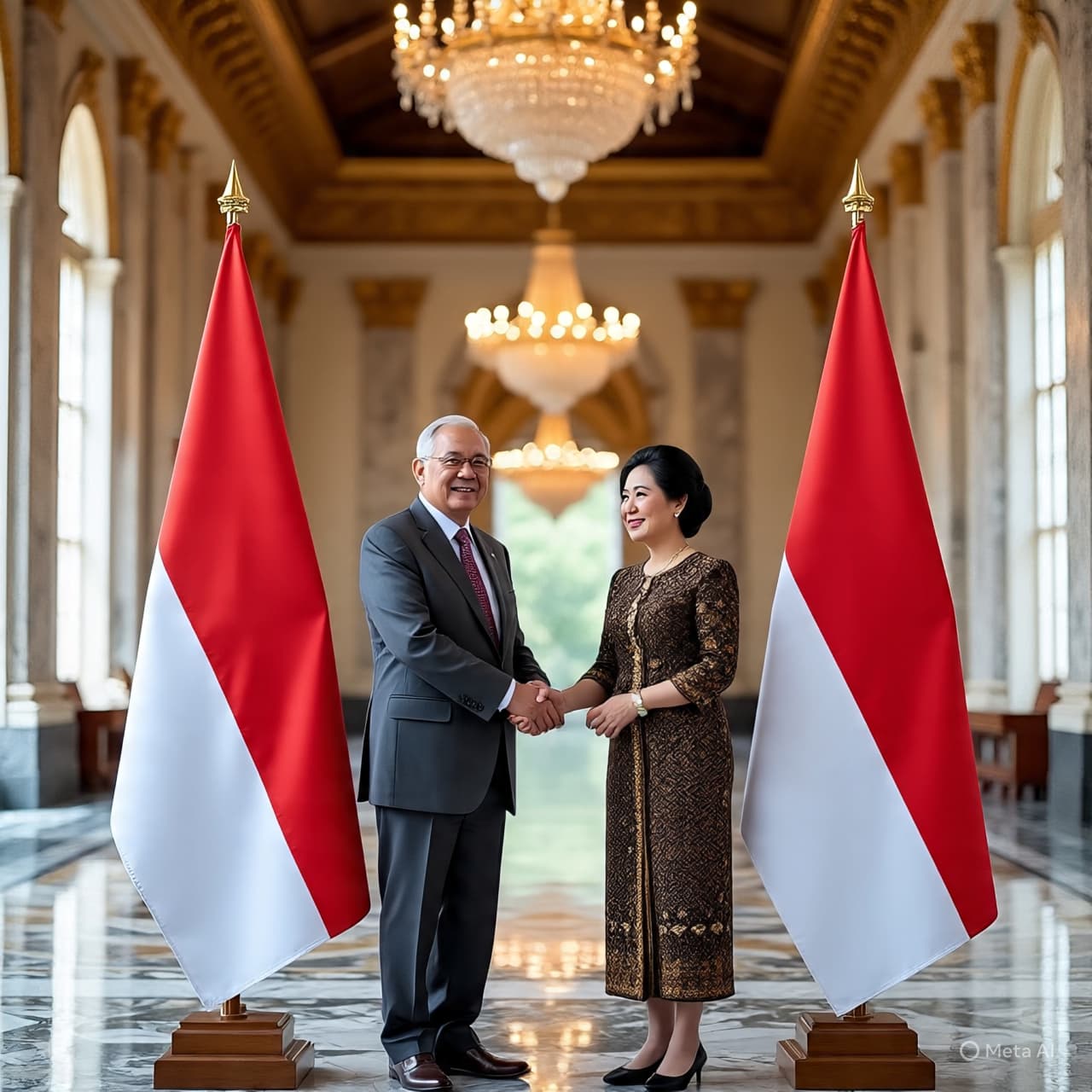
A soft Jakarta breeze drifted through the gates of the palace, as two worlds touched — the familiar realm of Indonesia’s mountains and islands, and the global promise of financial dignity. On a mild afternoon in late November, President Prabowo Subianto welcomed Queen Máxima of the Netherlands into the serene halls of the Merdeka Palace. Their meeting — subtle yet significant — spoke of more than ceremony. It spoke of hope: a hope for financial freedom, inclusion, and resilience across a nation of hundreds of millions.
In their conversations, the idea of “financial health” took center stage. Queen Máxima, in her role as the United Nations Secretary-General’s Special Advocate for Financial Health, acknowledged Indonesia’s progress in expanding access to formal financial services. President Prabowo responded with equal earnestness: Indonesia needs a robust, structured national strategy — one that reaches far beyond headline statistics. He proposed forming a new cross-sectoral body, a “Financial Health Council,” to complement the existing national inclusion framework.
Behind the formal words lies a deeper ambition: to ensure that financial inclusion isn’t just about opening bank accounts, but about building a foundation of stability — for households, for small businesses, for everyday Indonesians. Officials noted that Indonesia has already achieved impressive inclusion metrics, but emphasized that many communities remain underserved: informal workers, micro-enterprises, remote regions, and vulnerable populations. The challenge is not merely access, but trust, literacy, and supportive infrastructure.
More than policy, the meeting felt like a gentle reckoning. In a country where many still rely on informal lenders or avoid financial services altogether, the push for financial health becomes a promise of dignity. For a mother in a rural village, a small-scale entrepreneur in a city alley, a young person stepping into the formal workforce — financial inclusion and health could mean stability, opportunity, and resilience.
Yet, the road ahead is long. Translating strategic ambition into everyday reality requires coordination across sectors, consistent education, open data, and inclusive digital infrastructure. The envisioned Financial Health Council may help steer this long journey — but success will ultimately depend on whether policies reach the millions whose lives they aim to improve.
In that quiet meeting room at the palace, with respectful bows and earnest dialogues, a new chapter begins. For Indonesia, it may mark a turning point — a step from access toward real financial wellbeing. For many citizens, it may offer hope that their tomorrow could be steadier, their chances fairer, and their dignity recognized.
AI Image Disclaimer: “Visuals are AI-generated illustrations and serve as conceptual representation only.”
Sources: ANTARA News Tempo Setneg (State Secretariat of Indonesia) VOI Okezone
Published by Banx Network. This article is part of the Banx decentralized media programme, powered by the BXE token on the XRP Ledger.