The dawn breaks over Yerevan with a soft blush of light that seems to linger longer than usual along the stone façades of its old boulevards and quiet squares. In the hush of an early morning, there are stories in the air — of ages past and passages yet to come — carried by a wind that wanders through ancient streets where recent history meets enduring tradition. In this place, where echoes gather in the shadow of Mount Ararat and time feels both slow and profound, a moment has arrived that carries the weight of firsts and the quiet grace of movement.
For the people of Armenia, the presence of a visiting dignitary has long been a part of the rhythms of diplomacy, yet there are visits that shift from the ordinary to the symbolic. On this day, the footsteps of a high‑ranking American official make history in ways that assess both distance and desire. The Vice President of the United States, J.D. Vance, has arrived in Armenia, marking the first time that a sitting U.S. vice president — or, indeed, a sitting U.S. president — has set foot in this country’s soil. That fact hangs gently in the air here, not as a herald of triumph but as a reminder of how landscapes and relationships evolve across continents and decades.
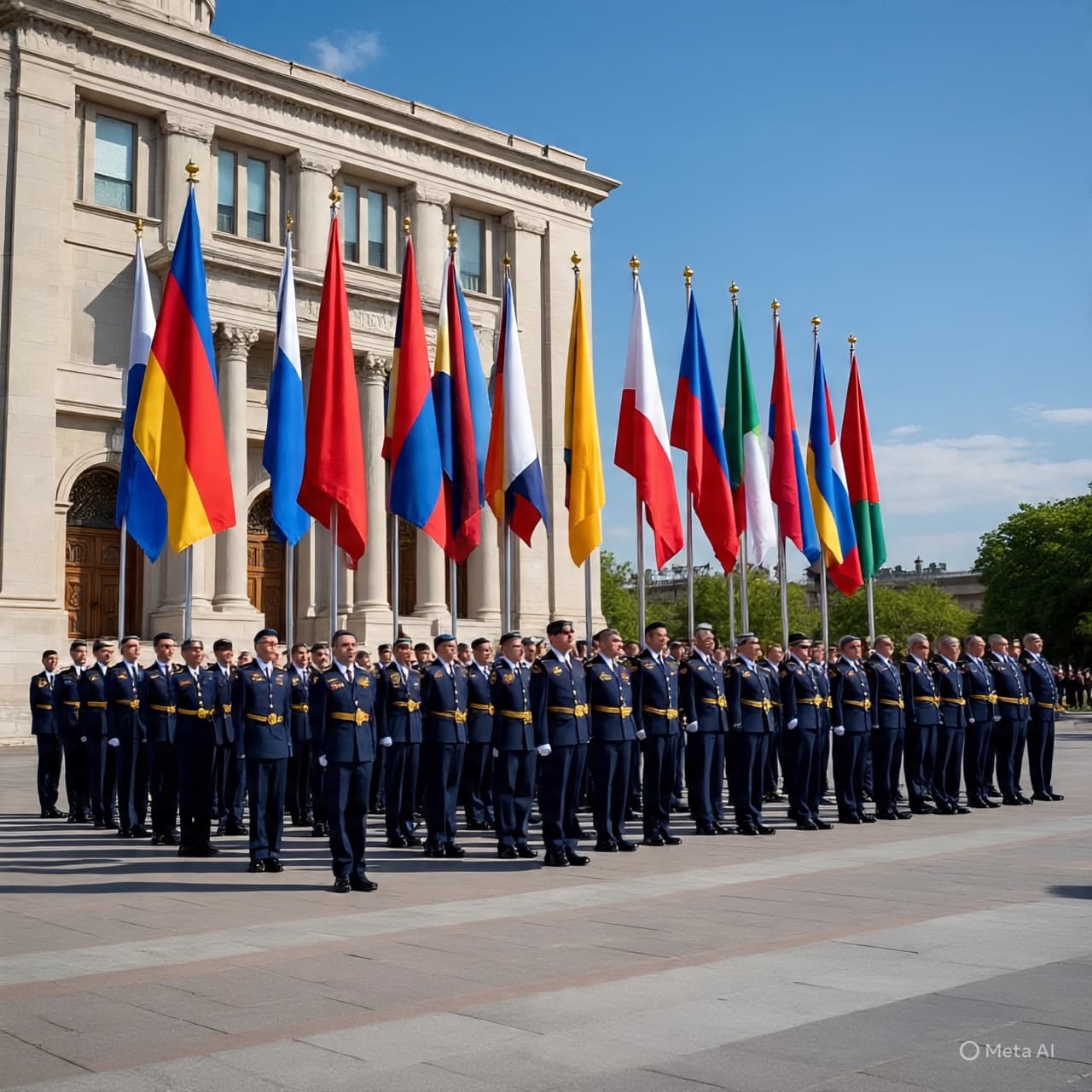
Viewed from the vantage of Yerevan’s wide avenues, the visit is shaped by currents that extend far beyond ceremonial greetings. Vance’s arrival comes as part of a broader effort to advance a peace framework in the South Caucasus and to deepen cooperative ties between Armenia and the United States. He is received with formal welcome, flags aloft, and the measured greetings of diplomacy — gestures that reflect both respect and the delicate balance of international engagement.
The backdrop to this moment is one of careful negotiation. Leaders here have worked to reopen the possibilities of connectivity and peace after years of conflict with neighboring Azerbaijan. Agreements reached in recent months — nurtured in part through U.S. involvement — have sought to reestablish key corridors and affirm fragile hopes for enduring understanding. In that context, this visit carries more than routine significance; it becomes part of a tapestry woven from both collective memory and collective aspiration.
Yet in the heartbeat of the city, daily life continues with its familiar cadence. Cafés open their doors, and the town’s gentle pulse carries on through conversations about bread and business, school and street, each small motion tied to the larger rhythm of place. In such ordinary exchanges lies the essence of a country whose history is lived in the quiet interplay of continuity and change.
From this quiet backdrop, the news emerges into clarity: Vice President J.D. Vance has become the first sitting U.S. official at the level of vice president or president to visit Armenia. During his stay in Yerevan, he has met with Armenian Prime Minister Nikol Pashinyan and signed an agreement to advance negotiations on civil nuclear energy cooperation. The visit comes as part of efforts to support the peace process between Armenia and Azerbaijan and to strengthen economic and strategic ties between Armenia and the United States. Vance is also expected to travel to neighboring Azerbaijan as part of this diplomatic mission.
AI Image Disclaimer
Illustrations were created using AI tools and serve as conceptual representations.
Sources (Media Names Only)
Associated Press Reuters PBS NewsHour WLWT Daily Sabah
Published by Banx Network. This article is part of the Banx decentralized media programme, powered by the BXE token on the XRP Ledger.