

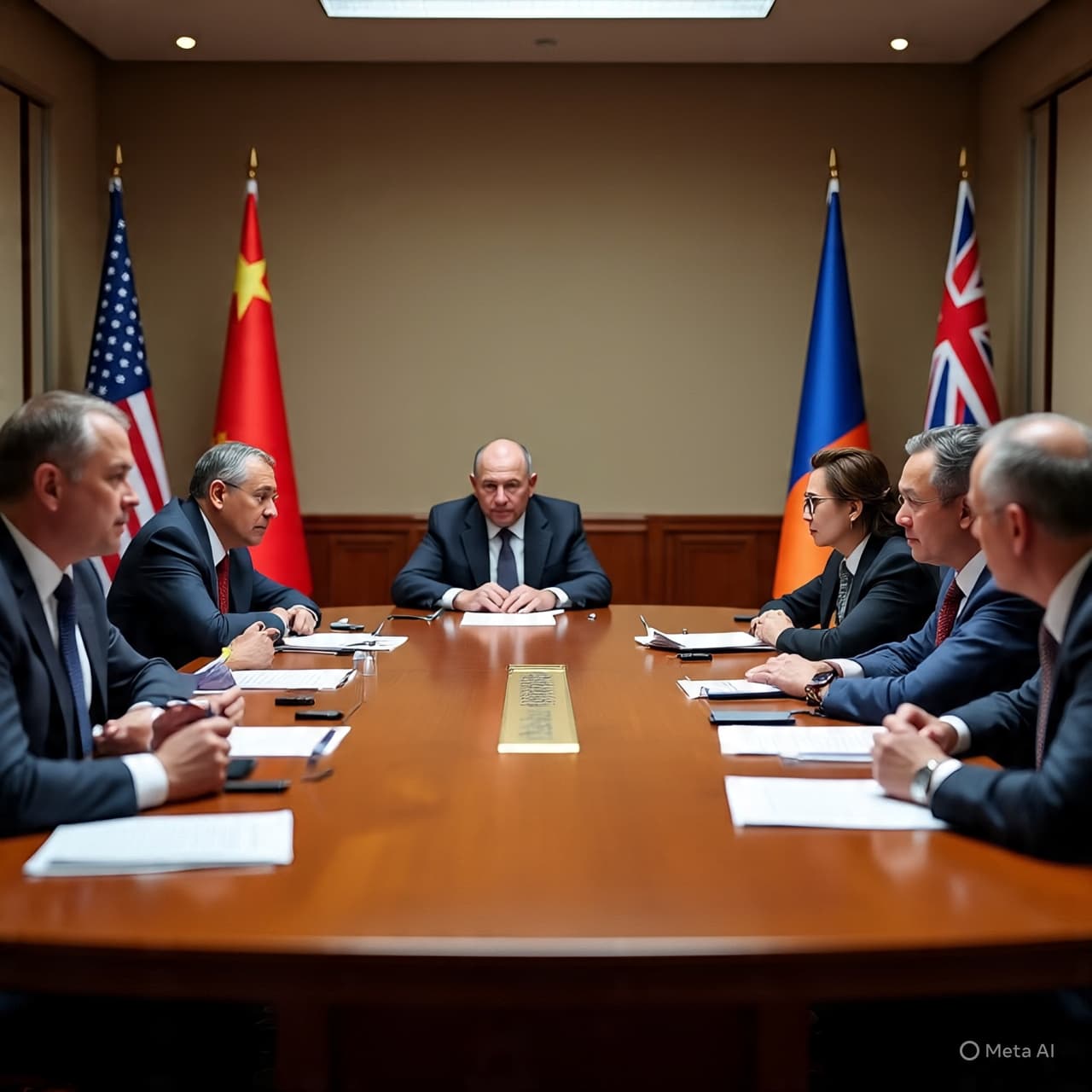
Key Highlights
- Diplomatic Efforts:U.S. Vice President J.D. Vance embarks on peace talks with Iran.
- Skepticism Lingers:Iranian officials express doubts about the negotiations' effectiveness.
- Regional Impact:Ongoing conflict affects economic routes and civilian stability.
The world often holds its breath during moments of potential conflict resolution, where diplomacy acts as a fragile thread stretched across uncertainty. As U.S. Vice President J.D. Vance departs for renewed peace talks with Iran, the atmosphere is charged with both hope and skepticism. Recent statements from Iranian officials have introduced fresh doubts into an already complex equation, suggesting that while dialogue is underway, confidence remains elusive.
Iranian representatives have raised questions about the intentions and structure of the upcoming negotiations. Concerns have emerged regarding whether the discussions will address core grievances or merely revisit familiar positions without yielding meaningful progress. This skepticism underscores the deep fractures that persist beneath the surface of diplomatic interactions.
The timing of these doubts is particularly significant. Diplomatic efforts often rely on momentum, and public uncertainty can hinder that momentum before it fully takes shape. Analysts note that signaling hesitation ahead of talks can serve as both a negotiating tactic and a reflection of genuine mistrust. Such dynamics complicate the already intricate landscape of international relations.
International observers are closely monitoring the broader regional context, as the ongoing conflict has already disrupted economic routes, security alliances, and civilian stability across multiple countries. Any delay or derailment in talks could exacerbate these consequences, further complicating an already volatile situation.
From the U.S. perspective, Vance's trip represents an attempt to stabilize relations not only with Iran but also to reassure regional partners. Officials have emphasized the importance of dialogue as a means to prevent escalation, even as challenges persist. The stakes are high, and the outcome of these talks could have far-reaching implications for the region.
Experts suggest that the success of these negotiations will depend less on public statements and more on the willingness of both sides to engage beyond mere rhetoric. Trust, often built slowly and quietly, cannot be rushed through formal meetings alone. The complexities of the issues at hand require a nuanced approach that acknowledges the uncertainties involved.
Despite the challenges, diplomacy has long operated in imperfect conditions. Doubt does not necessarily signal failure; rather, it can reveal the complexity of the issues at hand. In many cases, the path to agreement begins with acknowledging uncertainty and working through it collaboratively.
As the talks approach, the world watches not just for agreements but for signs of genuine engagement. Whether these discussions will lead to tangible progress remains unclear, but the effort itself reflects an enduring belief in dialogue over confrontation. The coming days will be critical in determining whether the fragile thread of diplomacy can hold firm against the pressures of mistrust and skepticism.
Published by Banx Network. This article is part of the Banx decentralized media programme, powered by the BXE token on the XRP Ledger.




