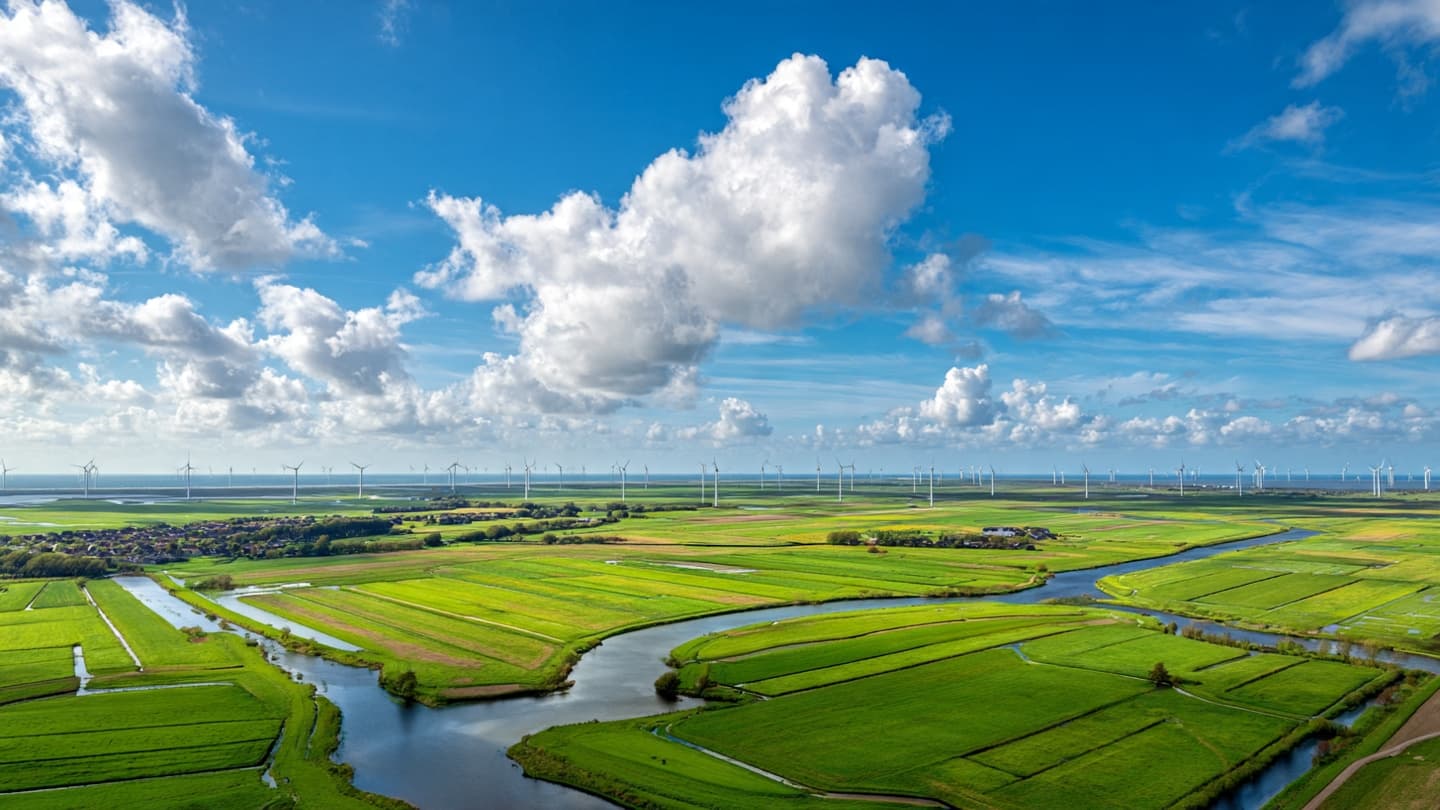
From a distance, the Dutch landscape can appear almost still: flat fields, narrow waterways and wind turbines turning slowly against the horizon. Beneath that calm surface, however, the country's energy system is changing rapidly.
The Netherlands has continued expanding renewable electricity, particularly wind and solar power, while facing the challenge of integrating more variable generation into its electricity network. The growth is creating new demands for transmission infrastructure, storage and flexible energy consumption.
Offshore wind has become an important part of the country's long-term energy strategy. The North Sea provides large areas where turbines can generate electricity without occupying valuable land, although construction and maintenance in marine environments remain technically demanding.
Solar power adds another dimension. Panels can be installed on rooftops, industrial sites and other existing surfaces, allowing electricity generation to become increasingly distributed across the country.
The difficulty emerges when production and consumption do not occur at the same moment. A windy afternoon can produce abundant electricity, while a calm evening may leave the system needing other sources of power. That difference makes flexibility increasingly important.
Battery storage can help by absorbing electricity during periods of high production and releasing it later. Other technologies, including hydrogen and flexible industrial demand, are also being examined as ways of balancing the system.
The Dutch electricity grid consequently faces growing pressure. New renewable projects require connections, while factories, data centers and electrification of transport add new sources of demand. Building infrastructure quickly enough has become an important part of the transition.
The Netherlands is not alone in facing this problem. Across Europe, renewable-energy development is changing the traditional relationship between power generation and consumption. Electricity systems designed around large centralized plants are gradually accommodating more distributed and weather-dependent sources.
For Dutch communities, the transition can be seen in familiar places. New substations, cables, turbines and solar installations become part of landscapes that were once shaped primarily by agriculture and water management.
The transformation is therefore both technological and physical. Clean electricity requires not only turbines and solar panels, but also cables, storage facilities, control systems and careful planning.
The Netherlands' energy transition is continuing along that complicated path. Wind and sunlight provide the raw energy, but infrastructure determines whether that energy can reliably reach homes, businesses and industry. In the flat Dutch landscape, the future of electricity is increasingly being built both above the fields and beneath them.
SEO-friendly Slug netherlands-renewable-energy-grid-storage-wind-solar-2026
Hashtags #Netherlands #RenewableEnergy #WindEnergy #SolarEnergy #Science #Technology #Climate #Energy
Sources Reuters Government of the Netherlands European Commission
Published by Banx Network. This article is part of the Banx decentralized media programme, powered by the BXE token on the XRP Ledger.