There are places just beyond the edge of sight where fragments linger — cast‑off remnants of ancient storms, flotsam at the margin of a tidal sweep. In the microscopic world within and around our own bodies, something not unlike this quietly unfolds. Cells carry with them the detritus of their own making, bits of molecular matter that, by normal standards, might be called waste but which, to the careful eye of science, reveal patterns and shape meaning.
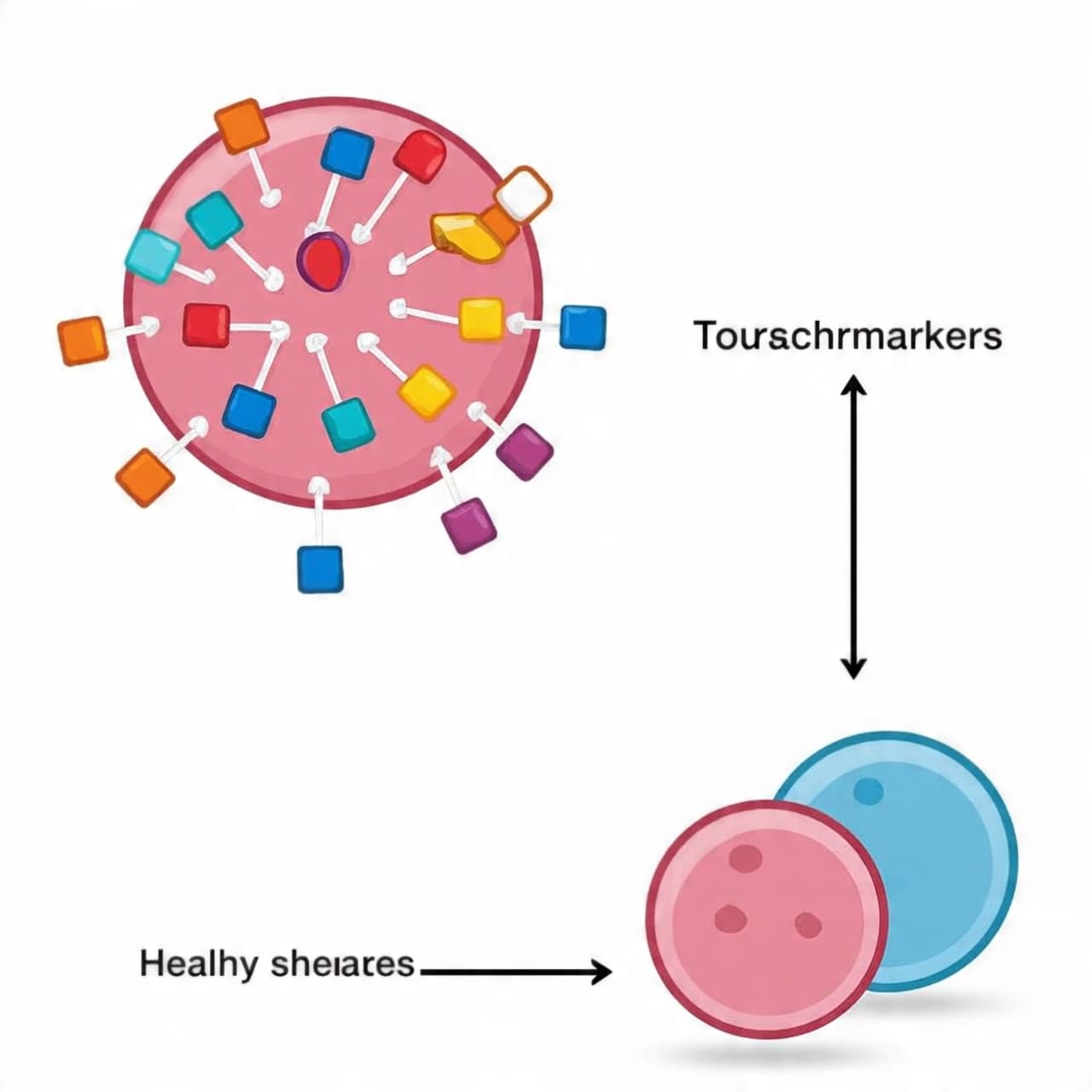
In the rich tapestry of tumor biology, researchers have long observed that cancer cells do not simply proliferate; they transform. Their outer surfaces carry not just the usual molecules of healthy cells but an assortment of modified proteins and shed fragments — what one might think of as “molecular garbage,” a scattering of cellular debris that accrues as tumors evolve. Far from being irrelevant, these refuse‑like markers have caught the attention of scientists who see in them an opportunity: a way for antibody drugs — designed to seek out specific targets — to latch onto tumors with precision and effect.
Modern antibody therapies hinge on the idea of specificity: a drug binds to a particular molecule on the surface of a cancer cell, like a key fitting one lock among many, and delivers a therapeutic effect while sparing the healthy tissues around it. The molecules that make up this cellular debris, abundant on many tumor types yet sparse on normal cells, provide just such a lock, a distinctive pattern that antibodies can recognize and exploit. Emerging research suggests that these discarded molecular pieces — once thought too messy to matter — might in fact serve as highly accessible beacons for drug delivery, simplifying the complex challenge of finding and binding to tumor cells.
This insight connects with a broader understanding in oncology that tumors are more than masses of rogue cells; they are microenvironments rich in unusual biochemistry. Tumor surfaces often express unique glycoproteins, aberrant receptors, and misfolded protein fragments that are the cellular equivalent of ragged flags caught in the wind. Antibody‑drug conjugates (ADCs) — drugs that combine an antibody with a potent cytotoxic agent — have been developed precisely to harness this kind of distinctiveness, delivering their payload only to cells that bear certain surface markers. The existence of molecular “garbage” as a potential target adds another dimension to these strategies: where once scientists sought specific antigens, they now consider clusters of discarded molecules as legitimate points of therapeutic contact.
In laboratories and clinics, this research emerges not as a torrent of clamorous breakthroughs but as a gradual weaving of nuance and possibility. The promise lies in designing antibody drugs that can recognize patterns of cellular waste unique to tumors — patterns that might be common across different cancer types. Such an approach could open avenues to therapies that are both more effective and less toxic than conventional chemotherapy, reaching tumors with the precision of a guided arrow and releasing cytotoxic agents only where they are meant to act.
At the same time, the intricate biology behind these targets reminds us of how much remains to be understood. Tumor heterogeneity — the fact that different cancers, and even different regions of the same tumor, present distinct molecular landscapes — poses a challenge to any one‑size‑fits‑all strategy. Still, by turning attention toward the refuse of cellular processes, scientists are discovering that what was once overlooked may become central to next‑generation therapies.
In factual terms, recent research highlights that molecules shed or presented on the surface of tumors — sometimes described by researchers as “molecular garbage” — can act as accessible targets for antibody and antibody‑drug conjugate therapies. These findings contribute to ongoing efforts to develop precision oncology treatments that bind to tumor‑specific markers and deliver therapeutic agents directly to malignant cells, potentially improving efficacy and reducing side effects compared to traditional approaches.
AI Image Disclaimer: Visuals are AI‑generated and serve as conceptual representations.
Sources: Cancer Health reporting, oncology biomarker research summaries.
Published by Banx Network. This article is part of the Banx decentralized media programme, powered by the BXE token on the XRP Ledger.