There are places in the universe where light arrives differently—dimmed, reddened, stretched across time. Around small stars, the kind that glow quietly for billions of years, planets gather close, circling tightly as if drawn inward by both gravity and necessity. In such places, distance is reduced, but exposure is not.
It is here, in these narrow orbits around M-dwarfs, that a quieter story unfolds. Not one of sudden destruction, but of gradual thinning—a slow departure of air from worlds that might otherwise resemble something familiar.
Recent research has turned toward these Mars-like planets, rocky and modest in size, carrying atmospheres that are already delicate by planetary standards. When placed near an M-dwarf star, even one considered relatively calm like Barnard’s Star, their environments change in ways that are not immediately visible but steadily consequential. Simulations suggest that such a world could lose an atmosphere comparable to modern Mars in as little as a few hundred thousand years, and even a thicker, Earth-like atmosphere might erode within tens of millions of years.
The mechanism is not singular. It is a layering of effects, each subtle on its own. M-dwarf stars, though faint in visible light, emit proportionally strong X-ray and ultraviolet radiation. Their stellar winds—streams of charged particles—press continuously against nearby planets. Over time, this energy heats upper atmospheres, accelerates particles, and allows gases to escape into space.
For a planet like Mars, the vulnerability is already known. Its low gravity and lack of a strong magnetic field have allowed solar wind to erode its atmosphere over billions of years, leaving behind a colder, thinner world. But around an M-dwarf, the same processes are compressed, intensified by proximity. What took Mars eons could, under these conditions, unfold far more quickly.
There is also the question of scale. The habitable zone—the region where temperatures might allow liquid water—lies much closer to these small stars than it does around a star like our Sun. Planets must orbit tightly to receive enough warmth, placing them directly within the reach of stronger radiation and denser stellar winds. The balance becomes difficult to maintain: close enough for warmth, yet exposed enough to lose the very atmosphere that would make that warmth meaningful.
Observations and models increasingly suggest that this tension is not rare but common. Mars-like planets near M-dwarfs may struggle to retain significant atmospheres over long periods, especially if they lack protective magnetic fields or sufficient mass. Even more massive planets can experience atmospheric escape, though on longer timescales or through different pathways.
And yet, the picture is not entirely fixed. Some theories propose that atmospheres might be replenished—through volcanic outgassing, impacts, or internal processes that release gases back to the surface. Others suggest that certain compositions or planetary conditions could slow the loss. These possibilities remain open, shaping an ongoing conversation rather than a final conclusion.
What emerges is a more fragile vision of habitability. Not a simple zone defined by distance and temperature, but a shifting balance of forces—radiation, gravity, magnetism, and time. A planet may sit within the right orbit, under the right light, and still find its air slowly slipping away.
Mars-like planets orbiting M-dwarf stars may lose their atmospheres relatively quickly due to strong radiation and stellar winds, with some models suggesting loss timescales ranging from hundreds of thousands to tens of millions of years. These findings highlight challenges for long-term habitability around such stars, though research into atmospheric retention and replenishment continues.
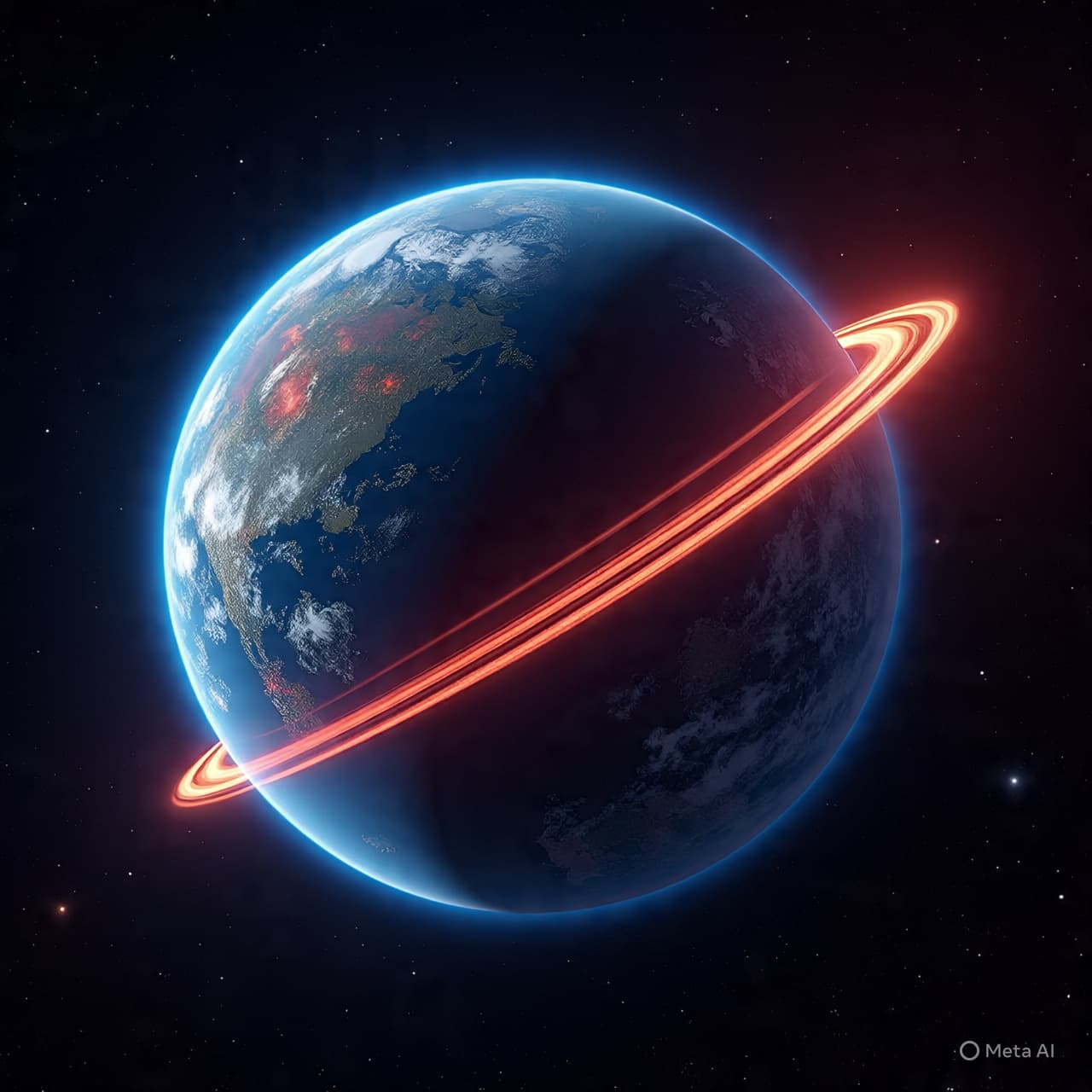
AI Image Disclaimer
Visuals are AI-generated and serve as conceptual representations.
Sources
Universe Today ResearchGate Astrobiology Magazine Nature Astronomy Live Science
Published by Banx Network. This article is part of the Banx decentralized media programme, powered by the BXE token on the XRP Ledger.