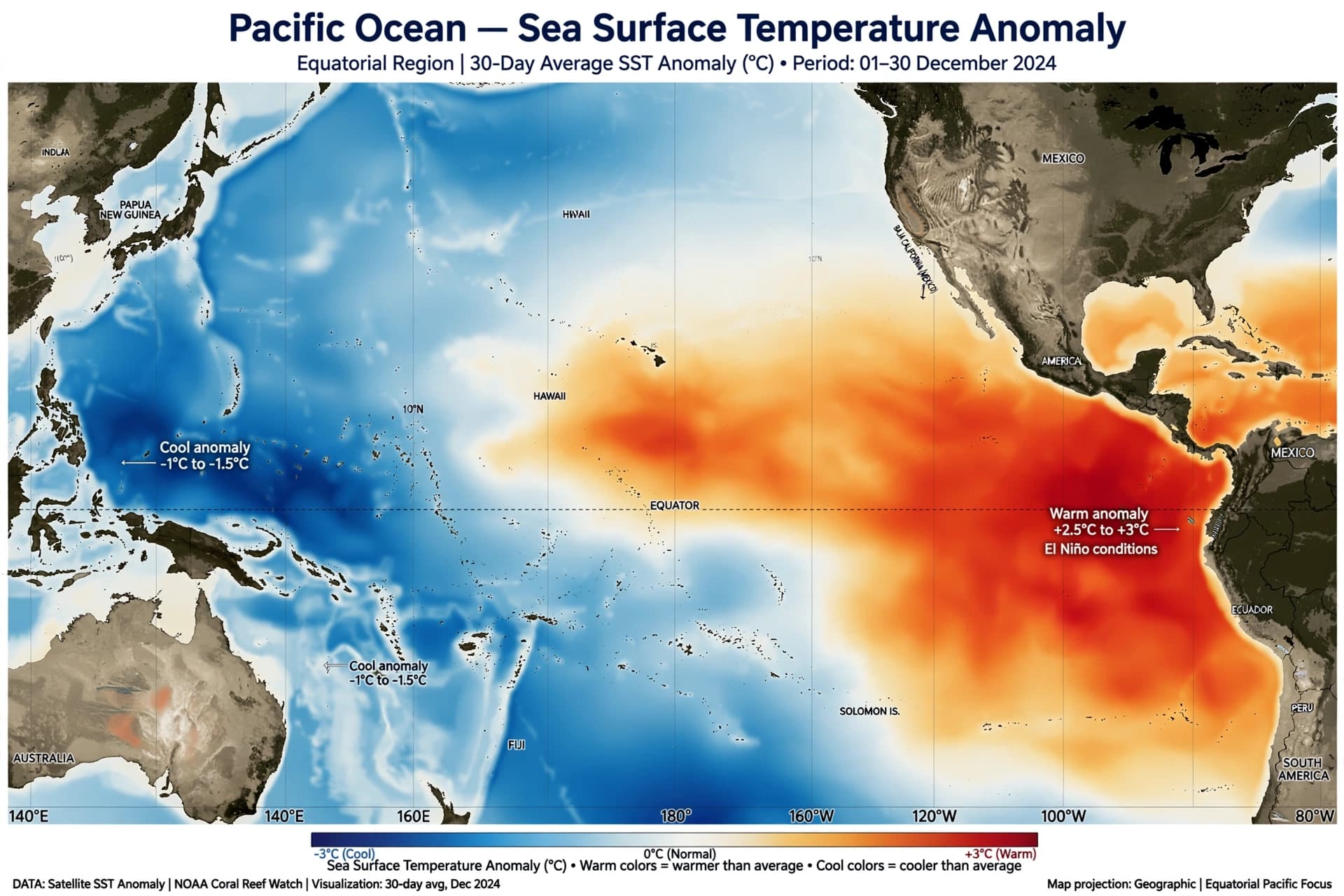
The Earth’s climate system does not change in isolation; it moves as an interconnected whole. Oceans, atmosphere, and ice sheets interact continuously, creating patterns that shape life across the planet. Recently, scientists have been paying closer attention to one of these systems—the global circulation of ocean currents.
Research highlighted in journals such as Nature Climate Change and reports from NOAA indicate that key components of ocean circulation, particularly the Atlantic Meridional Overturning Circulation (AMOC), may be weakening. This system plays a crucial role in transporting warm water from the tropics toward the North Atlantic.
A slowdown in this circulation could have significant regional impacts. Europe, for example, benefits from relatively mild temperatures due to warm ocean currents. If those currents weaken, colder conditions could emerge despite broader global warming trends.
Scientists emphasize that this does not mean Earth is heading toward an immediate “Snowball Earth” scenario. That term refers to extreme periods in geological history when ice covered much of the planet. Current research does not predict such an outcome in the near future.
However, the comparison is used to understand how sensitive the climate system can be. Studies suggest that large disruptions in ocean circulation could trigger feedback mechanisms—such as expanding ice coverage—that amplify cooling in certain regions.
One factor contributing to these changes is the influx of freshwater from melting ice sheets. As glaciers and polar ice melt, they reduce the salinity of ocean water, which can interfere with the sinking motion that drives circulation systems like the AMOC.
NASA Climate and Scientific American reports note that climate models continue to improve, but uncertainties remain. The timing, scale, and exact consequences of circulation changes are still being studied. What is clear is that these systems are not static.
The broader implication is complexity. Climate change is not a single-direction process; it involves multiple interacting forces that can produce uneven outcomes across the globe. Some regions may warm faster, while others experience temporary cooling or increased variability.
For policymakers and researchers, the focus remains on monitoring and understanding these shifts. Long-term observations and improved modeling are essential to anticipate potential disruptions and adapt accordingly.
In this evolving picture, the oceans remain both a stabilizing force and a source of uncertainty. Their quiet movements continue to shape the future of the planet—often in ways that are only gradually coming into view.
AI Image Disclaimer Visuals are created with AI tools and are not real photographs.
Source Check Nature Climate Change NOAA NASA Climate The Guardian Scientific American
Published by Banx Network. This article is part of the Banx decentralized media programme, powered by the BXE token on the XRP Ledger.