The rhythm of international politics sometimes resembles the tide. It rises with urgency, retreats with caution, and leaves behind questions in the sand. In moments of conflict, the world often watches not only those who move forward, but also those who choose to stand still.
Across Europe, where memories of past wars remain part of the continent’s quiet consciousness, decisions about military involvement are rarely made lightly. Each statement, each pause, carries echoes of history and the weight of future consequences.
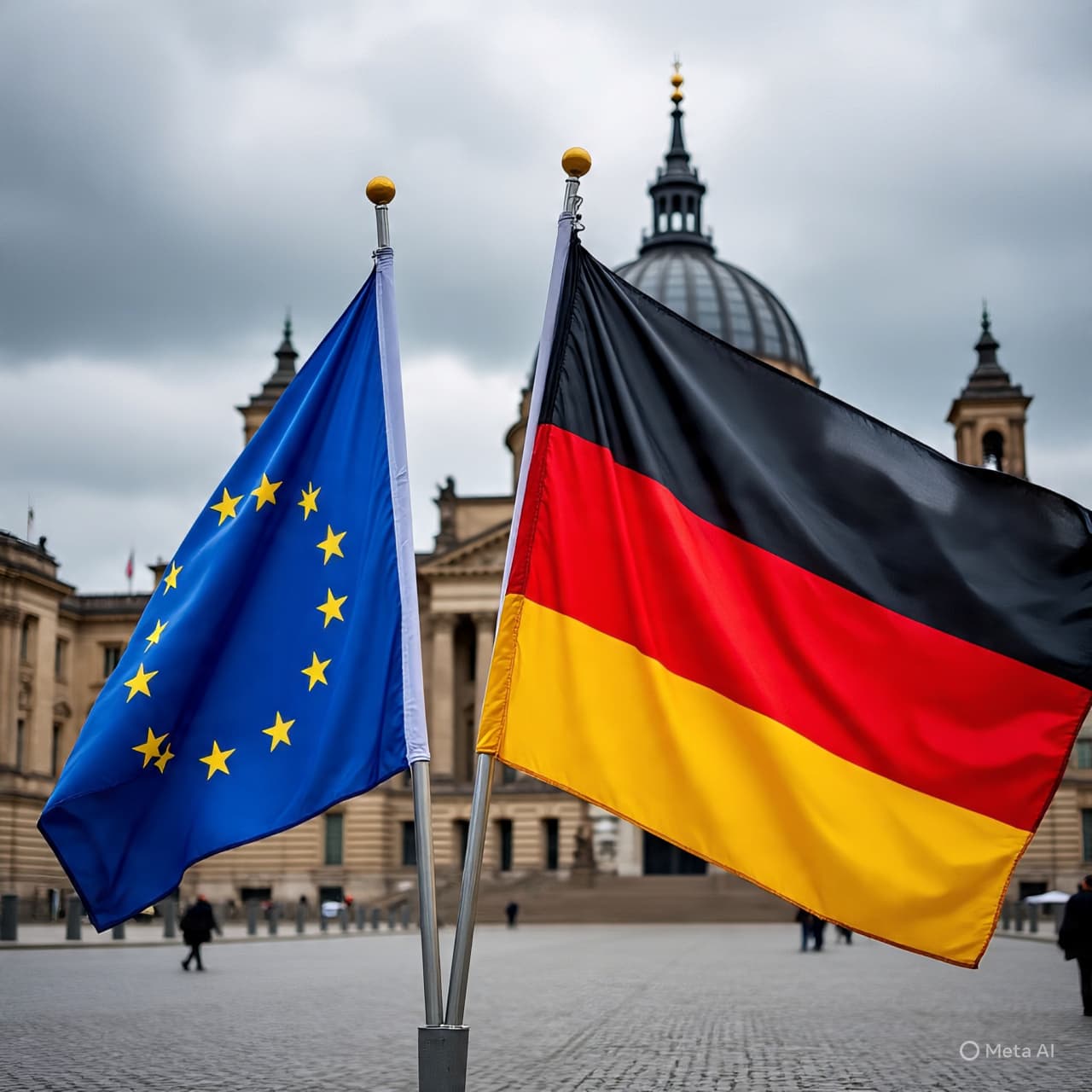
This atmosphere now surrounds Germany’s response to the expanding war involving Iran. As tensions grow in the Middle East and military actions widen, Berlin has made its position clear: Germany will not take part in the conflict with military force.
German Chancellor Friedrich Merz stated that the country would not participate in the ongoing war involving the United States and Israel against Iran. Speaking in Berlin, Merz emphasized that such involvement would require a clear mandate under international frameworks such as the United Nations, the European Union, or NATO—conditions that currently do not exist. Without those legal and political foundations, Germany considers military participation inappropriate.
The German government has also noted that the military campaign was initiated without consultation with Berlin. In that sense, officials have suggested that the conflict does not fall under collective defense obligations that would normally guide NATO members toward coordinated action.
Germany’s defense leadership has reinforced the same message. Defense Minister Boris Pistorius stated that Germany seeks diplomatic solutions rather than expanded military deployments in the region. He emphasized that sending European naval forces or additional military assets to the conflict would not necessarily contribute to stability and might instead deepen the confrontation.
Across Europe, the reaction has been similarly cautious. Several countries have hesitated to support expanded military operations connected to the conflict. Instead, many leaders have spoken of the need for diplomacy, dialogue, and a clearer international framework before any escalation of military involvement.
The hesitation reflects deeper concerns about where the conflict could lead. European officials have warned that prolonged war in the region could destabilize energy supplies, disrupt shipping routes, and trigger broader humanitarian consequences. The Strait of Hormuz, a narrow waterway through which a significant portion of the world’s oil flows, remains a central point of global anxiety.
Germany has expressed particular concern that the war currently lacks a clear strategy for resolution. Officials in Berlin have warned that without a defined path toward peace, military escalation risks becoming a conflict without a foreseeable end.
These concerns echo a broader European fear: that instability in the Middle East often spreads beyond borders, influencing energy markets, migration patterns, and security conditions far beyond the region itself.
For now, Germany’s stance remains measured but firm. Berlin continues to support diplomatic efforts aimed at reducing tensions while declining any direct military role in the war. The country’s leaders say their priority is preventing further escalation while encouraging international dialogue.
In the unfolding story of this conflict, Germany’s decision adds another voice to the complex chorus of global responses—one that leans toward restraint while the wider world continues to search for a path away from war.
AI Image Disclaimer Visuals are created with AI tools and are not real photographs.
Source Check Credible sources detected:
Reuters The Guardian Al Jazeera PBS NewsHour / Associated Press Anadolu Agency
Published by Banx Network. This article is part of the Banx decentralized media programme, powered by the BXE token on the XRP Ledger.