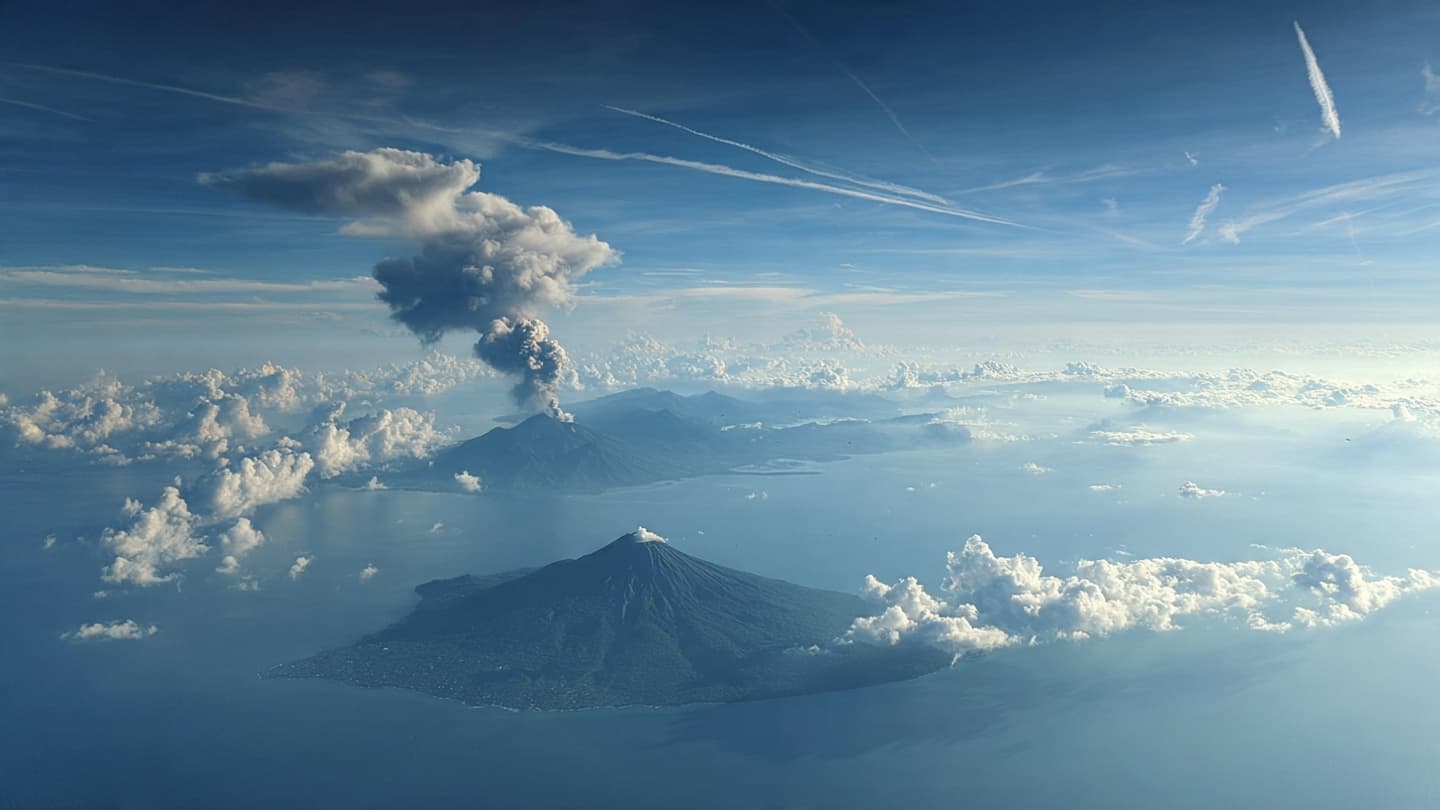
Morning returned gradually to Indonesia’s airports, as if the country’s air routes were waiting for the sky to settle before beginning again. Around Jakarta, the familiar rhythm of arrivals and departures resumed after volcanic ash from Anak Krakatau had interrupted flights and temporarily closed several airports. The volcano, standing in the Sunda Strait between Java and Sumatra, had once again placed its presence into the ordinary movement of people and aircraft.
Indonesia reopened Soekarno-Hatta International Airport near Jakarta together with four other airports after conditions improved and the ash cloud cleared enough for operations to restart. The reopening offered some relief to passengers whose journeys had been delayed or cancelled, although aviation authorities continued monitoring the situation because further volcanic activity remained possible.
The disruption had begun several days earlier, when Anak Krakatau erupted and volcanic ash moved across aviation routes. On Sunday, eight airports suspended operations, affecting hundreds of flights. The interruption extended beyond the airport terminals themselves, reaching passengers, airline schedules and the wider network connecting Indonesian cities.
By Monday, the scale of the disruption had become more visible. More than 240 domestic and international flights were cancelled or delayed, according to Jakarta’s airport authorities, affecting nearly 30,000 passengers that morning alone. For travelers, the ash was not simply a distant geological event; it became a sudden pause in journeys that had already been planned around schedules and connections.
The reopening, however, did not immediately erase every complication. Authorities still needed to inspect aircraft that had remained at Soekarno-Hatta during the closure before they could safely return to service. Reuters reported that 178 aircraft had remained at the airport, creating another practical step in the process of restoring normal operations.
Anak Krakatau has long occupied a distinctive place in Indonesia’s volcanic landscape. The volcano sits in the Sunda Strait, where the geography of Java and Sumatra meets one of the world’s most active tectonic regions. Indonesia lies along the Pacific Ring of Fire and has more than 100 active volcanoes, making volcanic monitoring a continuous part of national life.
For aviation authorities, the episode also illustrates how quickly volcanic activity can cross from the landscape into modern transportation systems. Ash particles can create serious risks for aircraft engines and visibility, which is why airports may be closed even when an eruption occurs some distance from a runway. The decision to reopen therefore depends not only on the volcano itself but also on changing atmospheric and operational conditions.
For now, flights are returning and airport activity is moving toward a more familiar rhythm. Authorities continue to monitor Anak Krakatau for further eruptions while airlines work through the effects of the earlier cancellations and delays. Across Jakarta and other affected airports, the immediate task is straightforward: restore schedules carefully while keeping watch on the changing sky.
AI Image Disclaimer
Visuals are AI-generated conceptual representations and should not be interpreted as real photographs of the eruption or airport operations.
Sources
Reuters Al Jazeera
Published by Banx Network. This article is part of the Banx decentralized media programme, powered by the BXE token on the XRP Ledger.