
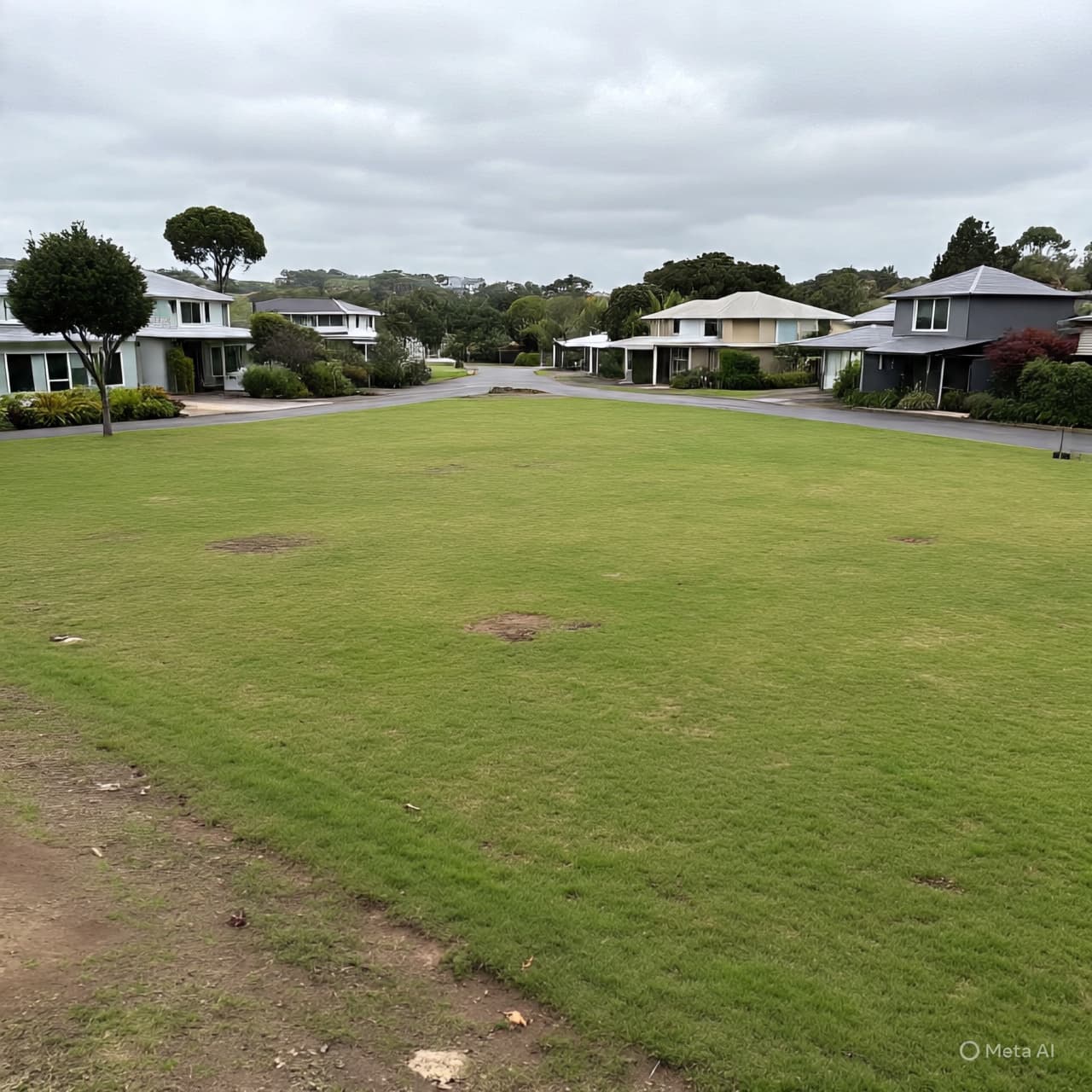
In the quieter corners of Auckland’s suburbs, where patches of grass sit between rows of modest homes and the wind carries the scent of the sea, land is rarely just land. It holds memory, potential, and in a city long defined by rising house prices, a certain gravity. So when a parcel of vacant ground is listed for sale at a fraction of its official valuation, it does not pass unnoticed.
Recently, Kāinga Ora, New Zealand’s public housing agency, listed a piece of vacant land for roughly a third of its government valuation, prompting sharp reactions from members of the public and local observers. The agency, responsible for managing and developing state housing assets, has been undertaking a broader review of its property portfolio — a process that includes selling sites deemed surplus to requirements.
The listing price, significantly below the most recent valuation on record, sparked frustration among some community members, one describing the move as “disgusting” in public commentary. The sentiment reflects a wider tension in Auckland’s property landscape, where affordability remains a persistent concern and public assets carry symbolic weight.
Kāinga Ora has explained that government valuations are not always aligned with market conditions at the time of sale. Official valuations are often conducted periodically and may not reflect shifts in local demand, zoning constraints, infrastructure costs, or the practical realities of developing a site. In some cases, agencies price land to ensure a sale within a defined timeframe, particularly if holding costs or development feasibility have changed.
The property in question is understood to be undeveloped and not currently used for state housing. Under its portfolio optimization strategy, Kāinga Ora has been divesting certain properties while focusing resources on higher-density housing projects in areas where infrastructure and community services can support them. The agency has said proceeds from such sales are typically redirected toward funding new builds and upgrading existing homes.
Yet the optics remain sensitive. In a country where housing affordability has shaped political debate for more than a decade, any sale of public land invites scrutiny. Auckland’s property market has cooled in recent years after a prolonged period of rapid growth, influenced by higher interest rates and tighter lending conditions. In such an environment, valuations set during earlier peaks can appear detached from current transaction prices.
Urban economists note that valuation discrepancies are not uncommon, particularly when properties face development limitations or require significant investment before construction can begin. A vacant lot may carry a theoretical value based on zoning potential, but actual buyers weigh immediate costs, financing conditions, and future returns.
Still, the reaction speaks to something deeper than arithmetic. Public housing agencies occupy a delicate position: they are custodians of assets funded by taxpayers and stewards of social policy objectives. Decisions about land — whether to build, hold, or sell — ripple beyond balance sheets into questions of trust and stewardship.
For Kāinga Ora, the sale is one element in a larger recalibration of its strategy. The agency continues to face financial pressures tied to large-scale construction programs and maintenance obligations. Balancing fiscal responsibility with housing need remains a central challenge.
As the listing moves through the market, the vacant land remains unchanged — grass bending in the wind, boundaries marked but unbuilt. Around it, Auckland’s housing conversation continues, shaped by price cycles, policy adjustments, and public expectation. Whether the final sale price affirms or revises the listing will become a data point in that wider story.
In the end, the debate is less about a single plot than about how value is defined — by valuation rolls, by market appetite, or by the aspirations attached to public land. On that quiet patch of ground, those definitions now converge.
Published by Banx Network. This article is part of the Banx decentralized media programme, powered by the BXE token on the XRP Ledger.
.jpg&w=3840&q=75 "Blake Lively Awarded $400,000 in Legal Fees After Justin Baldoni Lawsuit Dismissed")

