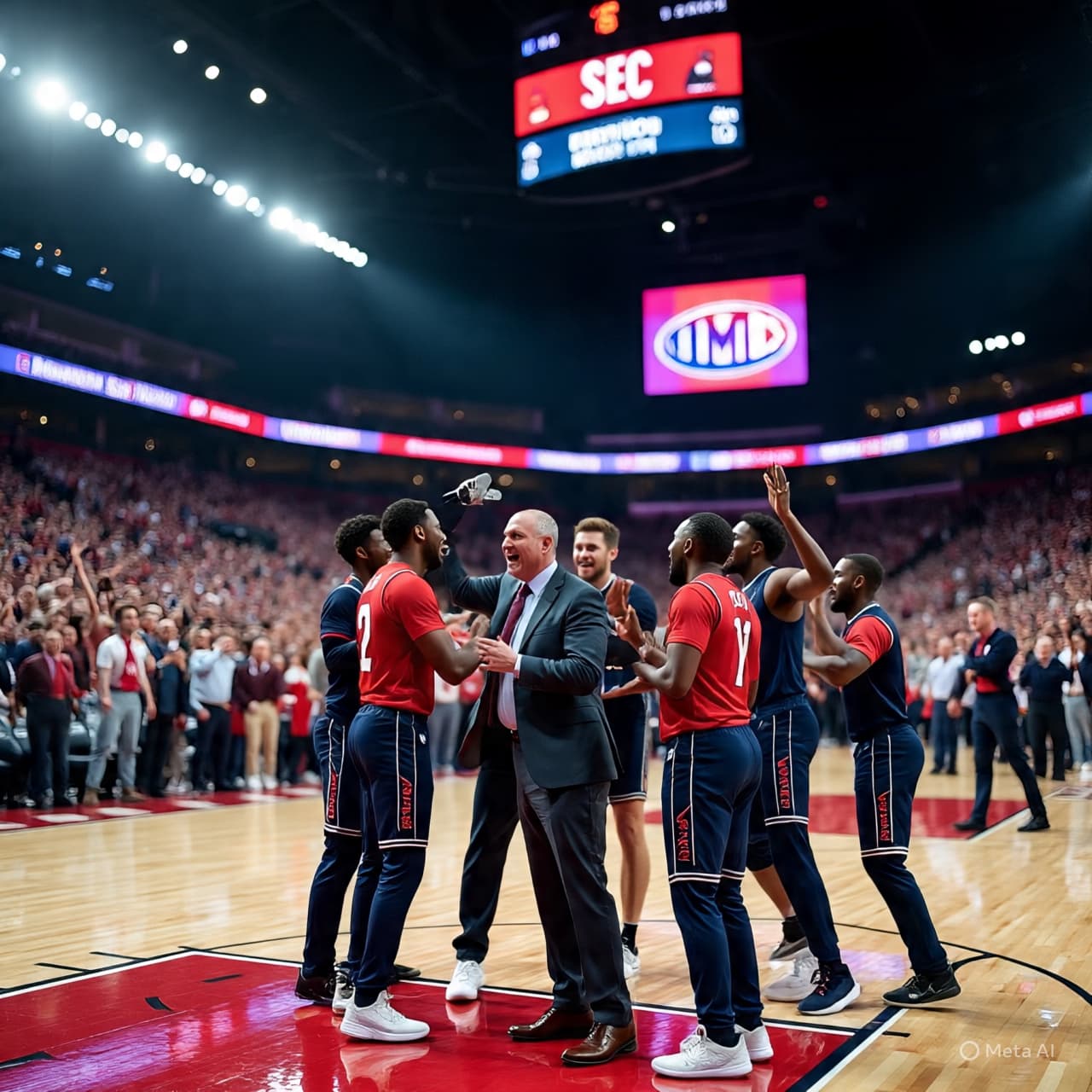
In sports, there are moments that feel less like battles and more like changes in a story’s rhythm — when unexpected twists seem to rearrange the narrative just as we thought we understood it. The arc of a season, like a long winding road, can feel predetermined until suddenly it isn’t, and a week of play brings new possibilities into view.
This week, that sense of altered paths has become central to college basketball’s growing national conversation.
At the South Eastern Conference tournament in Nashville, a No. 15 seed that seemed destined for forgettable loss has instead captured attention and admiration. Ole Miss, long written off after a difficult regular season, has won three games in three days, each time carving out leads and holding them, most recently outlasting Alabama 80‑79 as the Rebels continued their improbable run. They haven’t trailed at any point in the tournament so far, and the hopes of reaching the NCAA Tournament — once essentially dismissed — have suddenly become very much alive.
Part of what makes this story so reflective of March’s larger rhythms is the contrast between beginnings and possibilities. A team that lost most of its final regular‑season games entered the tournament with 300‑to‑1 odds of winning the conference. Yet here they are, an embodiment of the classic “Cinderella” spirit that makes bracketology and postseason play such a rich tableau for fans and analysts alike.
There are winners beyond Ole Miss as well. In other quarterfinal action, top seeds in the Atlantic 10 such as Saint Louis and VCU advanced, keeping alive their own hopes of securing strong at‑large bids. Their persistence in conference play reminds us how threads of stability and momentum can weave through a chaotic week of tournament basketball.
But for every rise, there is also a slip. Auburn, a program with postseason aspirations, now finds itself on the wrong side of the bubble after a loss in the SEC quarters. Their record and lack of recent quality wins have left the Tigers hoping for help rather than shaping their own fate. In this way, the tournament serves as a sobering reminder of how quickly hopes can shift in collegiate sports, where a single game can reshape a season’s narrative.
Other programs, too, have seen fortunes altered in small but meaningful ways. Oklahoma, for instance, slipped back into the “First Four Out” category in the projected brackets after a narrow defeat. Illinois, meanwhile, lost its advantageous seed position after falling in overtime, a reminder that even closely contested games can have outsized impacts on bracket projections. Purdue, conversely, found solace in a decisive win that placed them back in the conversation for a No. 2 seed, highlighting how confidence — and a tournament victory — can realign external expectations.
Taken together, these developments reflect the delicate interplay between performance and perception. March’s bracket conversations are never purely analytical; they are shaped by momentum, emotion, and the quietly human thrill of seeing underdogs rise and favorites questioned.
As conference tournaments continue to unfold, teams and fans alike are reminded that the path to the NCAA tournament — and to March Madness’s broader lore — isn’t fixed until the selection committee’s final word. Some teams surge forward with spirited play and renewed belief. Others watch from the margins, hoping that a favorable turn might yet arrive.
AI Image Disclaimer Illustrations were produced with AI and serve as conceptual depictions.
Source Check CBS Sports Reuters ESPN (context known but not directly cited) NCAA/Bracketology analysis (in CBS reporting) SEC Tournament updates
Published by Banx Network. This article is part of the Banx decentralized media programme, powered by the BXE token on the XRP Ledger.