Oil has a way of changing the geography around it. A field beneath rock can reshape roads, pipelines, ports, investment plans, and the movement of companies long before the first barrel reaches a tanker. In Argentina, that changing geography can now be seen in the relationship between the offshore Sea Lion project and the increasingly important Vaca Muerta shale formation.
Several international oil-service companies have recently said they do not plan to participate in Sea Lion, an offshore exploration and development project in the South Atlantic. Among them are SLB, Halliburton, and Baker Hughes, according to the Buenos Aires Herald.
The companies’ positions have placed renewed attention on Vaca Muerta, Argentina’s large shale oil and gas formation in Neuquén Province. The field has become one of the country’s most important energy-development areas and has attracted major international service providers and producers.
For global oil-service companies, Vaca Muerta represents an established commercial environment rather than an entirely new frontier. Production infrastructure, drilling activity, pipelines, export plans, and a growing network of suppliers have gradually created an ecosystem around the formation.
That commercial ecosystem matters because large energy companies rarely make investment decisions around a single project in isolation. Equipment, engineering capacity, specialized personnel, drilling technology, transportation, and long-term contracts all form part of the calculation.
Recent developments have therefore placed greater attention on the economic weight of Vaca Muerta. The field is being connected to expanding transportation infrastructure, including the Vaca Muerta Oil Sur project, which is intended to increase Argentina’s capacity to move crude toward export terminals on the Atlantic coast.
The contrast between an established shale basin and an offshore development is also important from an investment perspective. Vaca Muerta already has producing wells and an expanding network of supporting infrastructure, while Sea Lion remains an offshore project whose development requires a different combination of technology, vessels, services, and long-term commitments.
Several companies have publicly clarified their positions regarding participation in Sea Lion. The Buenos Aires Herald reported that SLB, Halliburton, and Baker Hughes said they would not be involved, while industry reports have identified additional service companies making similar statements.
For Argentina’s broader energy industry, the commercial significance lies in where specialized companies choose to deploy capital, equipment, and technical expertise. Vaca Muerta’s existing scale gives it a strong position in that competition for industrial resources.
The story is therefore not simply about one offshore field or one shale formation. It reflects a wider movement in Argentina’s energy sector, where infrastructure, production capacity, export routes, and corporate strategy increasingly intersect. As the country expands its oil industry, Vaca Muerta continues to sit near the center of that evolving map, while other projects wait to determine their own place within it.
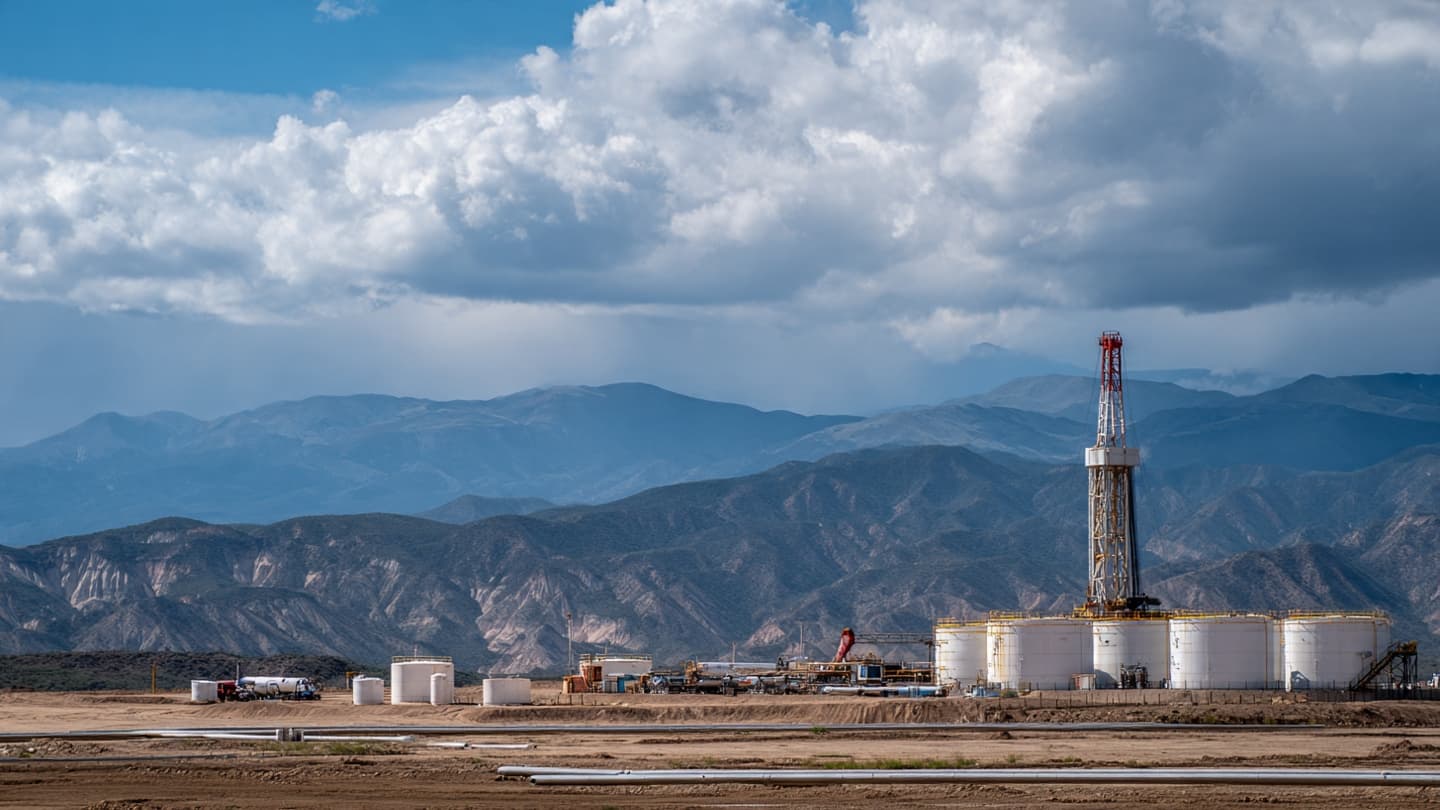
AI Image Disclaimer These visuals were created using AI as conceptual illustrations of Argentina’s energy infrastructure and should not be interpreted as photographs of actual Sea Lion operations or Vaca Muerta facilities.
Published by Banx Network. This article is part of the Banx decentralized media programme, powered by the BXE token on the XRP Ledger.