Screens rarely announce their evolution. They simply arrive brighter, calmer, more precise than before, asking the user to notice only after hours of use. Huawei’s reported testing of dual-layer OLED technology for personal computers fits neatly into this tradition — a development that does not seek attention, but comfort.
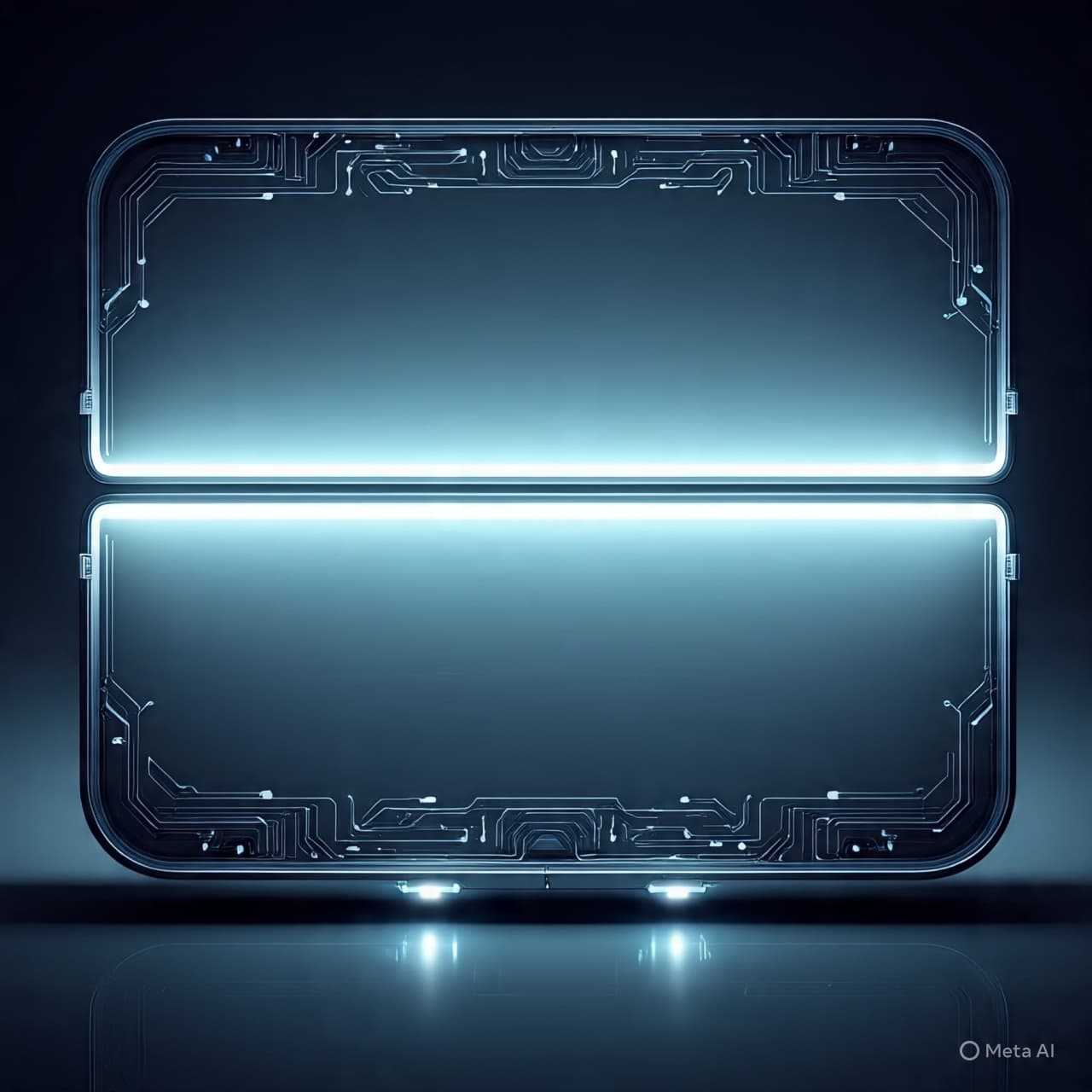
The technology itself is not entirely new. Dual-layer OLED has already appeared in smartphones and tablets, where two organic light-emitting layers work together to improve brightness, contrast, and color consistency. Instead of pushing a single layer harder, the display shares the workload, producing light that feels less strained and more evenly distributed. On smaller devices, this approach has been framed as an answer to glare, outdoor visibility, and long viewing sessions.
Bringing that same idea to PCs shifts the context entirely. A computer screen is not glanced at between moments; it is lived with. Hours pass in front of it, filled with documents, timelines, images, and code. In this setting, brightness is not about spectacle, but endurance. Contrast is not about drama, but legibility. Dual-layer OLED suggests a display designed less for first impressions and more for sustained attention.
There is also a subtle philosophical continuity at work. Smartphones have increasingly served as experimental spaces for display innovation, absorbing risk before ideas mature enough to expand outward. By testing dual-layer OLED on PCs, Huawei appears to be extending that lineage — allowing a technology refined in the palm to settle onto the desk, where expectations are different and tolerance for fatigue is lower.
What this could mean in practice is a screen that feels less aggressive. Whites that illuminate without glare. Dark areas that retain detail rather than collapsing into black. A surface that adapts more naturally to changing light throughout the day, from morning sun to late-night work. These are not features that demand explanation, but qualities that reveal themselves slowly, through absence — less eye strain, fewer adjustments, longer focus.
Of course, testing does not guarantee arrival, and arrival does not guarantee adoption. Cost, manufacturing complexity, and competition from other display technologies will all shape what comes next. But the act of testing alone signals a direction: an understanding that display quality is no longer measured solely by resolution or refresh rate, but by how the screen supports human attention over time.
If dual-layer OLED does make its way into future PCs, it may not be remembered as a dramatic leap. Instead, it may become one of those quiet upgrades that recede into the background — a screen that does its work so well it barely registers at all. And in a world increasingly defined by how long we sit before glowing rectangles, that kind of invisibility might be the most meaningful improvement of all.
AI Image Disclaimer Illustrations were created using AI tools and are intended as conceptual representations.
Sources Huawei display technology research Industry reporting on dual-layer OLED development
Published by Banx Network. This article is part of the Banx decentralized media programme, powered by the BXE token on the XRP Ledger.