The most consequential decisions in industry often arrive without drama. They appear as transitions rather than ruptures, framed as continuity even when the ground beneath them is shifting. At Toyota, that shift has taken the form of a change in leadership, unfolding against a backdrop of intensifying pressure from the world’s two largest economies.
For decades, Toyota has thrived by mastering balance — between efficiency and scale, tradition and adaptation, regional roots and global reach. That balance is now harder to maintain. The United States and China, each critical to Toyota’s fortunes, are pulling the automotive world in different directions, reshaping supply chains, technology standards, and political expectations.
In the United States, industrial policy has become more assertive, rewarding domestic production and accelerating the transition toward electric vehicles and advanced manufacturing. In China, competition has sharpened, led by fast-moving local manufacturers and a market that increasingly favors homegrown innovation. For a company built on global integration, these pressures do not cancel each other out; they accumulate.
Against this backdrop, Toyota’s decision to change its chief executive signals an acknowledgment of the moment. Leadership transitions at the company have historically been measured, favoring internal continuity over abrupt reinvention. This change follows that pattern, yet its timing reflects a recognition that strategy must now account for geopolitical reality as much as engineering excellence.
The challenges ahead are not purely technological. They are structural. Electric vehicles, software-driven platforms, and new regulatory regimes demand speed and flexibility, even as Toyota remains committed to a diversified approach that includes hybrids and alternative powertrains. Navigating that path requires not just product decisions, but diplomatic ones — choices about where to invest, where to localize, and how to remain competitive without becoming captive to any single market.
Toyota’s position between America and China mirrors a broader dilemma faced by multinational firms. Globalization, once a stabilizing assumption, now feels conditional. Companies are asked to align, to choose, or at least to explain themselves more clearly than before. Leadership, in this context, becomes less about vision alone and more about calibration.
As the new chief executive steps into the role, the task is not to redefine Toyota’s identity, but to preserve it under new constraints. The company’s strength has long been its patience — a belief that durability matters more than momentum. Whether that patience can withstand a world moving faster and fragmenting further will define Toyota’s next chapter.
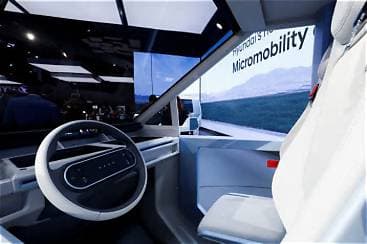
AI Image Disclaimer Visuals are AI-generated and serve as conceptual representations.
Sources Reuters The New York Times Nikkei Asia Financial Times
Published by Banx Network. This article is part of the Banx decentralized media programme, powered by the BXE token on the XRP Ledger.