
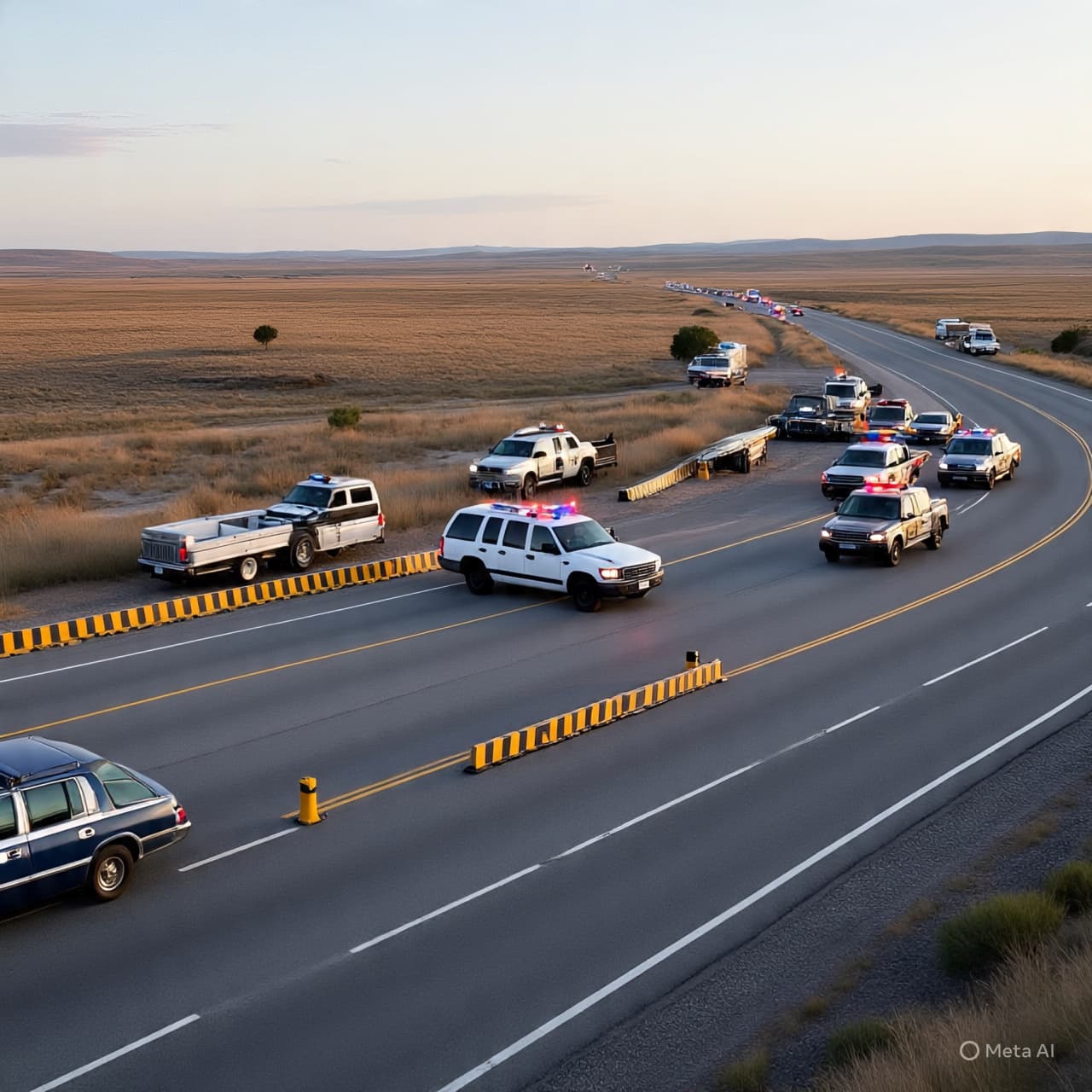
Morning roads often carry the quiet rituals of work and responsibility—vehicles moving through pale light, drivers chasing the demands of distance and time. Highways across Australia’s vast interior can stretch for hours without interruption, the horizon steady and unchanging. Yet on one such road in 2022, the rhythm of an ordinary journey was broken by a moment that would ripple across two lives, two families, and a courtroom years later.
It was along the Capricorn Highway in Queensland that a vehicle driven by New Zealand–born Nathan Brian Teraki crossed into oncoming traffic and collided head-on with a Toyota Hilux. The other driver, Northern Territory mine worker Leslie Noel Huxham, died at the scene despite attempts by bystanders to save him. Investigators later found that Teraki had been driving while fatigued and under the influence of drugs.
Dashcam footage captured a troubling pattern before the crash: Teraki’s vehicle drifting across the center line multiple times as he continued driving for more than an hour. Authorities later confirmed that he tested positive for amphetamine, methamphetamine, and the active ingredient in cannabis.
In September 2024, the Brisbane District Court sentenced Teraki to seven years in prison after he pleaded guilty to the dangerous operation of a vehicle causing death while affected by an intoxicating substance.
Yet the legal consequences did not end with the sentence. After his conviction, Australian immigration authorities began proceedings to cancel Teraki’s visa, a step that could have led to his deportation back to New Zealand. The case moved through administrative review, where questions of character, risk, and personal circumstances were weighed alongside the gravity of the offense.
In a decision delivered this year, the Administrative Review Tribunal ultimately ruled that deportation should not proceed. While the tribunal described the crash and its consequences as “very serious,” it concluded that Teraki’s offending did not represent a pattern of ongoing criminal behavior in Australia.
The 44-year-old had moved to Australia in 2010 with his family and built a life there, raising children and working long hours—at times holding multiple jobs. According to evidence presented in the case, he had been struggling with depression following the death of his father in 2017 and had turned to drugs in part to cope with fatigue and the pressures of work. Medical reports cited severe depression, cannabis dependence, alcohol abuse, and symptoms consistent with post-traumatic stress disorder.
Teraki also told authorities that returning to New Zealand would sever his connection with his children, who remain in Australia. Though his mother lives in New Zealand and offered him a place to stay, he said he feared falling back into earlier patterns if forced to leave.
For the tribunal, the decision balanced a tragedy that cannot be undone against the question of what follows afterward—punishment already underway, family ties still present, and a future uncertain but not entirely closed.
The road where the crash occurred remains just another stretch of highway, carrying vehicles across distance and routine. But the case that followed has become a reminder of how a single moment behind the wheel can travel far beyond the road itself.
AI Image Disclaimer
Visuals are AI-generated and serve as conceptual representations.
Sources
RNZ
NZ Herald
Australian Associated Press
Brisbane District Court
Administrative Review Tribunal
Published by Banx Network. This article is part of the Banx decentralized media programme, powered by the BXE token on the XRP Ledger.


.jpg&w=3840&q=75 "Blake Lively Awarded $400,000 in Legal Fees After Justin Baldoni Lawsuit Dismissed")