
Key Highlights
- Verdict:Three men found guilty of first-degree murder.
- Victims:Arnold and Joanne De Jong, a couple in their seventies.
- Community Impact:The case has left a profound mark on Abbotsford.
The passage of four years can often dull the sharp edges of a memory, but for the family of Arnold and Joanne De Jong, the journey has been a long, grueling walk toward a moment of reckoning. In a courtroom in Abbotsford, the air was thick with the weight of expectations as Justice Brenda Brown prepared to deliver a verdict that would finally categorize a night of unimaginable horror. The story of the De Jongs is one of a quiet life in British Columbia, abruptly ended by a sudden and calculated intrusion.
Arnold and Joanne, grandparents in their seventies, had built a life defined by the steady, industrious rhythm of the Fraser Valley. Their home, a sanctuary filled with memories, was violated by individuals they had once trusted to clean their space. The crime was not a random act but a deliberate choice driven by the coldest of motivations: financial pressure and greed.
During the trial, details emerged that painted a harrowing picture of violence. The judge described the assault as "intimate and prolonged," a chilling phrase that suggests a proximity and duration to the suffering that defies easy comprehension. The court heard how the couple was tied up and subjected to an ordeal meant to eliminate them as witnesses to a theft. In those hours, the domestic peace of their Abbotsford home was replaced by a darkness that has haunted their daughters every day since.
On Friday, Justice Brown delivered the verdict that the community had been waiting for. Abhijeet Singh, Gurkaran Singh, and Khushveer Toor—men in their twenties—were found guilty of first-degree murder. The defense’s attempt to frame the event as a "robbery gone wrong" was dismissed in favor of the truth: a planned and deliberate act of elimination.
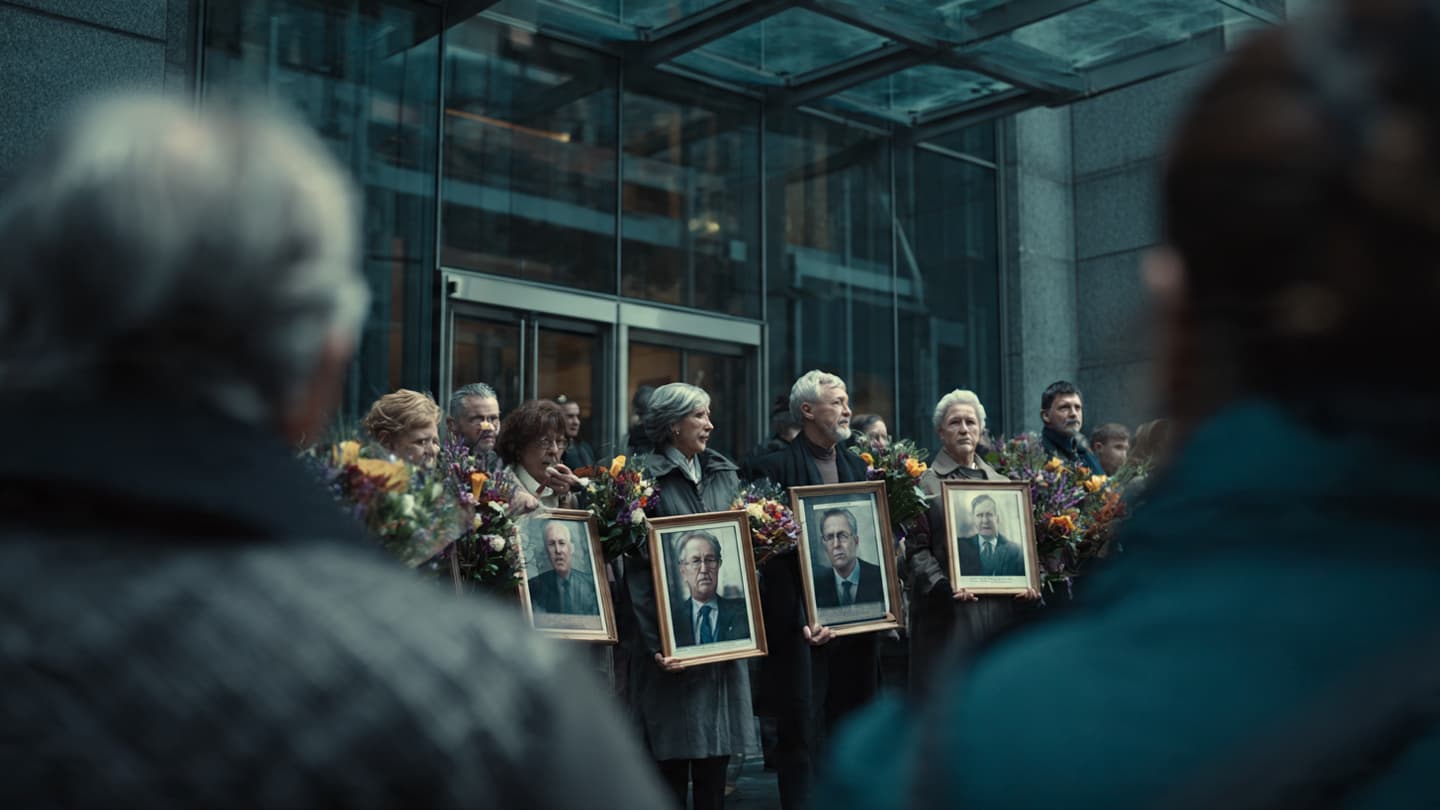
Outside the courthouse, the De Jongs' daughters stood amidst photos of their parents and bouquets of flowers. Their tears were not just of grief but of profound relief that the system had recognized the gravity of what had been taken from them. The date of the verdict was significant—it marked the anniversary of the last time they had seen their parents alive, a poignant closing of a circle that had remained open and bleeding for four years.
The courtroom was so crowded that overflow rooms had to be opened, a testament to the lives the De Jongs had touched and the collective wound their deaths had inflicted on Abbotsford. Neighbors and friends sat in silence, absorbing the reality that the men responsible would now face the full weight of the law. The sentencing, set for late May, will provide the final legal punctuation to a tragedy that has become a part of the city’s lore.
There is a somber lesson in the trial’s conclusion about the fragility of the peace we often take for granted. The De Jongs were killed for cheques and credit cards, their lives weighed against a power washer and small sums of money. This staggering imbalance leaves a community questioning the nature of the people who walk among them, hiding such capacity for cruelty behind the mundane facade of a service business.
As the De Jong family leaves the courthouse to return to their lives, they do so with a measure of peace that was previously impossible. The legal battle is over, and the names of the guilty are recorded in the annals of justice. Yet, the true legacy of Arnold and Joanne remains not in the court transcripts but in the love and resilience of the daughters who fought to ensure their parents’ story ended with the truth.
Published by Banx Network. This article is part of the Banx decentralized media programme, powered by the BXE token on the XRP Ledger.



