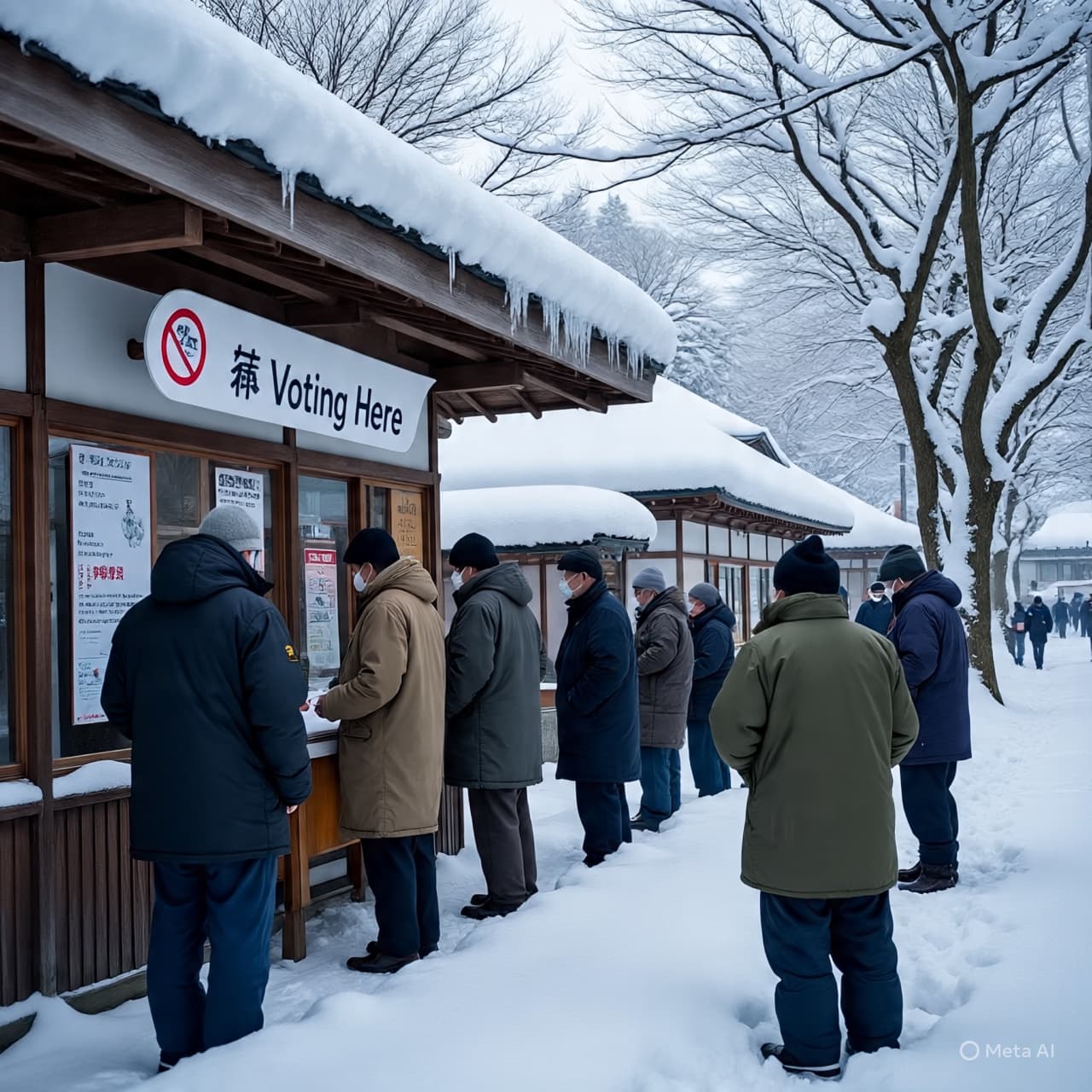
A soft winter haze settles over Tokyo as voters make their way through snow-dusted streets, casting ballots that may shape the nation’s course for years to come. From bustling markets to quiet suburban neighborhoods, there is a shared sense that this election is more than routine; it is a moment of reflection on identity, purpose, and direction.
At the center of this political moment stands Sanae Takaichi, Japan’s first female prime minister and a figure whose ultraconservative vision has galvanized a broad coalition. Once seen as a marginal force within her party, she now carries the momentum of a revitalized conservative movement, promising economic relief, national security, and a renewed sense of cultural pride. Polling suggests that her coalition is poised for a major victory, potentially securing the seats necessary for legislative stability.
For many, Takaichi’s appeal lies not just in policy but in presence. Charismatic and media-savvy, she has connected with younger voters who previously felt disengaged, emphasizing measures such as easing the cost of daily life and addressing stagnant wages. Her campaign resonates with those seeking both reassurance and forward motion in a nation navigating demographic challenges and international pressures.
Yet uncertainty lingers. Japan’s political landscape is complex, with lingering debates over immigration, regional security, and the balance of power within the legislature. As ballots are counted and results take shape, the country watches a defining moment unfold—one that could either unify or deepen divides, and one that reflects the delicate negotiation between tradition and transformation.
AI Image Disclaimer
“Visuals are AI-generated and serve as conceptual representations.”
Sources
Associated Press Reuters The Guardian
Published by Banx Network. This article is part of the Banx decentralized media programme, powered by the BXE token on the XRP Ledger.