
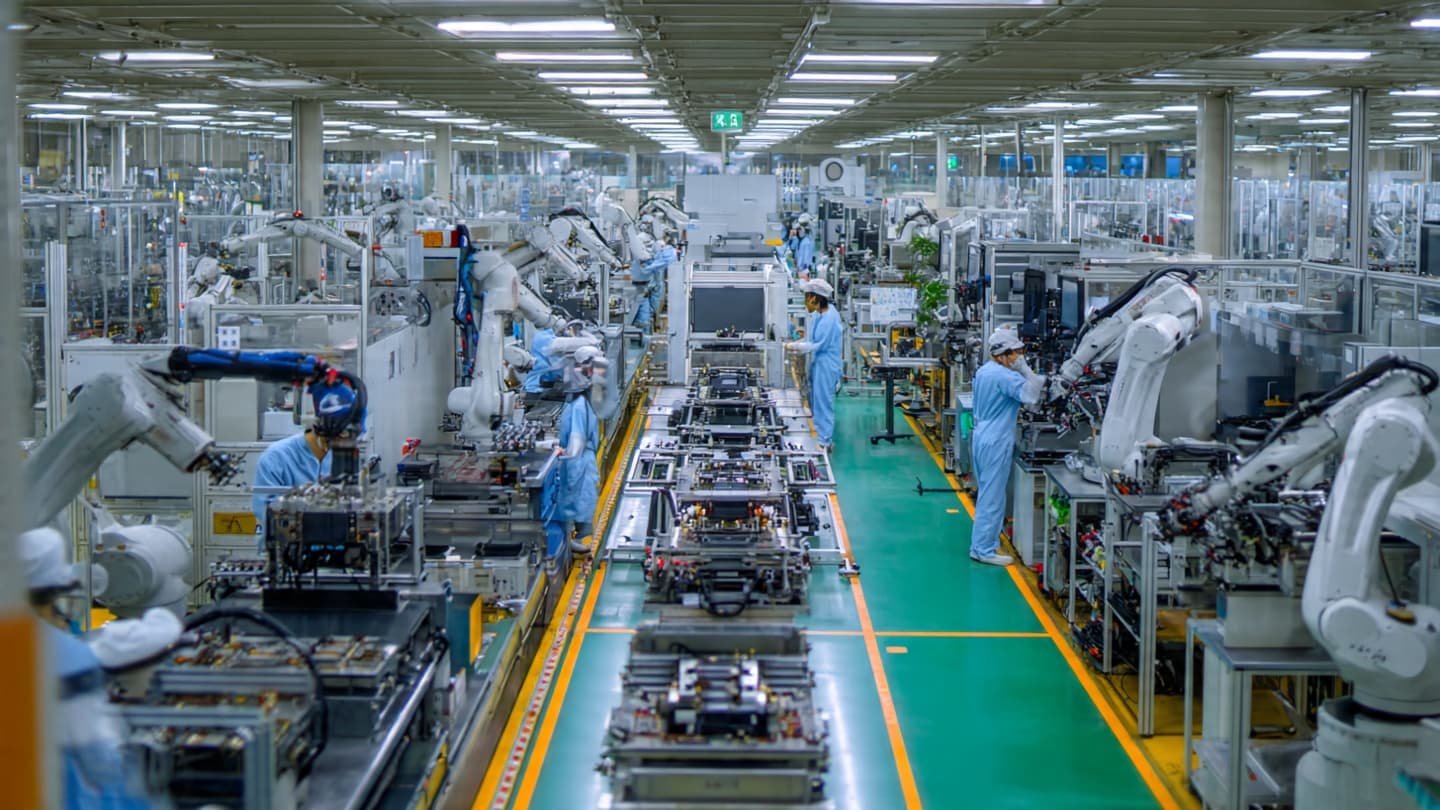
In Japan, the relationship between people and machines has been developing for decades. Robots once appeared primarily behind factory walls, performing repetitive industrial tasks with remarkable precision. Today, their presence is gradually moving into hospitals, warehouses, service businesses, and other parts of everyday life.
Japan remains one of the world's leading robotics markets, supported by a long history of industrial automation and advanced manufacturing. Companies have developed robots capable of welding, assembling, transporting materials, inspecting products, and performing increasingly specialized tasks.
Labor shortages have become an important reason for expanding automation. Japan's aging population means that some industries face difficulty finding enough workers, particularly in sectors involving physically demanding or repetitive jobs.
Logistics is one area where robotics can provide practical assistance. Warehouses can use automated systems to move goods, sort packages, and manage inventories. As online commerce grows, the ability to process large numbers of orders efficiently becomes increasingly important.
Healthcare offers another potential application. Robots can assist with transportation within hospitals, rehabilitation, monitoring, and certain forms of patient support. Their role is generally designed to complement human workers rather than replace the interpersonal elements of healthcare.
Japan's robotics companies are also exploring machines designed for environments outside traditional factories. Service robots can be used in hotels, restaurants, airports, offices, and commercial facilities, where they may perform tasks ranging from delivery to cleaning.
Artificial intelligence is changing what these machines can do. Traditional industrial robots generally follow highly structured instructions, while newer systems can increasingly interpret images, recognize objects, adapt movements, and respond to changing environments.
The development does not come without challenges. Robots can be expensive to purchase and maintain, while workers require training to operate and supervise increasingly sophisticated systems. Questions surrounding safety, reliability, and human-machine interaction also become more important as robots move into public spaces.
Still, Japan's experience offers a glimpse of how automation may evolve in societies facing demographic pressure. Rather than being confined to factories, robots are gradually becoming tools for maintaining productivity and supporting workers across different sectors.
The journey is still underway. In Japan, machines continue to become more capable while companies and communities learn where automation provides the greatest value. The future of robotics may ultimately be less about replacing people and more about finding practical ways for technology to carry part of the work alongside them.
AI Image Disclaimer: The accompanying visuals were generated with AI and are conceptual representations of robotics applications in Japan.
Sources:
Reuters International Federation of Robotics Ministry of Economy, Trade and Industry of Japan Japan Robot Association OECD
Published by Banx Network. This article is part of the Banx decentralized media programme, powered by the BXE token on the XRP Ledger.



