
War often arrives with thunder. But sometimes, before the echoes fade, the world begins to listen for another sound—the possibility of silence.
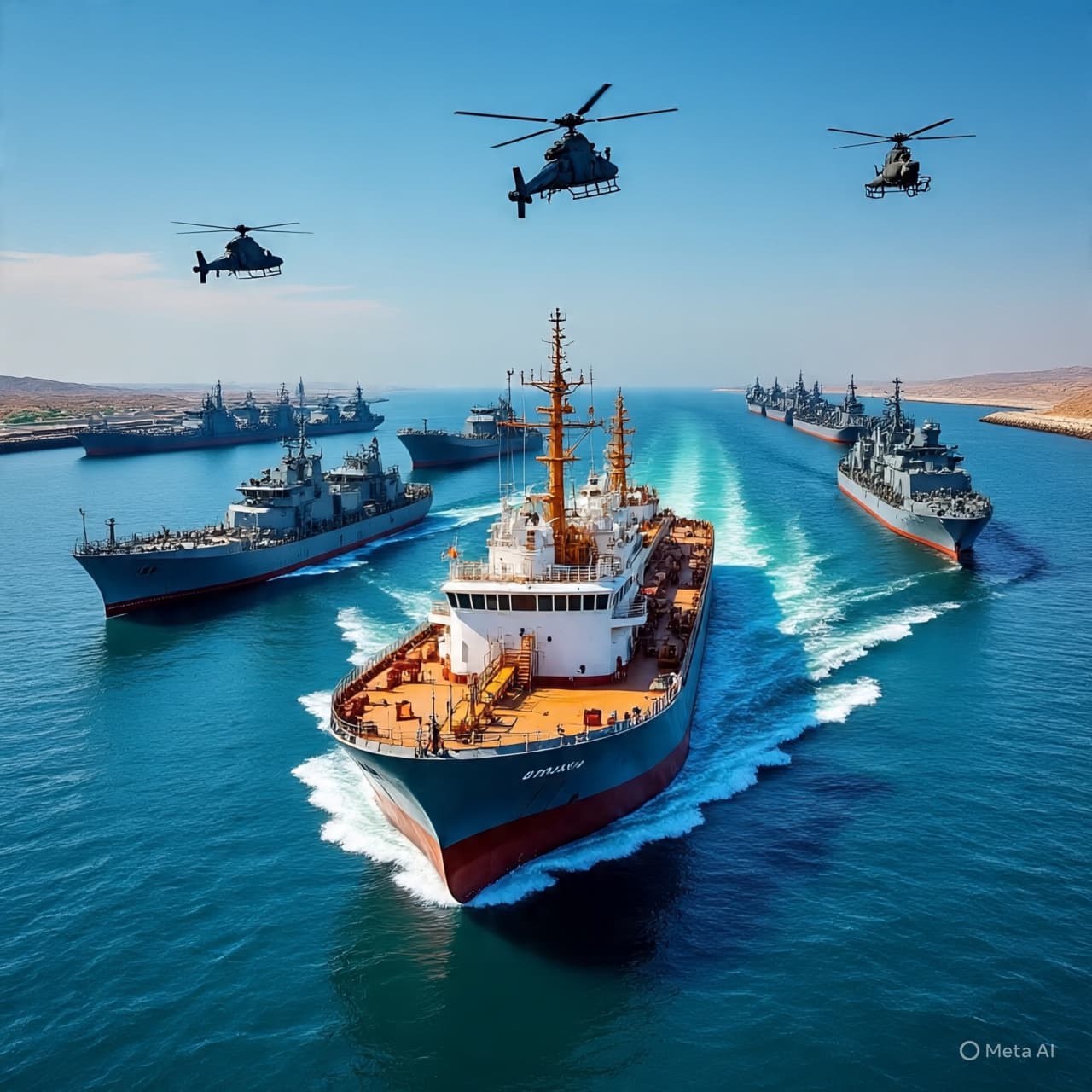
Across the waters of the Strait of Hormuz, tankers move more cautiously than usual, escorted by warships and watched by satellites. In capitals from Washington to the Gulf, leaders speak in the careful language of strategy and timing. The conflict between Iran, the United States, and regional allies has quickly reshaped the region’s rhythms, turning shipping lanes, airspace, and financial systems into arenas of uncertainty.
Yet even as tensions rise, one voice has suggested that the end of the fighting might not be far away.
Speaking to reporters and in interviews this week, Donald Trump indicated that the war could conclude soon, arguing that military operations have already achieved much of their intended effect. He suggested that American and allied strikes had severely weakened Iran’s military capabilities and that there may be “practically nothing left” for U.S. forces to target inside the country.
But while those words hint at closure, events across the region continue to move in the opposite direction.
Iran has responded to the widening conflict with a series of actions aimed at demonstrating both reach and resilience. Attacks on commercial vessels in nearby waters and threats directed at financial institutions linked to Western allies have raised concerns about the broader economic ripple effects of the war.
Shipping routes through the Strait of Hormuz—one of the world’s most critical energy corridors—have become increasingly tense. The narrow channel carries a significant share of global oil exports, and disruptions there can quickly send tremors through international markets.
Even limited strikes against vessels can create wide consequences. Insurance costs for shipping companies rise, cargo routes are reconsidered, and energy traders watch every development with caution. In recent weeks, the mere possibility of further attacks has already contributed to volatility in oil markets and maritime traffic.
For military planners, the stakes are also becoming more personal.
Reports emerging from the battlefield indicate that U.S. forces have begun to suffer casualties as the conflict intensifies. While the numbers remain limited compared with larger wars of the past, each loss underscores the reality that even technologically advanced campaigns carry human costs.
Meanwhile, Iran’s leadership has signaled that it may be prepared for a prolonged confrontation if necessary, warning that the conflict could expand into economic and strategic domains beyond the battlefield.
That possibility has drawn attention to the financial sector as a potential arena of pressure. Iranian officials have warned of actions against institutions connected to countries supporting military operations against Tehran. Such threats, though not fully detailed, have prompted increased vigilance among banks and corporations operating across the region.
At the same time, diplomats and analysts are searching for signs that the war might be approaching a turning point.
Military campaigns often follow a familiar arc—rapid escalation followed by a search for exits that allow each side to claim its objectives. Statements suggesting that the war could end soon may reflect that delicate phase, where public messaging begins to prepare audiences for the possibility of de-escalation.
Still, the path from conflict to calm is rarely simple.
The war has already drawn in multiple actors and reshaped security calculations across the Middle East. Neighboring countries, energy markets, and global shipping networks all watch developments closely, aware that events in the region can ripple far beyond its borders.
For now, the situation remains suspended between two possibilities: a war that continues to widen, or a campaign that gradually winds down after achieving its strategic aims.
President Trump’s remarks suggest the second path may be within reach. Yet the ships moving cautiously through the Strait of Hormuz, and the forces stationed across the region, remain reminders that the story of this conflict is still unfolding.
In the coming days, officials in Washington and Tehran are expected to continue monitoring the situation while military operations proceed. Whether the war truly approaches its end—or merely pauses before another turn—will depend on decisions still being made behind closed doors.
AI Image Disclaimer Illustrations were produced with AI and serve as conceptual depictions.
Sources Reuters CBS News Axios BBC News The Guardian
Published by Banx Network. This article is part of the Banx decentralized media programme, powered by the BXE token on the XRP Ledger.


