
Key Highlights
- Trump suggests the Iran war could conclude soon, citing military successes.
- Iran responds with aggressive actions, raising regional tensions.
- Shipping routes through the Strait of Hormuz face increased risks due to conflict.
In a recent series of statements, former President Donald Trump indicated that the ongoing conflict with Iran might be nearing its conclusion. Speaking to reporters, Trump claimed that U.S. military operations have significantly weakened Iran's military capabilities, suggesting that there may be 'practically nothing left' for American forces to target. This assertion comes amid a backdrop of escalating tensions in the region, particularly in the strategically vital Strait of Hormuz.
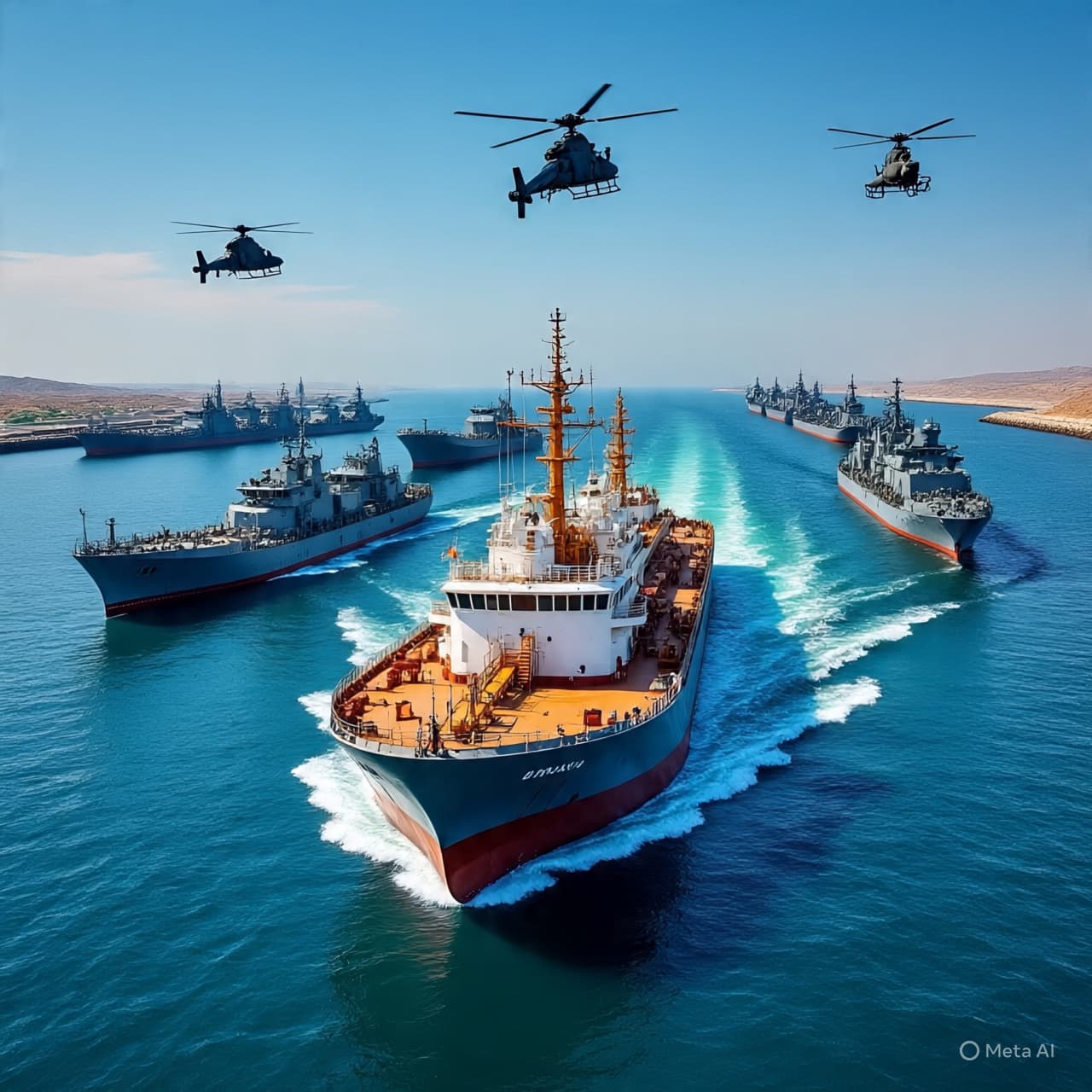
The Strait of Hormuz is a critical chokepoint for global oil shipments, with a substantial portion of the world's oil supply passing through its narrow waters. As military operations continue, shipping companies are increasingly cautious, with warships escorting tankers and heightened surveillance from satellites. The potential for conflict to disrupt these vital shipping lanes has raised alarm among energy traders and financial markets alike.
In response to the conflict, Iran has demonstrated its military reach through a series of aggressive actions, including attacks on commercial vessels and threats against financial institutions linked to Western allies. These developments have heightened concerns about the broader economic implications of the war, as disruptions in the Strait of Hormuz could lead to significant fluctuations in global oil prices.
Reports from the battlefield indicate that U.S. forces have begun to experience casualties, albeit limited compared to larger historical conflicts. Each loss serves as a stark reminder of the human cost associated with military engagements, even those characterized by advanced technology and strategic precision.
Iranian leaders have signaled their readiness for a prolonged confrontation, warning that the conflict could extend beyond military engagements into economic and strategic domains. This has prompted increased vigilance among banks and corporations operating in the region, as Iranian officials have hinted at potential actions against institutions supporting military operations against Tehran.
As military planners and diplomats analyze the situation, they are keenly aware that the trajectory of the conflict often follows a familiar pattern: rapid escalation followed by a search for a resolution that allows both sides to claim some level of success. Trump's recent comments may reflect this delicate phase, where public messaging begins to prepare audiences for the possibility of de-escalation.
However, the path from conflict to resolution is rarely straightforward. The war has already drawn in multiple actors and reshaped security dynamics across the Middle East. Neighboring countries, energy markets, and global shipping networks are all closely monitoring developments, aware that the implications of this conflict extend far beyond the immediate region.
For now, the situation remains precarious, suspended between the potential for continued conflict and the hope for a gradual winding down of hostilities. Trump's remarks suggest that a resolution may be on the horizon, yet the ongoing military operations and the cautious movements of vessels through the Strait of Hormuz serve as a reminder that the story of this conflict is still unfolding. In the coming days, officials in both Washington and Tehran are expected to continue assessing the situation, as the fate of the Iran war hangs in the balance.
Published by Banx Network. This article is part of the Banx decentralized media programme, powered by the BXE token on the XRP Ledger.



