
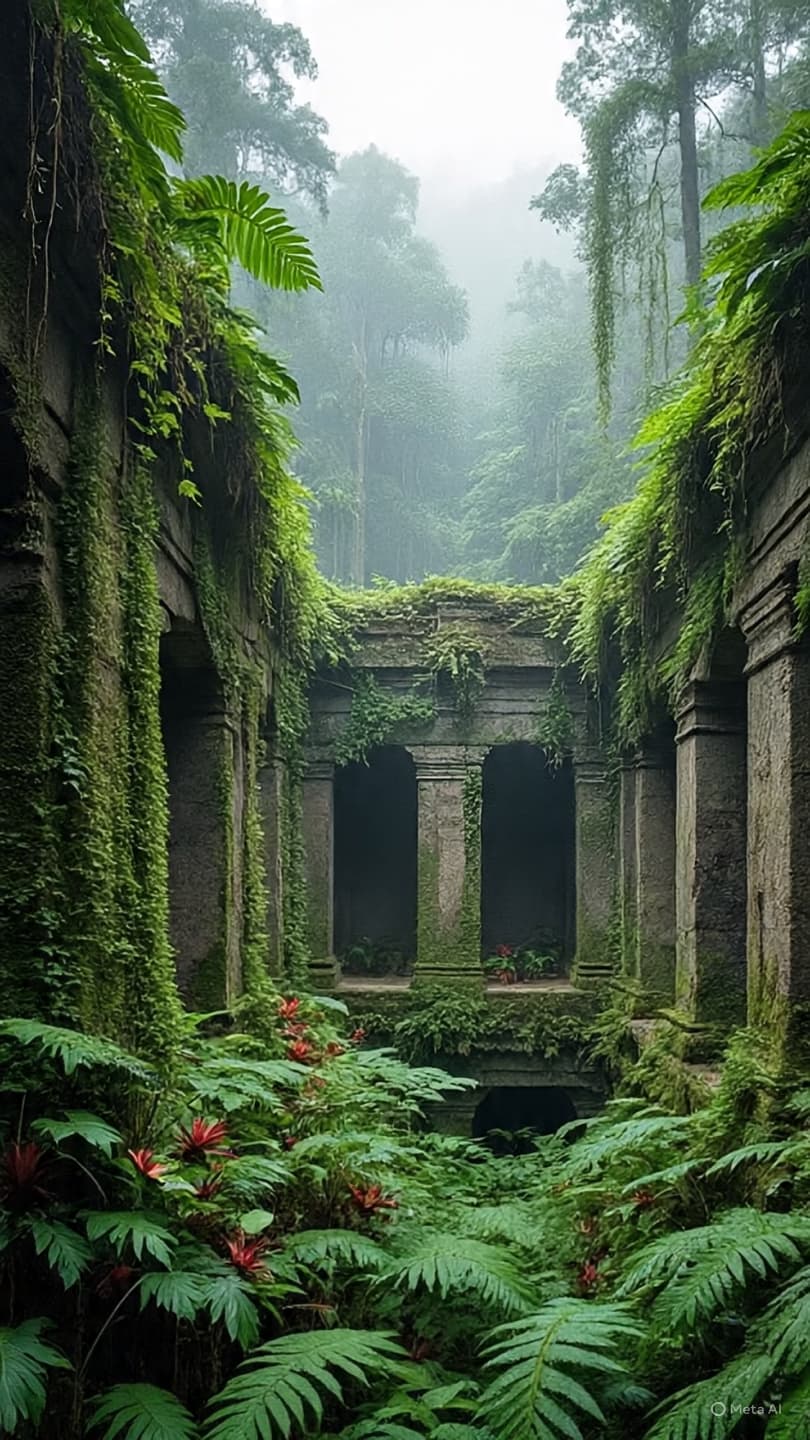
In the dense, humid embrace of the Honduran jungle, the past is not a memory; it is a physical presence, shrouded in a veil of emerald vines and moss-covered stone. Here, the canopy creates a world of perpetual twilight, where the air is heavy with the breath of the rainforest and the calls of the hidden macaws. Beneath this living tapestry, the earth holds the remnants of a civilization that once thrived in harmony with the tropical wilderness, leaving behind clues to an ancient mastery of the land.
Recent archaeological research has peeled back the layers of the forest floor to reveal a sophisticated system of pre-Columbian agricultural terracing. These stone-lined embankments, carved into the steep slopes of the jungle, were the silent engines of a society that understood the delicate balance of soil and slope. To discover these terraces is to realize that the jungle was once a managed landscape, a patchwork of gardens and fields that sustained thousands of people long before the arrival of the modern world.
There is a quiet wonder in the realization of such ingenuity, a narrative of human adaptation to one of the most challenging environments on earth. The terraces were designed to manage the torrential rains and prevent the erosion of the fertile topsoil, a feat of engineering that feels remarkably contemporary in its focus on sustainability. The discovery suggests a level of social organization and environmental knowledge that challenges our perceptions of the "wild" jungle.
The researchers move through the undergrowth with a sense of reverence, mapping the extent of the terraces using advanced scanning technology that can "see" through the dense foliage. In the filtered light of the canopy, the geometric precision of the stone walls stands in sharp contrast to the chaotic growth of the surrounding trees. It is a moment where the architectural intent of the past emerges from the green silence, speaking of a time when the hills were a source of abundance.
One reflects on the resilience of these structures, which have endured centuries of neglect and the relentless pressure of the encroaching forest. The terraces remain as a testament to the skill of the ancient farmers who built them, a legacy of stone that has become part of the mountain itself. The study of these sites offers more than historical insight; it provides a reflection on how we might once again live in balance with the rhythms of the tropical world.
The atmosphere of the excavation is one of patient discovery, where the removal of a single layer of leaf litter can reveal a truth hidden for a thousand years. The agricultural systems of the pre-Columbian era were not merely for survival; they were a form of landscape art, a reshaping of the earth that honored the spirits of the rain and the soil. As the map of the terracing grows, so does our appreciation for the complexity of the civilizations that preceded us.
As the team concludes its current phase of work, the jungle begins to reclaim its own, the damp heat of the afternoon accelerating the growth of the ferns and fungi. The discovery of the terraces remains a significant milestone in the archaeological record of Honduras, a reminder that the history of this land is deeper and more intricate than the modern eye can perceive. It is a story of endurance, written in the stone of the mountains and the green of the trees.
Archaeologists working in the Mosquitia region of Honduras have identified extensive systems of agricultural terraces dating back to the pre-Columbian era. Using LiDAR technology, the team mapped over 200 hectares of modified slopes that appear to have been used for intensive crop cultivation. The findings, highlighted in a recent feature on ancient sustainability, suggest that these systems were ke
Published by Banx Network. This article is part of the Banx decentralized media programme, powered by the BXE token on the XRP Ledger.



