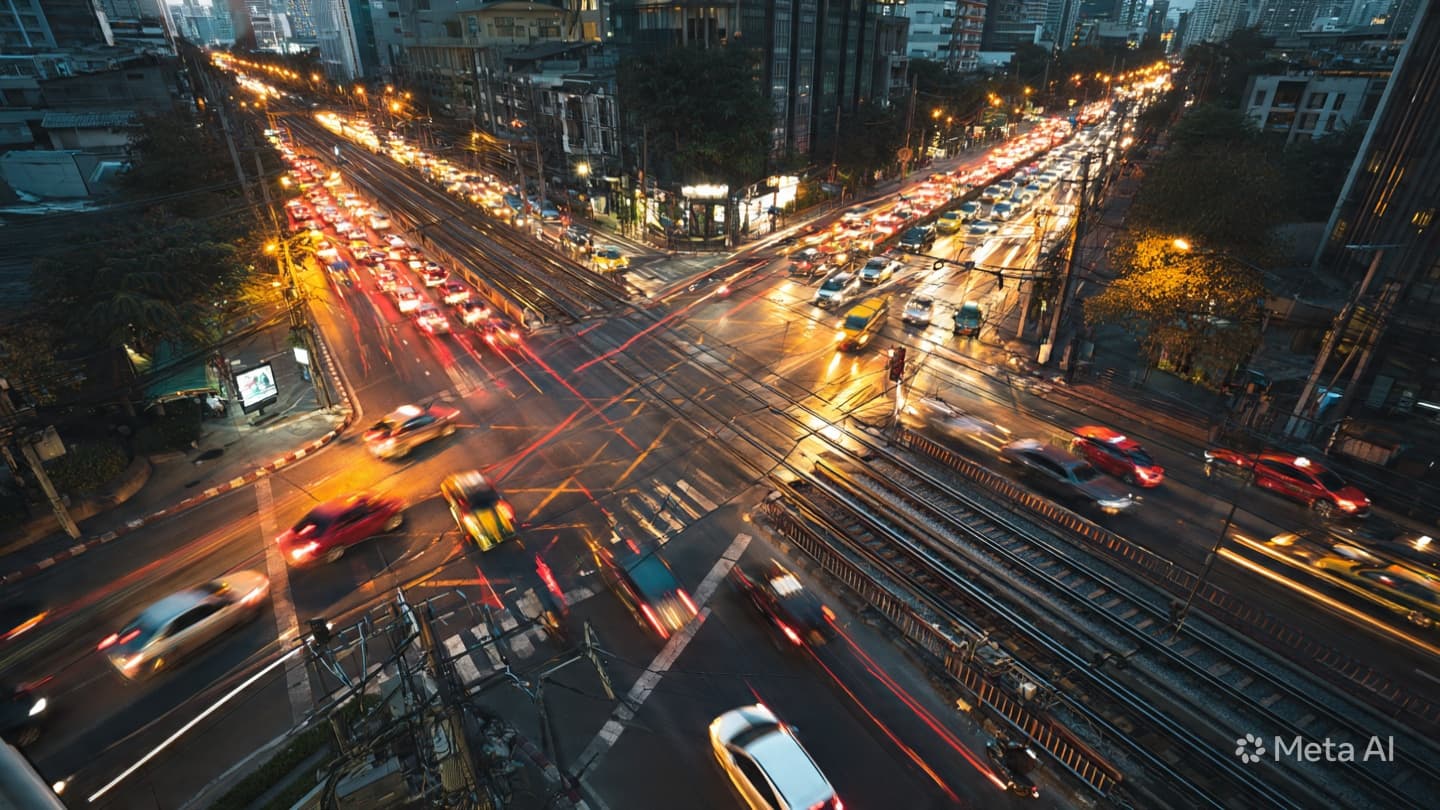
In the heart of Bangkok, where the architecture of the modern city constantly presses against the remnants of the past, the rhythm of movement is everything. It is a city of layers, where sky trains hover above jammed boulevards and commuters weave through the dense fabric of daily life. At the Makkasan crossing, near the Airport Rail Link, this convergence of paths is a daily occurrence, a choreographed dance of traffic and steel. Yet, on a quiet afternoon in mid-May, the melody of this daily routine was violently interrupted, reminding everyone that the machinery of a modern metropolis is as fragile as it is essential.
The collision, occurring when a freight train encountered a passenger bus caught at a level crossing, was an event of sudden, searing transformation. In an instant, the normalcy of a transit route—the waiting at a light, the idle chatter of passengers, the heat of the afternoon—was replaced by the intensity of fire and the harsh reality of impact. It is a type of event that disrupts the collective psyche of the city, forcing a pause in the relentless pace of urban existence to acknowledge the human cost of the systems we depend upon to keep moving.
The imagery that emerged from the scene—the charred skeleton of the bus, the blackened remnants of the train’s front, the haze of smoke rising above the Makkasan station—captured a visceral stillness. It is hard to reconcile the scale of such a tragedy with the mundane reality of a commuter bus route. For those involved, the accident was not a matter of logistics or infrastructure; it was the final moment of a day that began with the expectation of reaching a destination, only to end in an unforeseen and catastrophic deviation.
There is a profound, meditative weight in considering the aftermath of such a collision. When the flames are extinguished and the scene is cordoned off, the city is left to reconcile the tragedy with the structures that allowed it to happen. Questions arise about the reliability of crossing barriers, the weight and speed of freight trains in dense urban corridors, and the adequacy of safety protocols that are meant to guard against the very risks that manifested so tragically. These are not merely administrative inquiries; they are essential for the preservation of trust in the public sphere.
The response from officials, characterized by the urgency of investigations and the somber tone of public statements, reflects the gravity of the loss. Eight lives, lost in a flurry of sparks and steel, have become a focal point for a city that often overlooks the dangers embedded in its own growth. The grief of families, the shock of the survivors, and the collective sorrow of the onlookers who witnessed the event from their cars and homes—these are the intangible residues of a disaster that will likely color the way residents perceive their city for years to come.
In the days that followed, the intersection became a site of reflection, a place where people paused to consider the precariousness of their own daily commutes. The narrative shifted from the initial shock to a more analytical discourse, a necessary transition as authorities began to dissect the event data recorders and the mechanical failures that may have played a part. It is a necessary, albeit clinical, process—a way of trying to impose order on an experience that was, in its essence, completely chaotic and devoid of intent.
This event serves as a sharp reminder that the modernization of transportation systems is not just a project of speed and efficiency; it is a profound responsibility of care. Every level crossing, every freight line that intersects with a public thoroughfare, carries with it the potential for such tragedy. The challenge for Bangkok, as it looks toward its future, is to ensure that the infrastructure of development does not continue to outpace the fundamental requirement of safety. The city’s resilience is often praised, but it must be matched by a deep, unwavering commitment to preventing such losses from becoming a recurring part of the urban experience.
As the investigations continue, the memory of that May afternoon will linger, a quiet warning in the back of the mind of every commuter who approaches a set of tracks. It is a legacy of loss that demands more than just policy adjustments; it requires a renewed consciousness of the fragility of our collective movement. In the end, the most important outcome of this tragedy will be the degree to which it serves as a catalyst for a safer future, ensuring that the paths we travel daily do not become the sites of such enduring and unnecessary sorrow.
On May 16, 2026, a freight train collided with a public bus at a railway crossing near Makkasan station in central Bangkok, Thailand. The impact triggered a massive fire, resulting in the deaths of eight individuals and injuring at least 35 others. Thai authorities, led by the Department of Rail Transport and local police, launched a formal investigation into the incident, examining potential mechanical failures, the performance of safety barriers, and the conduct of the train operators at the time of the collision.
Published by Banx Network. This article is part of the Banx decentralized media programme, powered by the BXE token on the XRP Ledger.

.jpg&w=3840&q=75 "Intelligence Agencies Suspect Russia Is Developing Anti-Satellite Weapon to Target Starlink")