
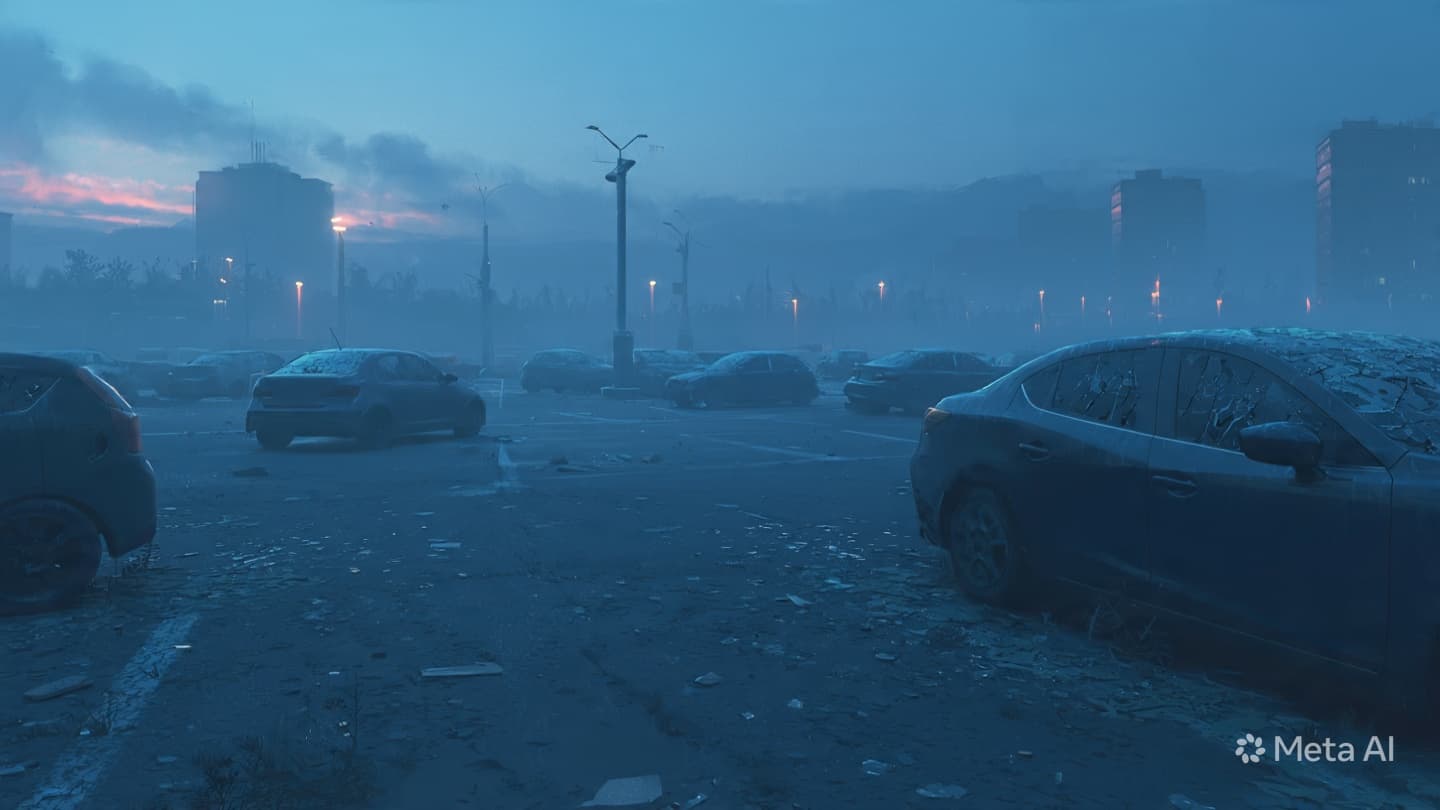
The public spaces of Dnipropetrovsk are the vibrant intersections of the city’s collective life, where wide tree-lined boulevards, public parks, and busy parking areas frame the daily routines of thousands of citizens. In these common arenas, the rhythm of the metropolis is felt naturally—the murmur of conversations, the steady hum of traffic, and the unhurried movement of people navigating their days. It is a landscape built on the shared assumption that the open spaces of the city belong to the community, serving as a neutral backdrop for the ordinary interactions of urban existence.
Yet, that architectural neutrality is abruptly violated when the sky above becomes a theater of interception, scattering the debris of modern conflict across the geography of the ordinary. On a recent day, the peaceful atmosphere of several local neighborhoods was instantly disrupted by a shower of sharp, metallic drone shrapnel that rained down upon the asphalt and concrete below. In a matter of seconds, the familiar spaces of the public square were transformed into a scene of sudden, widespread mechanical damage.
The aftermath of a shrapnel shower carries a specific, jarring visual contradiction that alters the familiarity of the city streets. Dozens of civilian vehicles, parked in orderly rows along the sidewalks or within transit lots, stood with shattered windshields, punctured bodywork, and tires flattened by the falling iron shards. The crystalline crunch of safety glass beneath the boots of passersby provided a persistent, sharp soundtrack to a morning defined by collective shock.
To contemplate such an occurrence is to recognize the deeply intrusive nature of a conflict that projects its consequences into the most mundane corners of civilian life. A car used for the morning commute, a park bench where neighbors gather, an open-air market stall—these ordinary markers of stability are transformed into casual casualties of an aerial encounter that occurred miles above. The damage is measured not in the collapse of massive structures, but in the widespread erosion of the sense of public safety.
The response of the municipal cleanup crews and local insurance adjusters began as soon as the immediate alert was lifted, moving with a weary, methodical efficiency into the affected districts. Working under the pale light of an overcast sky, they set about the tedious task of sweeping up the glass, logging the damage to personal property, and towing away the most severely struck vehicles. It is a quiet, bureaucratic form of recovery that unfolds in the wake of modern aerial warfare.
The geopolitical and technological discussions surrounding the deployment of unmanned aerial vehicles frequently center on payload capacity, guidance systems, and interception ratios analyzed in distant corporate boardrooms. On the ground, however, those discussions are entirely replaced by the immediate, practical frustration of a citizen looking at a ruined windshield or a municipal worker clearing metal shards from a playground path. The true cost of the incursion is found in these micro-disruptions to the urban fabric.
By the afternoon hours, the affected public spaces had begun to recapture some of their regular momentum, though the empty parking stalls and boarded-up shop windows remained as visible reminders of the morning's vulnerability. The conversation among the residents turned to the unpredictable nature of the sky, with many expressing a quiet, resilient determination to maintain their routines despite the constant presence of the unseen threat.
Municipal administrative authorities confirmed that drone shrapnel from overnight interceptions caused extensive damage to dozens of civilian vehicles and multiple public spaces across Dnipropetrovsk. Local law enforcement units secured the affected areas to facilitate the removal of the debris, while municipal engineering teams completed a safety assessment of the surrounding public infrastructure to ensure no long-term hazards remained.
Published by Banx Network. This article is part of the Banx decentralized media programme, powered by the BXE token on the XRP Ledger.


