
Key Highlights
- Coconut palms are vital for Fiji's coastal communities, providing income and resources.
- Fiji Coconut Millers Ltd has raised copra prices to encourage farmers.
- The modernization of the coconut industry includes producing high-value products.
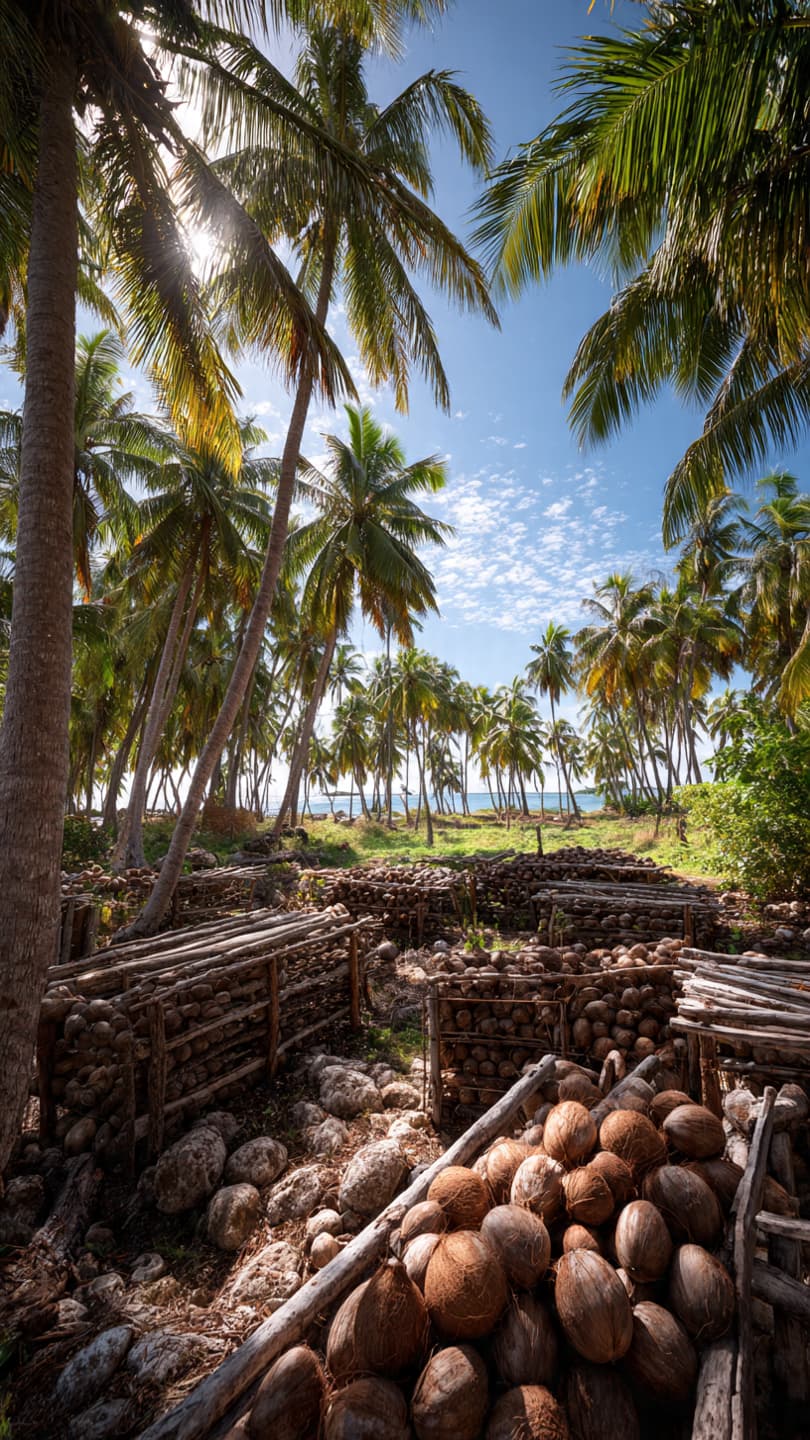
The coconut palm, a symbol of life along the shores of Vanua Levu and the Lau Group, serves as a cornerstone of the local economy. This tree, often referred to as the 'Tree of Life,' provides essential resources such as shade, shelter, and copra, which is the dried meat of the coconut. The process of harvesting and drying copra is not merely a task; it is a tradition that has sustained these communities for generations, intertwining their livelihoods with the rhythm of nature.
In these coastal villages, the relationship with the coconut palm is deeply rooted. The copra harvested is more than just a crop; it acts as a savings account for families, funding education and supporting community needs. The meticulous process of splitting the nuts and drying the meat is a labor of love, showcasing the skills passed down through generations. Workers engage in this task with a rhythm that reflects both the difficulty of the work and the pride in their heritage.
As the industry evolves, Fiji is witnessing a shift from traditional copra production to more refined coconut products. New facilities are being established to produce virgin coconut oil and coconut water, which are gaining popularity in global markets. This transition is crucial for ensuring that local farmers receive a fair share of the profits from their labor, allowing them to thrive in an increasingly competitive environment. The coconut grove is not just a source of income; it is a testament to the resourcefulness of the community, where every part of the tree is utilized.
The dried copra, with its rich, textured surface, embodies the essence of the tropics. It serves as a bridge connecting the remote islands to international markets, where it is sought after for use in cosmetics, food, and other products. However, the industry faces significant challenges, including the need to revitalize aging groves and combat threats from invasive pests like the rhinoceros beetle, which can devastate crops.
For the communities in Fiji's North and East, the coconut palm is a source of identity and resilience. The recent announcement by Fiji Coconut Millers Ltd to increase the procurement price for copra is a strategic move aimed at encouraging farmers to rejuvenate their groves. This initiative is part of a broader government strategy to enhance the production of high-value coconut products, such as activated carbon and organic coconut cream, which are essential for rural poverty alleviation and community stability.
As the sun sets over the horizon, casting a warm glow on the palm trees, the coconut industry stands at a crossroads. The purity and versatility of Fijian coconut products are well-regarded in export markets, but the industry must navigate fluctuating global prices and the increasing frequency of natural disasters. The coconut palm, with its deep roots, serves as a reminder that resilience is built through adaptation and perseverance.
In conclusion, the future of Fiji's coconut industry hinges on the ability of its farmers to innovate while honoring their traditions. With the right support and investment, the coconut palm can continue to nourish not just the land but also the spirit of the islands, ensuring that this vital resource remains a cornerstone of the community for generations to come.
Published by Banx Network. This article is part of the Banx decentralized media programme, powered by the BXE token on the XRP Ledger.



