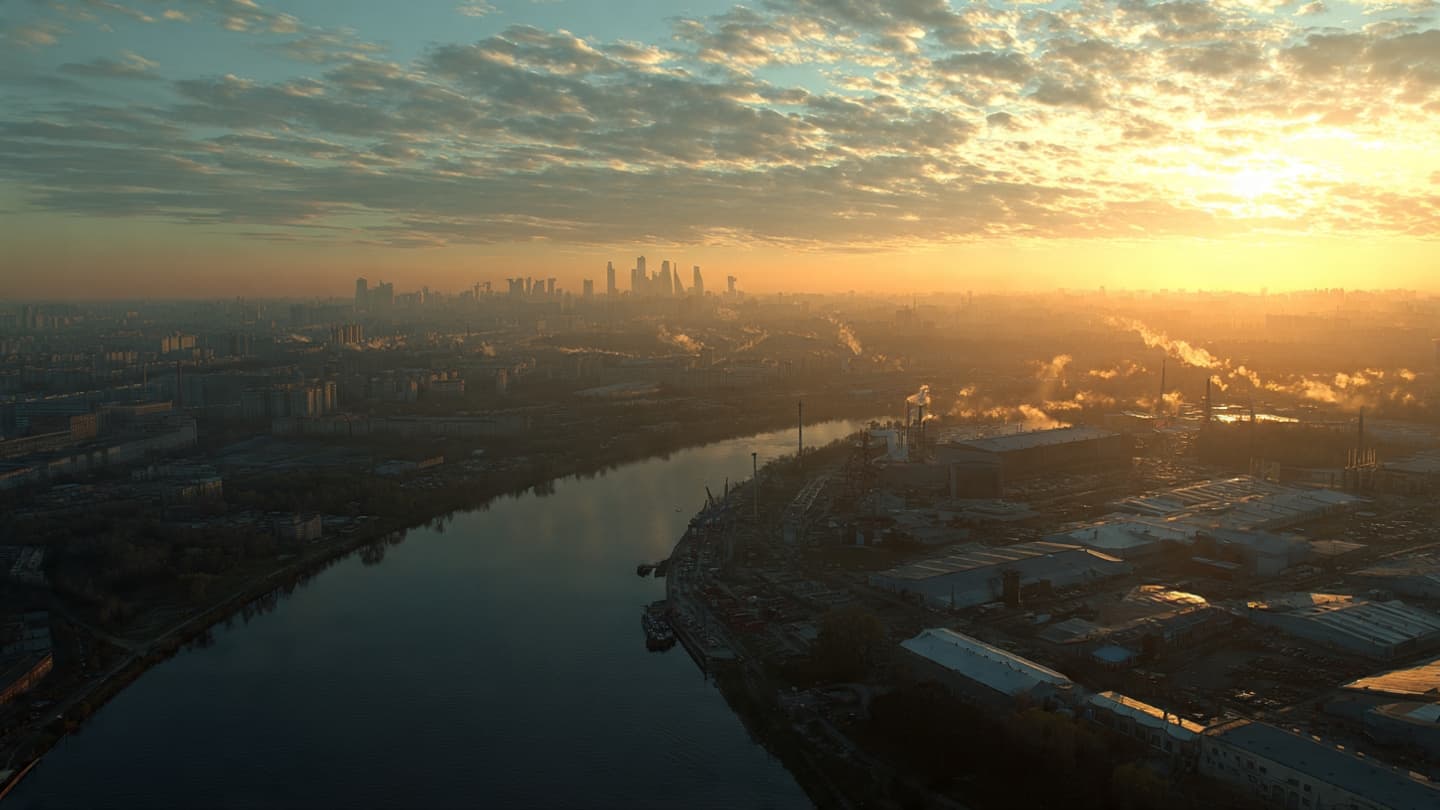
Morning settles gently over Moscow with familiar rhythms. The river glides beneath old bridges, trains begin their routes, and the city's towers catch the first light of day. Yet above the streets, the sky has become another landscape of the war that has stretched across Eastern Europe for more than four years. What was once a distant front increasingly reaches the heart of cities, reminding both nations that modern conflict travels far beyond traditional battlefields.
That reality unfolded again when Ukrainian forces launched more than 400 drones toward the Moscow region, according to Mayor Sergei Sobyanin. Russian officials said air defense systems intercepted most of the drones before they reached the capital, while several strikes caused fires, damaged residential buildings, industrial facilities, and logistics infrastructure, and injured multiple people in the surrounding region.
The large-scale drone assault came only hours after Russia carried out ballistic missile attacks against Kyiv and other Ukrainian cities. The exchange reflected the increasingly rapid cycle of retaliation that has characterized the conflict, with both sides expanding their use of long-range weapons capable of reaching targets hundreds of kilometers beyond the front lines.
Ukrainian President Volodymyr Zelenskyy said Ukrainian forces had targeted logistics facilities and an oil depot connected to Russia's military support network. Ukrainian officials have increasingly described such strikes as efforts to weaken infrastructure supporting Russia's military operations rather than attacks aimed at civilian populations. Russia, meanwhile, reported intercepting hundreds of drones across multiple regions during the overnight operation.
Across the Moscow region, emergency crews responded to damaged buildings, extinguished fires, and inspected infrastructure affected by falling debris. Airports temporarily adjusted operations, while local authorities assessed the impact on transportation and industrial facilities. Although daily routines gradually resumed, the events underscored how the conflict has brought new security challenges to areas once considered relatively distant from direct military action.
The expanding reach of drone warfare has transformed the character of the conflict. Compared with conventional missiles, drones can be produced in larger numbers and launched in coordinated waves designed to test air-defense systems. At the same time, defenders continue investing heavily in interception technologies as both sides adapt to rapidly evolving methods of aerial combat.
Beyond military calculations, each escalation also echoes through the global economy. Markets continue monitoring developments affecting energy infrastructure, transportation networks, and regional stability. While the immediate effects remain concentrated within the conflict zone, uncertainty often extends far beyond national borders, influencing commercial planning and international security discussions alike.
Diplomatic efforts have not entirely disappeared amid the military exchanges. International leaders continue urging restraint while exploring opportunities for dialogue, even as each new strike complicates prospects for negotiations. The search for a lasting settlement grows more challenging whenever violence deepens, yet diplomatic channels remain one of the few avenues capable of altering the conflict's long-term course.
As daylight settles across Moscow and Kyiv alike, two capitals continue living beneath the same broad sky while experiencing the war from different perspectives. The latest drone assault becomes another chapter in a conflict defined by endurance, adaptation, and uncertainty. Between the quiet rhythm of ordinary mornings and the distant sound of air-defense systems lies a reminder that peace, like the first light of dawn, often feels closest just before it fully arrives.
AI Image Disclaimer These illustrations were generated using AI as conceptual visual representations and are not actual photographs of the reported events.
Sources Reuters Associated Press BBC News Euronews Russian Ministry of Defense
Published by Banx Network. This article is part of the Banx decentralized media programme, powered by the BXE token on the XRP Ledger.