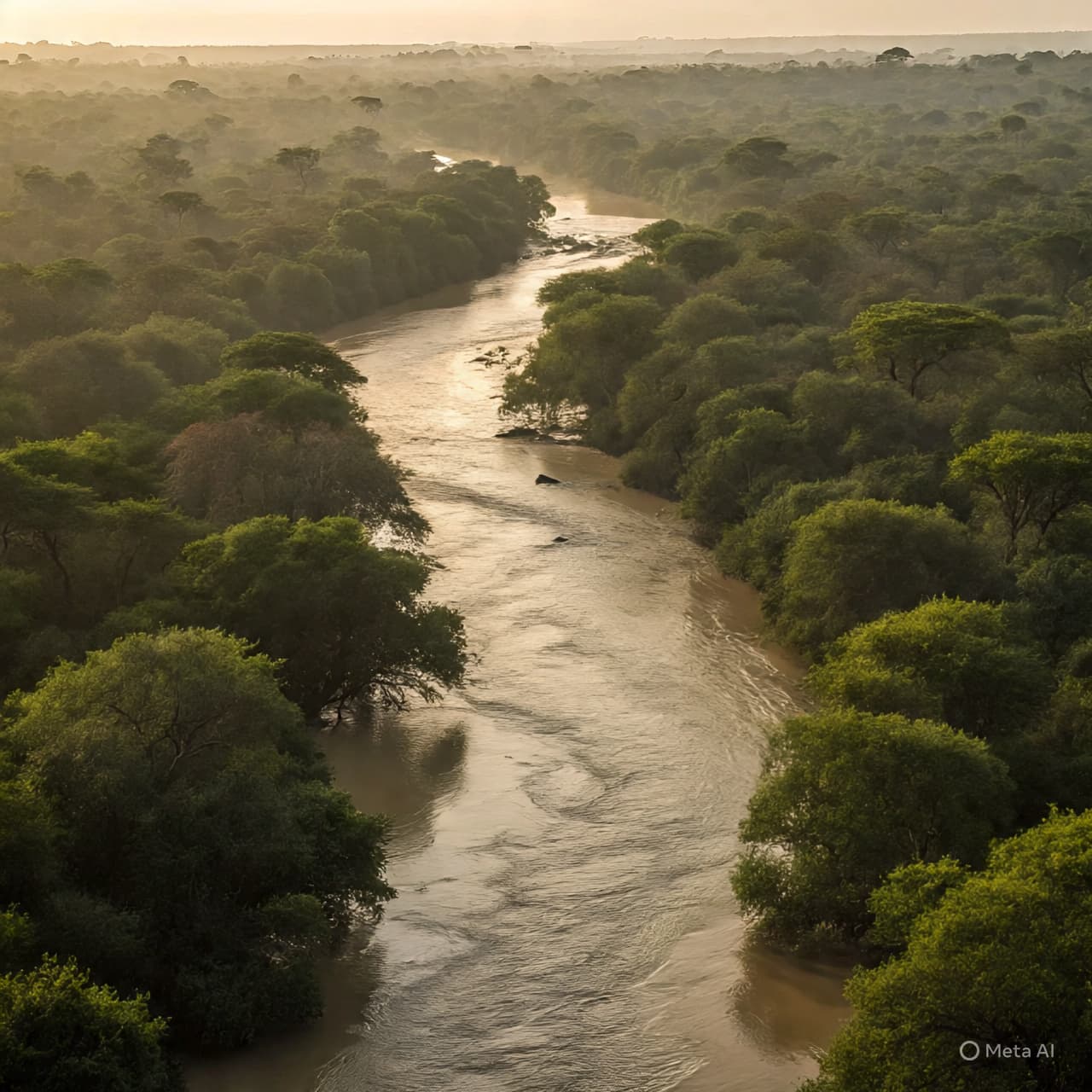
In the far northern reaches of South Africa’s Kruger National Park, where the land opens into wide floodplains and ancient trees shade the meeting of two great rivers, the landscape often feels timeless. Pafuri is known for its quiet beauty—baobabs standing like sentinels against the horizon, fever trees reflecting in slow-moving water, and wildlife moving through a mosaic of forest and riverbank that has changed little across generations.
But rivers, even in their calmest seasons, remember how to rise.
When heavy rains swept across the region earlier this year, the Luvuvhu and Limpopo rivers began to swell far beyond their normal banks. At first the water moved slowly through the floodplains, spreading across grasses and beneath the towering trees. Then the currents gathered force, carrying branches, sediment, and entire trunks of uprooted trees downstream. Within days, the quiet confluence near Pafuri had transformed into a powerful surge of water.
Reports from across Kruger National Park described widespread disruption. Roads disappeared beneath muddy currents, bridges were damaged or washed away, and several camps in the northern sections faced severe flooding. Yet in Pafuri—the remote corner where the two rivers converge—the impact was especially dramatic.
The Pafuri Tented Camp, a small and secluded lodge known for its proximity to wildlife and birdlife, stood directly in the path of the rising floodwaters. Built to blend with the surrounding wilderness, the camp sat along the riverbank where visitors could watch elephants crossing shallow water or listen to the evening chorus of birds settling into the trees.
When the flood arrived, that quiet setting became a channel for the river’s force.
Water surged through the area with little warning. Tents, decks, and walkways were overwhelmed as the current carried debris across the site. Structures that had stood lightly among the trees were battered or swept away, leaving behind twisted frames and scattered materials when the water finally receded. What had been a carefully designed retreat into nature was left heavily damaged, its fragile architecture no match for the scale of the flood.
Elsewhere in the park, rangers and staff faced similar challenges. Access roads in the northern region were submerged or destroyed, isolating sections of the park and making it difficult for vehicles to reach certain camps. Bridges, vital for connecting distant areas across seasonal rivers, were among the first structures to fail as water volumes surged.
Yet for those who know the northern Kruger landscape well, the event also carried a reminder of the region’s deeper natural rhythms. Flooding along the Limpopo and Luvuvhu rivers has shaped the area for centuries. Seasonal floods deposit nutrient-rich sediment across the floodplain, nourishing forests and supporting one of the most biologically diverse corners of the park.
From the ground, the aftermath reveals both destruction and renewal. Sandbanks have shifted, fallen trees lie scattered across riverbanks, and channels carved by rushing water have altered familiar paths. But the same floodwaters that damaged roads and camps also replenished the floodplain soils and filled wetlands that sustain birds, fish, and grazing animals.
In places like Pafuri, where wilderness remains closely tied to natural processes, the line between disruption and renewal can be thin.
For park managers and tourism operators, rebuilding will take time. Infrastructure must be repaired carefully in a region where access is already limited by distance and terrain. The remains of damaged camps will need to be cleared and redesigned with greater resilience in mind.
Yet the landscape itself has already begun to settle into a new shape.
The rivers have returned to their channels, flowing more quietly beneath the towering trees. Birds circle above the floodplain, and animals gradually return to paths along the water’s edge. Visitors arriving in the months ahead may notice subtle changes in the land—new sandbanks, fallen trunks, altered river curves—but the essential character of Pafuri endures.
Where two rivers meet, the land has always been shaped by water.
This flood was simply the latest chapter in that long story
Published by Banx Network. This article is part of the Banx decentralized media programme, powered by the BXE token on the XRP Ledger.