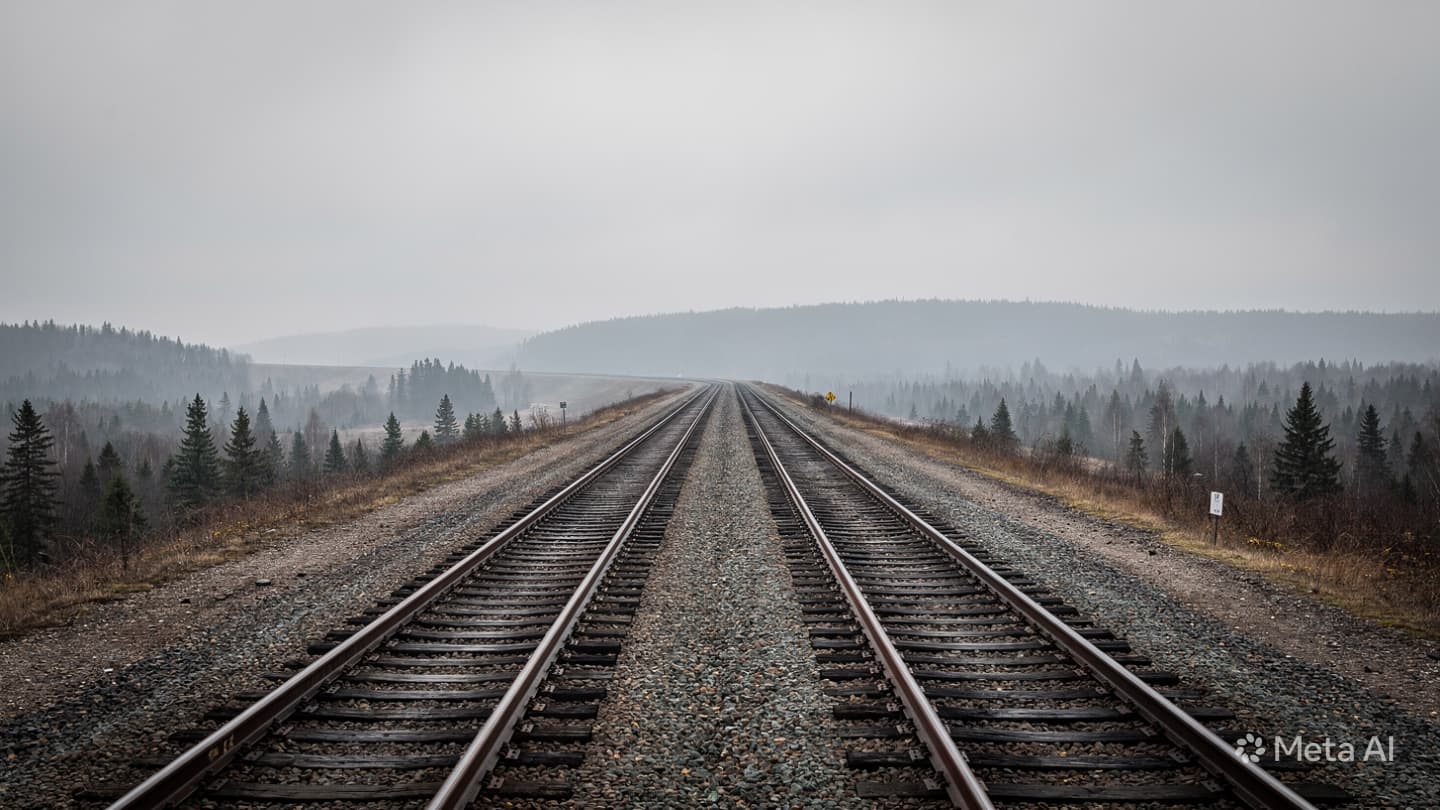
The sprawling rail networks crossing Sverdlovsk Oblast serve as a critical logistics backbone for the Russian industrial sector, carrying millions of tons of raw iron ore, processed steel, and heavy freight from the Ural Mountains across the continent. These heavy-haul tracks, built over thick stone ballast and reinforced concrete ties, run continuously under immense mechanical loads to maintain the nation's primary industrial circulation. The operational survival of these vital rail links relies entirely on strict track geometry checks, ultrasonic flaw detection in the steel rails, and constant monitoring of the underlying earthen embankments.
That delicate transportation balance failed abruptly during a high-density freight transit cycle when a primary track junction suffered a severe structural failure, accompanied by a partial embankment collapse. The rupture occurred along a heavily trafficked section of the line, twisting the steel rails and destabilizing the supporting subgrade beneath the tracks. The sudden structural shifting instantly triggered automatic block signaling systems, turning track lights red across the entire sector and forcing an immediate emergency halt to all inbound freight trains.
Regional logistics coordinators and emergency rail crews responded with an immediate, high-priority mobilization, dispatching specialized repair trains, track-laying machinery, and industrial engineering units to the site of the failure. Field engineers moved rapidly to establish a strict safety perimeter around the unstable embankment, preventing any accidental weight loads from further shifting the fragile ground. The sudden disruption broke the continuous mechanical rhythm of the industrial corridor, replacing the familiar hum of passing freight cars with the sharp hiss of heavy pneumatic repair equipment.
On the ground, regional shipping directors and factory managers gathered in local transit offices, conducting a frantic logistical review to reroute priority cargo over alternative secondary lines. The sudden closure of this primary artery created an immediate bottleneck across the wider regional rail network, leaving thousands of tons of critical manufacturing components stranded at sorting yards down the line. The primary challenge facing the heavy repair teams was the remote, steep terrain of the rail cut, which severely restricted the deployment of standard tracked earthmovers along the edge of the line.
By midnight, engineering coordinators confirmed that the shifting of the embankment had been successfully stabilized using heavy stone riprap and temporary steel retaining sheets, allowing track crews to safely begin cutting away the warped rail sections. Displaced maintenance workers stood along the high gravel ballast, their faces lined with exhaustion under the glare of powerful mobile floodlights as they prepared the bed for fresh steel arrivals. The entire operation proceeded under a heavy cloud of urgency, with regional administrators tracking the hourly economic losses resulting from the transit halt.
Technical safety inspectors have launched a comprehensive inquiry into the material history of the failed junction, focusing on a combination of deep-seated metal fatigue and localized water saturation within the embankment. Preliminary engineering assessments suggest that an undetected failure in a nearby hillside drainage ditch had allowed seasonal meltwater to seep deep into the supporting soil, undermining the foundation over several months. The incident has prompted federal rail regulators to demand an immediate geo-technical audit of all high-load freight embankments crossing the industrial zones of the province.
The long-term economic consequences of the track failure will be substantial, requiring extensive excavation and structural reconstruction before heavy-haul freight operations can resume at maximum capacity. As the early morning light began to illuminate the twisted fragments of steel and the deep gouge in the gravel bed, the true scale of the necessary reconstruction work became clear. The event stands as an unvarnished narrative of mechanical vulnerability, highlighting that even the most massive infrastructure is subject to the quiet, unforgiving laws of material degradation.
Published by Banx Network. This article is part of the Banx decentralized media programme, powered by the BXE token on the XRP Ledger.