
Key Highlights
- Net-zero corporate strategies are driving market expansion across Asia in 2026.
- Japanese firms are leveraging decarbonization expertise to enter new markets.
- The shift is reshaping trade relationships and investment priorities in the Pacific.
The markets of Asia are undergoing a significant transformation, characterized by a blend of ancient practices and modern innovations. This evolution is particularly evident in the shift towards net-zero strategies, which have become the new standard in the region's economic landscape. As businesses increasingly prioritize sustainability, the narrative of prosperity is being rewritten to align with environmental stewardship.
In this dynamic environment, Japan is emerging as a leader in sustainable corporate practices. The country's firms are not merely responding to external pressures; they are proactively integrating green initiatives into their business models. This strategic pivot reflects a broader recognition that future growth must be sustainable, ensuring that economic success does not come at the expense of the planet.
The transition to net-zero is not just a theoretical concept; it is manifesting in tangible ways across Asia's infrastructure and supply chains. Companies are reevaluating their operations to minimize environmental impact while maximizing efficiency. This careful balancing act is akin to nurturing a forest, where each decision contributes to a healthier ecosystem. The interconnectedness of markets means that the success of one region increasingly depends on the environmental health of others, fostering a collaborative approach to sustainability.
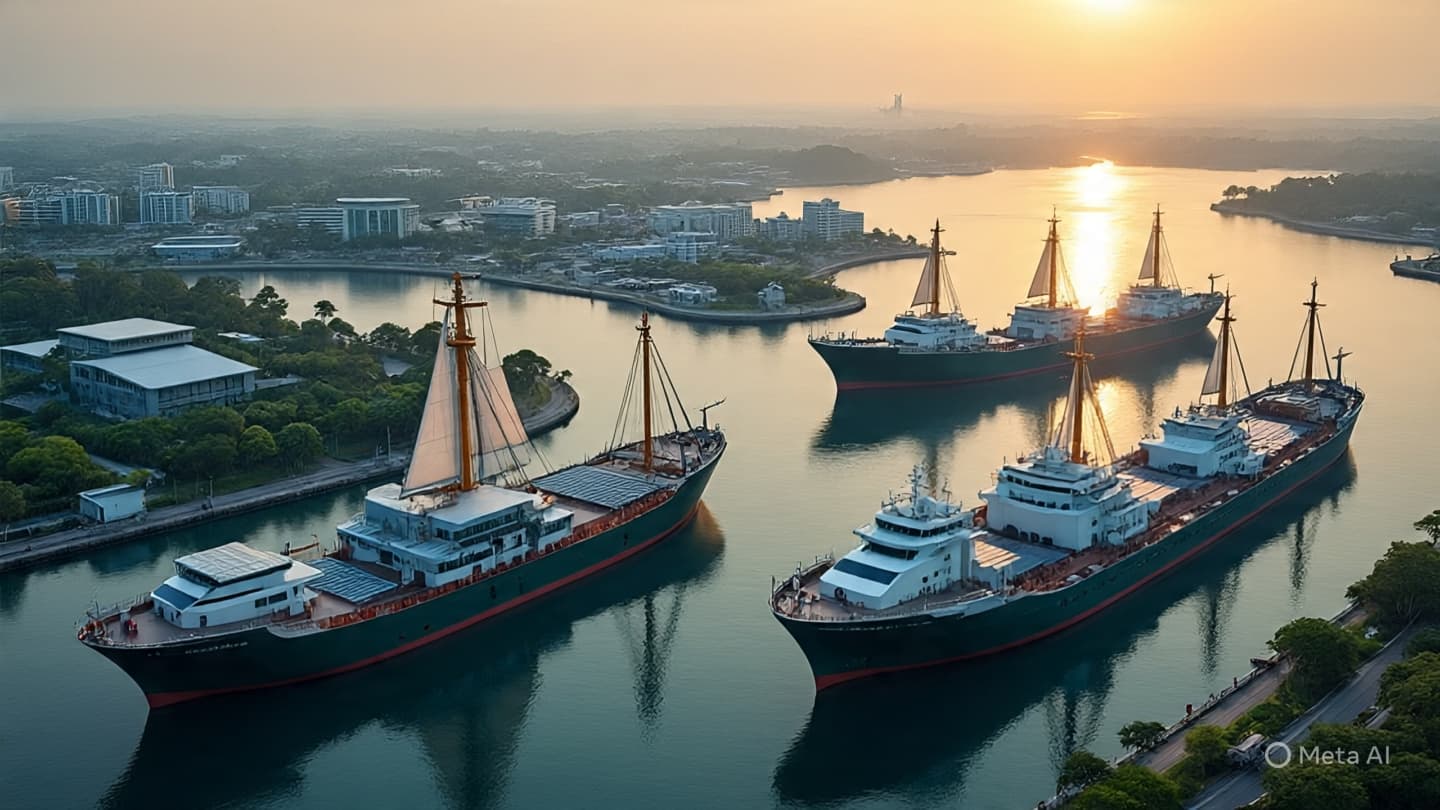
As cargo ships navigate the bustling ports, they symbolize the lifeblood of trade in this new economy. These vessels are now being equipped with cleaner energy solutions, reflecting the industry's commitment to reducing its carbon footprint. The scene is one of purposeful movement, where the drive for sustainability is reshaping logistics and trade practices.
Implementing net-zero strategies requires a fundamental shift in how businesses operate. This transformation is evident in the construction of new factories equipped with solar panels and the establishment of research centers dedicated to the circular economy. Such initiatives demonstrate a long-term commitment to sustainability, emphasizing the importance of innovation in achieving environmental goals.
As the sun sets over Asia's vibrant cities, the narrative of economic expansion continues to evolve. The region is finding its voice in the global conversation on sustainability, illustrating that economic vitality and environmental responsibility can coexist. This momentum is not driven by grand announcements but by the consistent efforts of countless individuals dedicated to redefining business practices.
Looking ahead to 2026, the pursuit of net-zero corporate strategies is set to become the primary driver of market expansion across Asia. Leading firms, particularly from Japan, are poised to capitalize on their expertise in decarbonization, entering new regional markets that demand sustainable infrastructure and green technologies. This shift is not only transforming trade relationships but also reshaping investment priorities throughout the Pacific, marking a significant step towards a more sustainable future.
The commitment to a net-zero future is now recognized as a vital component of modern trade in Asia. It stands as a testament to human ingenuity and the capacity for change, illustrating that growth can be achieved with mindfulness and ambition. The path forward is clear, with capital flowing towards sustainable initiatives that promise to build a resilient and prosperous future for the region.
Published by Banx Network. This article is part of the Banx decentralized media programme, powered by the BXE token on the XRP Ledger.



