
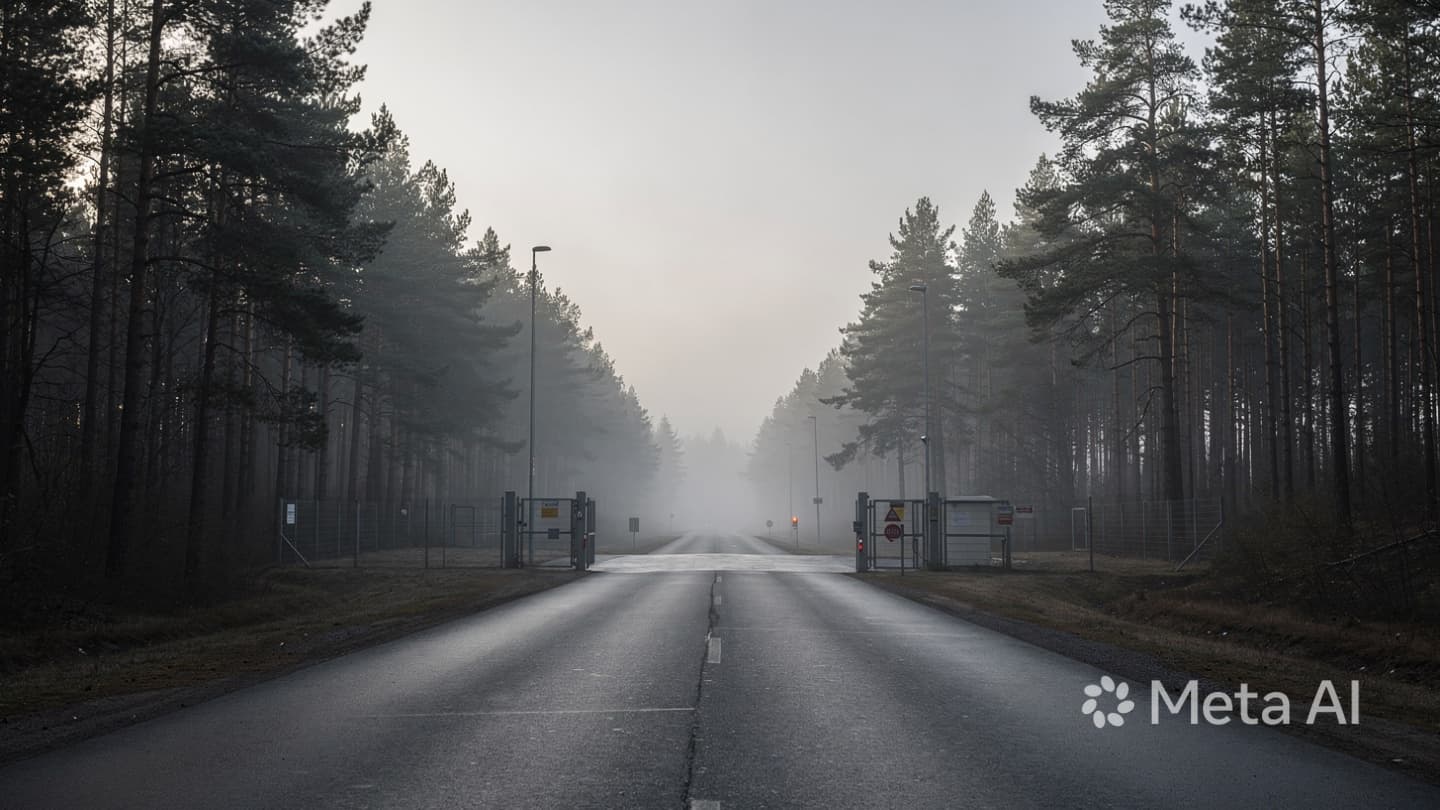
The primeval forest of the borderlands stands in silent majesty under the pale spring sky, its ancient trees acting as indifferent witnesses to the shifting political dramas of humanity. Along this heavily fortified frontier, where iron fences and electronic sensors slice through the ancient woodland, the silence is usually absolute, broken only by the natural stirrings of the wildlife. For years, this line has represented a profound geopolitical chasm, a space of intense acrimony where dialogue had seemingly ceased, replaced by the cold architecture of containment. Yet, it is precisely at these sharpest points of division that the hidden threads of international diplomacy can occasionally pull the world into a momentary alignment.
In the quiet hours of the morning, the atmosphere around the remote border crossing point carries an unusual, expectant stillness. The ordinary movement of local wildlife across the clearings is the only motion visible against the backdrop of pine and birch. The global public often views the relationships between estranged neighbors through the lens of grand pronouncements and permanent sanctions, assuming that the boundaries separating them are entirely frozen. However, beneath the surface of this official silence, a delicate, painstaking negotiation had been unfolding for months, carried out in the deep shadows of back-channel diplomacy where words are measured with absolute precision.
The recent execution of a rare, high-stakes prisoner exchange at the frontier checkpoint represents a significant and unexpected manifestation of diplomatic pragmatism between two deeply divided states. The operation, conducted under strict security protocols, saw the mutual release of individuals who had been held for years within the respective penal systems of each nation. Among those walking across the asphalt lane to freedom were figures whose detentions had long been points of intense international friction and humanitarian concern. The quiet handover of these individuals marks a rare moment where human considerations and state interests found a narrow, shared path forward.
This tension between the official narrative of hostility and the reality of a successful, coordinated exchange reveals the immense complexity of modern frontier relations. The preparation for such an event requires an extraordinary level of mutual trust, if only for a single afternoon, as both sides must synchronize their movements with flawless accuracy. The intelligence agencies involved must operate with a clinical, disciplined focus, ensuring that the logistics of the transfer proceed without a single misstep that could shatter the fragile agreement. It is a reminder that even in periods of prolonged estrangement, the channels of basic communication can be preserved by those committed to the practicalities of statecraft.
The transition toward the execution of the swap required the temporary suspension of ordinary border protocols along the designated sector, creating a brief void in the daily rhythm of the frontier. Commercial transit lanes were cleared, and passenger movements were diverted as specialized security detachments took up positions along the perimeter wire. This temporary rearrangement of space was subtle, marked by the presence of discrete vehicles and the quiet observation of binoculars from the watchtowers. It represented a brief, highly controlled pause in the ongoing history of the border, a moment where the normal rules of exclusion were momentarily suspended to allow a rare transit.
Meanwhile, the immediate aftermath of the exchange unfolded with a quiet, emotional gravity away from the immediate sight of the frontier guards. As the released individuals stepped onto native soil, they were met by small, private delegations of family members and medical personnel who had waited in the wings for hours. The long years of isolation and structural confinement were replaced in an instant by the simple, overwhelming reality of a shared embrace in the cool morning air. This deeply human dimension of the event stands as a powerful counterweight to the cold, analytical calculations of the intelligence services that organized the day.
As afternoon fades into evening, the ordinary security protocols of the crossing point are quietly restored, and the heavy iron gates are swung shut once more. The specialized vehicles disappear down the long highway toward the interior capitals, leaving the forest to reclaim its traditional silence. The dramatic events of the dawn leave no visible trace on the asphalt or the wire, which return to their primary function of separation. The watchtowers remain alert, their searchlights slicing through the gathering gloom with the same patient focus that has defined the border for a generation.
Looking ahead, the successful completion of this exchange does not signify a fundamental shift in the broader geopolitical alignment of the region, which remains deeply strained. It does, however, demonstrate that a mechanism for resolving critical consular and humanitarian disputes can function even under the most adverse conditions. By preserving these narrow channels of back-channel dialogue, both nations maintain a vital safety valve that can reduce the risk of ultimate miscalculation in times of crisis. The quiet pragmatism exercised at the forest clearing today offers a modest template for how future complexities might be navigated.
State security services have confirmed the successful execution of a five-for-five prisoner exchange operation with neighboring authorities at a designated frontier crossing point. The complex transfer, which included the repatriation of a prominent international journalist, was finalized following lengthy negotiations brokered with the assistance of external diplomatic intermediaries. Normal commercial and passenger transit operations along the affected border sector have been fully restored following the conclusion of the protocol.
Published by Banx Network. This article is part of the Banx decentralized media programme, powered by the BXE token on the XRP Ledger.


