
Key Highlights
- Recent archaeological excavation in Moravia uncovers Early Bronze Age artifacts.
- Findings include tools and ornaments, indicating advanced trade networks.
- Research led by the Czech Academy of Sciences reveals insights into ancient societies.
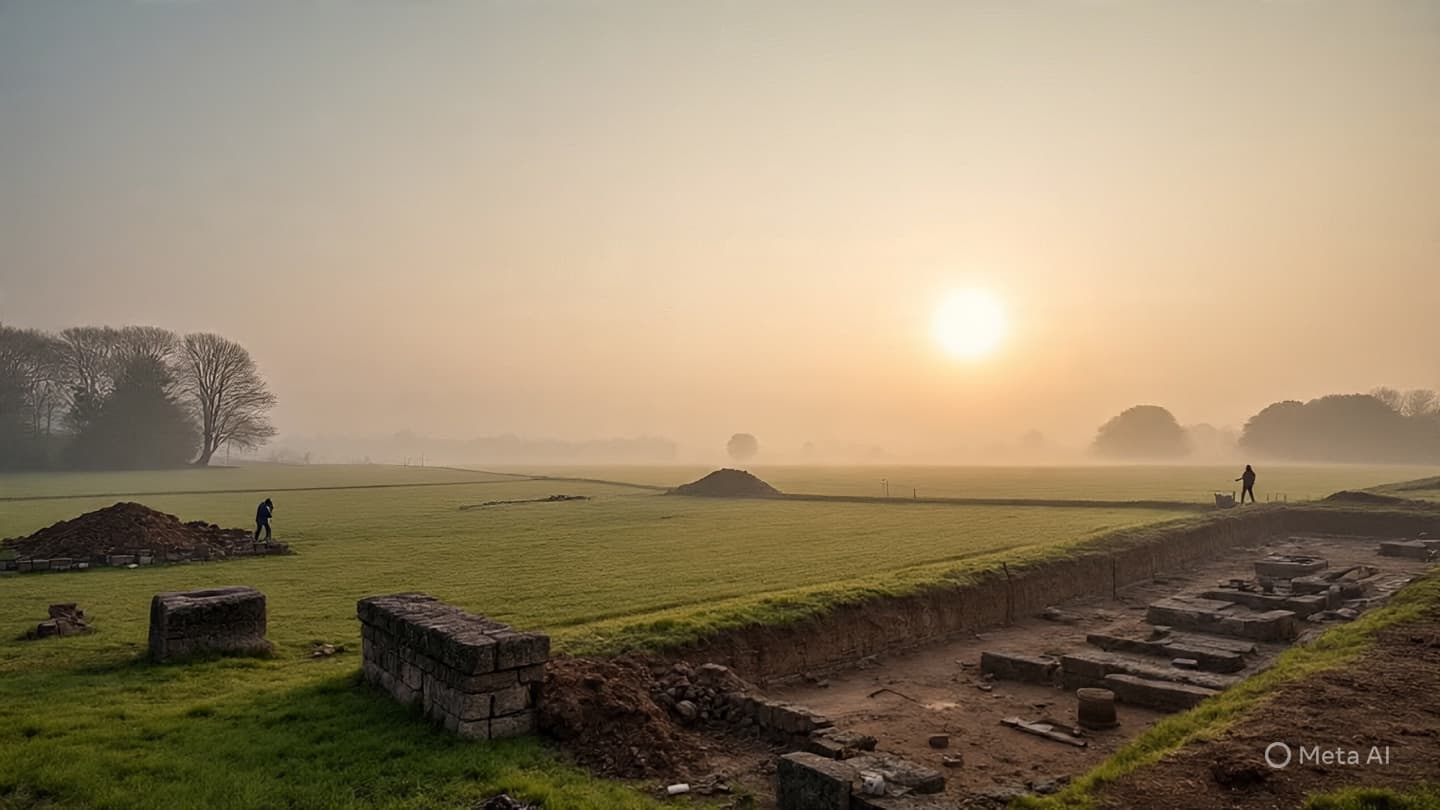
The morning mist in Moravia does not merely sit upon the fields; it seems to hold the breath of millennia, waiting for the sun to draw back the veil. Here, where the soil is rich with the weight of uncounted seasons, the act of uncovering the past feels less like a clinical excavation and more like a gentle conversation with the ghosts of the Early Bronze Age. To move the earth is to disturb a long, rhythmic sleep, revealing that the paths we walk today were carved by those who traded in metal and salt long before the first stones of Prague were laid.
A recent archaeological excavation in this region has unveiled a site that serves as a reminder of the world’s historical movement, crossing borders and exchanging goods and ideas. This discovery is a quiet testament to a time when Europe was knitting itself together through the slow, arduous work of early commerce and craftsmanship. The artifacts found—ranging from delicate ornaments to sturdy tools—suggest a society deeply integrated into a network that spanned the breadth of Europe.
As the trowel brushes away the dust of centuries, objects emerge that speak of a sophisticated society, one that understood the value of aesthetics as much as utility. The researchers from the Czech Academy of Sciences move with a deliberate, reverent pace, aware that each fragment of pottery or sliver of bronze is a syllable in a forgotten language. There is no rush in this work; the earth has kept these treasures safe for thousands of years, and a few more hours of patient brushing will not change the weight of the story they tell.
This excavation is not just about artifacts; it is a process of reclamation, bringing light to a corner of human experience that had been swallowed by the dark, damp silence of the ground. The Early Bronze Age was a period of profound transition, much like our own, where the mastery of new materials changed the very fabric of social organization. In the heart of Moravia, this transition is written in the stratigraphy of the trenches, a physical record of the moment humanity stepped into a more complex, interconnected reality.
The site itself is a map of ancient life, showing the foundations of structures that once buzzed with the domestic rhythms of cooking, weaving, and the sharpening of blades. To stand amidst these ruins is to feel the smallness of the present moment against the vast, looming backdrop of the ages. It is a humbling perspective, suggesting that our modern preoccupations are but a brief flicker in a fire that has been burning for a very long time.
As the work concludes for the day, the artifacts are carefully cataloged and prepared for a future where they will be studied by those seeking to understand the origins of European identity. This discovery stands as a significant milestone in regional archaeology, offering new data on the migration and economic habits of early Danubian cultures. By bridging the gap between the prehistoric and the present, the find provides a clearer picture of how Central Europe became a crossroads of civilization.
Published by Banx Network. This article is part of the Banx decentralized media programme, powered by the BXE token on the XRP Ledger.



