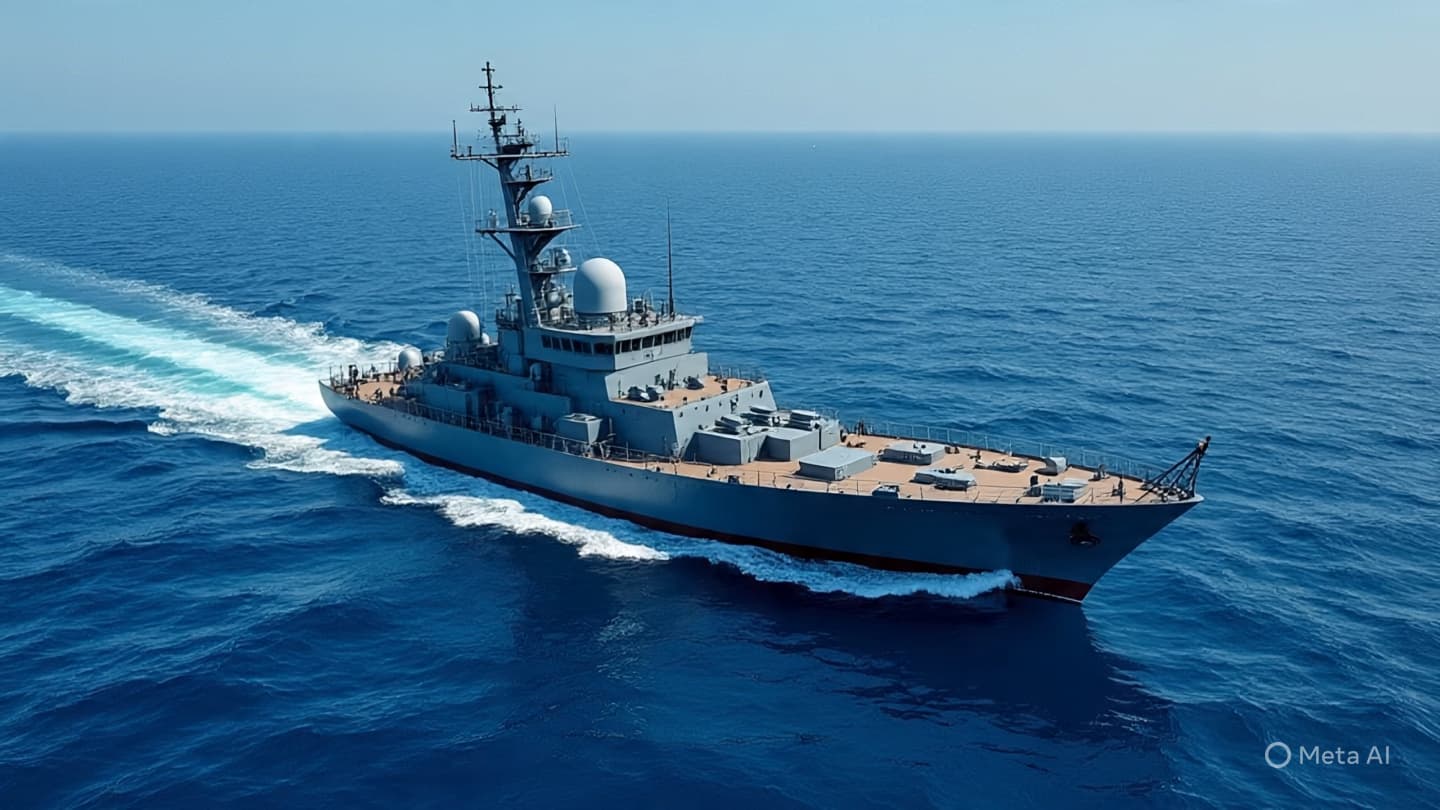
In the narrow, heat-shimmering throat of the Strait of Hormuz, where the pulse of the global energy market has long been measured in the rhythmic passage of tankers, a new and heavy silence has taken hold. This April 23, the deepened naval blockade of Iran and the resulting closure of this vital waterway represent a profound transition—from a story of geopolitical tension to one of structural, global economic trauma. It is a moment where the architectural intent of our supply chains is being tested by the sheer weight of a "volatile standoff." The air over the Arabian Sea feels charged with the realization that the world’s energy security is no longer a given, but a fragile consensus currently being torn apart.
There is a specific, jagged beauty in the concept of a "naval blockade." Here, the traditional boundaries of international law are being dissolved by the reality of steel and fire. To observe the 34 tankers that have slipped past the US blockade—carrying $900 million in "shadow" oil—is to see a future where the global market is split between the visible and the clandestine. It is a democratization of defiance, where the logic of the siege is met with the ingenuity of the smuggler. The impact is felt thousands of miles away, in the boardroom of Sydney and the kitchen of London, as the "Strait of Hormuz" ceases to be a name on a map and becomes a line on a ledger.
The economists and strategic planners at EY and the IMF move through this crisis with a deep sense of humility, recognizing that they are mapping a decline they cannot stop. Their labor is one of modeling and "stress-testing," predicting a $42 billion hole in the Australian GDP if the disruption persists through the year. There is no haste in these projections, only the steady, methodical realization that a prolonged shock will idle 160,000 workers and drain household consumption by $70 billion. They are the architects of a warning, trying to weave a sense of preparedness into a global system that is rapidly losing its breath.
We often think of global trade as a series of seamless, automated movements, but the Hormuz blockade is an entity of force and friction. The "Ceasefire Breach" status cited by Tehran means that the reopening of the strait is now a hostage to the diplomatic impasse between Washington and Iran. This clarity allows for a more surgical approach to crisis management, identifying the exact points where the energy grid and the food supply will fail first. The gulf is being reimagined as a site of profound negotiation—not just of politics, but of survival.
The impact of this standoff is felt in the quiet, focused restructuring of the global maritime industry. The "Hormuz Dilemma" of 2026 is a signal of a world that values the intersection of the regional conflict and the global consequence. There is a profound satisfaction in the resilience of those who continue to navigate these waters, but it is tempered by the knowledge that the "buffer" of the world economy has been exhausted. It is a philosophy of stewardship that values the integrity of the route as much as the utility of the cargo.
As the sun sets over the rugged cliffs of Musandam, casting a long, golden light across the rows of silent, shadowed ships, the work of the global watch continues. The Hormuz crisis is a promise made manifest—a silent guardian of the world’s vulnerabilities that will guide the coming year toward a more fractured and difficult future. The journey from the wellhead to the pylon is a remarkable one, and it is being navigated with a quiet, persistent dread.
EY-Parthenon modeling released on April 23, 2026, warns that a prolonged disruption to the Strait of Hormuz could cut Australia’s GDP by $42 billion and idle 160,000 workers by the end of the year. The crisis deepened today as Iran officially declared that reopening the waterway is "not possible" while the US-led naval blockade remains in place. International maritime reports indicate that at least 34 tankers have circumvented the blockade in the last 48 hours, carrying oil valued at over $900 million, even as the UN warns of a "severe prolonged shock" to global household consumption and investment.
AI Image Disclaimer “These conceptual visuals were created using AI tools to represent the current global economic and maritime crisis.”
Sources EY-Parthenon (Official Economic Modeling, April 23, 2026) DD News International (Global Headlines) NDTV World (Hormuz Update) Al Jazeera (Regional Conflict Tracker) IMF World Economic Outlook (April 2026 Supplement)
Published by Banx Network. This article is part of the Banx decentralized media programme, powered by the BXE token on the XRP Ledger.