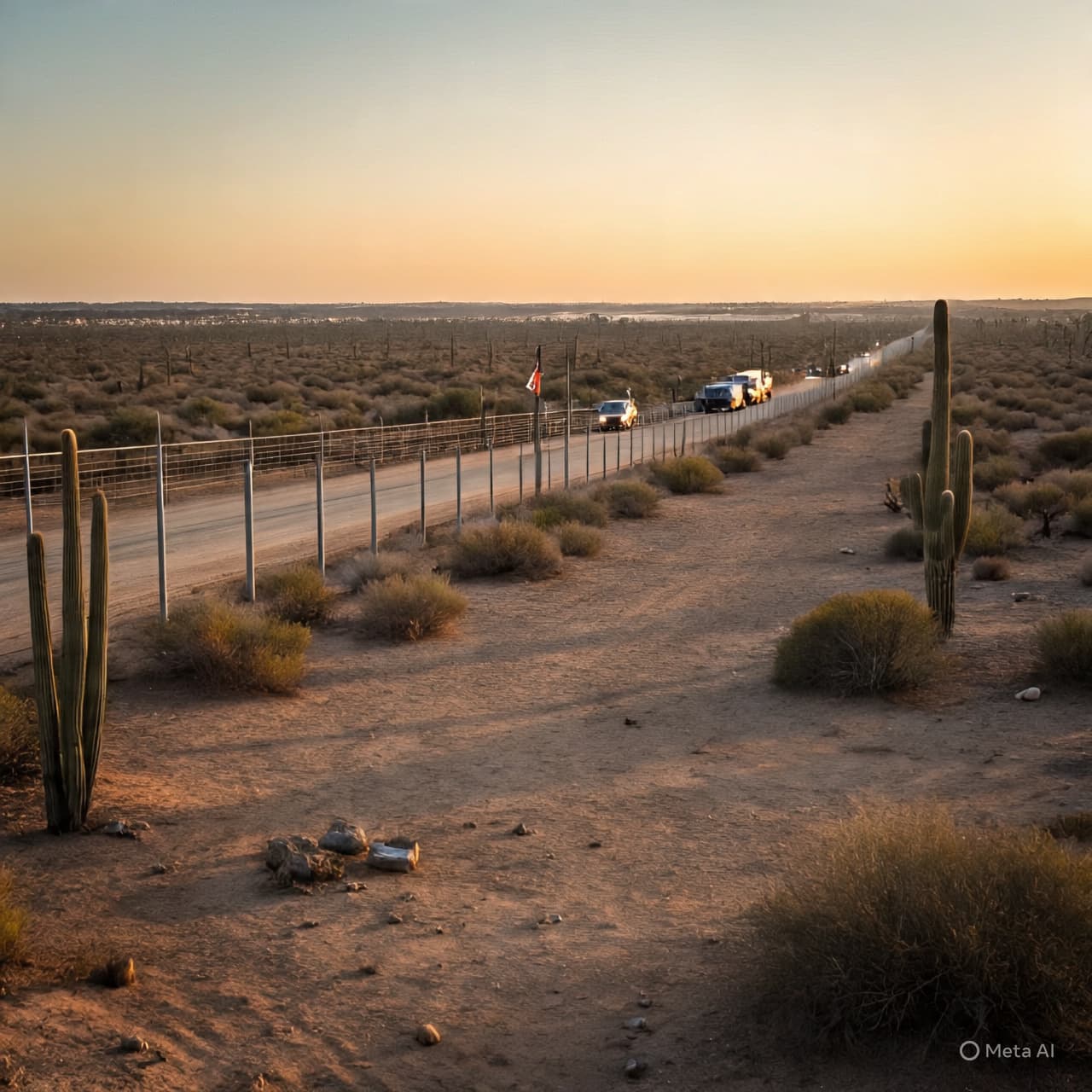
At the edge of the desert frontier, where highways stretch toward distant checkpoints and rivers trace the boundaries between nations, the struggle against organized crime has long unfolded in quiet and complicated ways. Trucks cross borders, families travel between cities, and beyond the visible traffic lies another network—one shaped by secrecy, power, and the enduring influence of criminal organizations.
In Washington, those networks have once again become the focus of a widening campaign.
President Donald Trump has begun assembling what his administration describes as a new international coalition aimed at dismantling powerful drug cartels operating across the Americas. Officials say the effort seeks to deepen cooperation among governments, law enforcement agencies, and intelligence services to confront trafficking networks responsible for the movement of narcotics, weapons, and migrants.
The initiative reflects a renewed emphasis on cartel activity as a central national security concern. In statements from the White House, Trump has described the goal of the coalition in stark terms, saying the United States intends to “eradicate” the cartels and reduce their influence across the region.
The effort is expected to involve closer coordination with several Latin American governments, including intelligence sharing, joint operations, and expanded security partnerships. U.S. officials say the plan also includes strengthening border enforcement and targeting the financial networks that sustain organized crime groups.
For decades, cartels operating primarily in Mexico and parts of Central and South America have built extensive systems for trafficking drugs such as fentanyl, cocaine, and methamphetamine into the United States. These organizations have also been linked to human smuggling, weapons trafficking, and violence in communities across the region.
American officials say the new coalition aims to confront these networks across multiple fronts, combining law enforcement measures with economic sanctions and international cooperation. The administration has suggested that additional resources may be directed toward intelligence operations and cross-border investigations.
The proposal has also drawn debate among policymakers and analysts. Some experts say a coordinated multinational strategy could improve the ability of governments to disrupt cartel operations that extend across borders. Others caution that previous campaigns against organized crime have shown the difficulty of dismantling such groups without broader social and economic reforms.
Across the U.S.–Mexico border region, the realities of the issue remain visible in everyday life. Communities continue to grapple with violence tied to trafficking routes and the growing impact of synthetic opioids, particularly fentanyl, which has contributed to a major public health crisis in the United States.
The administration has indicated that discussions with regional partners are ongoing as the coalition takes shape. Details of specific joint operations or participating countries have not yet been fully announced.
The White House said the initiative forms part of a broader strategy to combat transnational organized crime and reduce the flow of illicit drugs into the United States.
AI Image Disclaimer Illustrations were created using AI tools and serve as conceptual representations.
Sources (Media Names Only) The New York Times Reuters Associated Press The Washington Post BBC News
Published by Banx Network. This article is part of the Banx decentralized media programme, powered by the BXE token on the XRP Ledger.
.jpg&w=3840&q=75 "US Declares Drought Disaster for Parts of Puerto Rico as Dry Conditions Persist")