
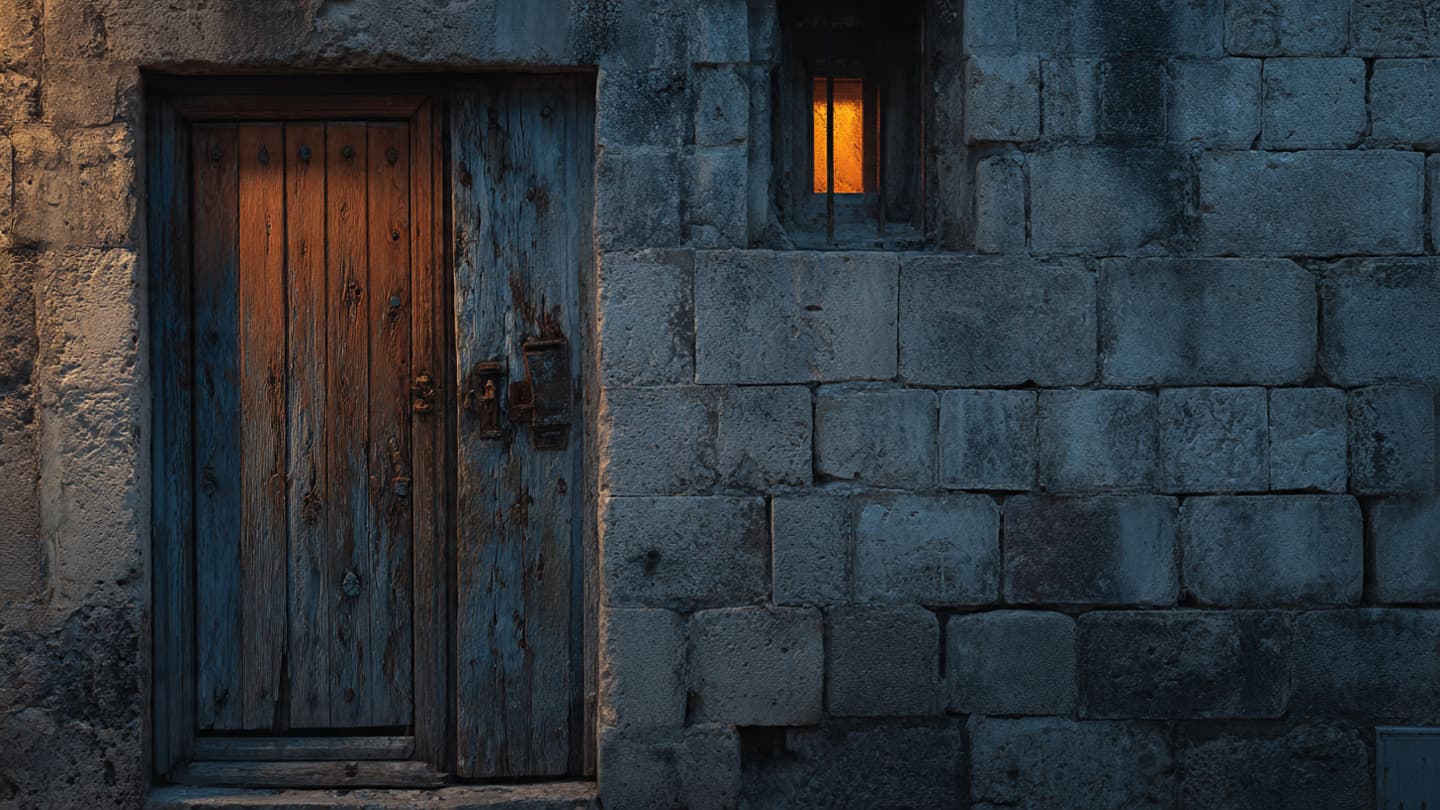
In the remote corners of Eastern Serbia, near the borders where the land begins to roll toward the Danube, there are villages carved entirely from the local limestone that seem to have been forgotten by the modern calendar. The Pimnice of Rajac and Rogljevo—clusters of stone wine cellars—stand as silent monuments to a time when the rhythm of life was dictated solely by the soil and the sun. Here, the air is thick with the scent of damp stone and the faint, sweet ghost of fermented grapes, a primordial atmosphere that has lingered in these valleys for centuries. To walk between these low, heavy-roofed structures is to step into a world where the past is not a memory, but a physical presence.
There is a profound, unhurried stillness to these stone colonies, a quiet that is only broken by the occasional creak of a wooden door or the rustle of the wind through the surrounding vineyards. The buildings are not homes for people, but homes for the wine, designed with thick walls to maintain a constant, subterranean cool. There is a certain architectural humility in their form, a realization that the earth’s bounty requires a specific kind of sanctuary to reach its full potential. We are observers of a landscape where human ingenuity has sought a perfect, silent partnership with the elements.
The stones themselves carry the textures of the landscape, their surfaces weathered into a mosaic of greys and ochres that blend seamlessly with the earth. In the early morning, the mist from the Timok valley wraps around the cellars, turning the village into a ghostly, indistinct realm where the boundaries between the centuries dissolve. It is a place that demands a slower pace, a willingness to listen to the stories etched into the gnarled vines and the heavy wooden beams. We find in this stillness a sense of perspective, a realization that the most enduring traditions are often the quietest.
To observe the Pimnice is to be humbled by the resilience of the rural spirit and the persistence of a culture that has survived through centuries of upheaval. The wine produced here is a liquid history, a reflection of the unique minerals of the Balkan soil and the ancestral knowledge passed down through generations. There is no urgency in the process, only a patient wait for the transformation that occurs in the dark of the cellar. It is a reminder that some things cannot be rushed, and that the best results often come to those who work in harmony with the natural clock.
The light in Eastern Serbia has a raw, crystalline quality, illuminating the rugged beauty of the limestone hills and the orderly rows of the vineyards. As the sun begins to set, the stone cellars take on a warm, amber glow, their shadows stretching long and deep across the narrow paths. It is a moment of pure, aesthetic wonder, where the industrial noise of the world feels infinitely distant. We are witnesses to a world that has found its balance, a place where the earth and the hand of man have created something that feels truly eternal.
There is a restorative power in this rural isolation, a chance to disconnect from the frantic noise of the digital age and reconnect with the basic elements of the earth. The villages do not seek our attention; they simply exist, a persistent and beautiful presence that continues its ancient work regardless of the shifting fashions of the world. We find in their endurance a source of hope, a realization that there are still corners of the world where the past is allowed to rest undisturbed. The Pimnice are the silent guardians of the Serbian frontier.
As we leave the stone villages and return to the main roads, the memory of the cool dark and the scent of the wine remains as a vivid afterimage. We carry with us the feeling of the textured stone and the sight of the gnarled vines reaching for the sun. The cellars remain as they have always been, a silent monument to the spirit of the land. We are merely the current keepers of the secret, charged with the task of ensuring that this unique cultural landscape remains intact for those who will follow.
The Serbian Ministry of Culture, in collaboration with regional tourism boards, has announced a new conservation framework for the Rajac and Rogljevo Pimnice, focusing on the structural restoration of the oldest stone cellars. The initiative aims to preserve the authentic limestone architecture while supporting local winemakers in adopting sustainable production methods. Recent geological surveys have also confirmed the unique mineral composition of the Negotin region's soil, reinforcing the area's candidacy for further international heritage recognition.
AI Image Disclaimer: Visuals were created using AI tools and are not real photographs.
Published by Banx Network. This article is part of the Banx decentralized media programme, powered by the BXE token on the XRP Ledger.


