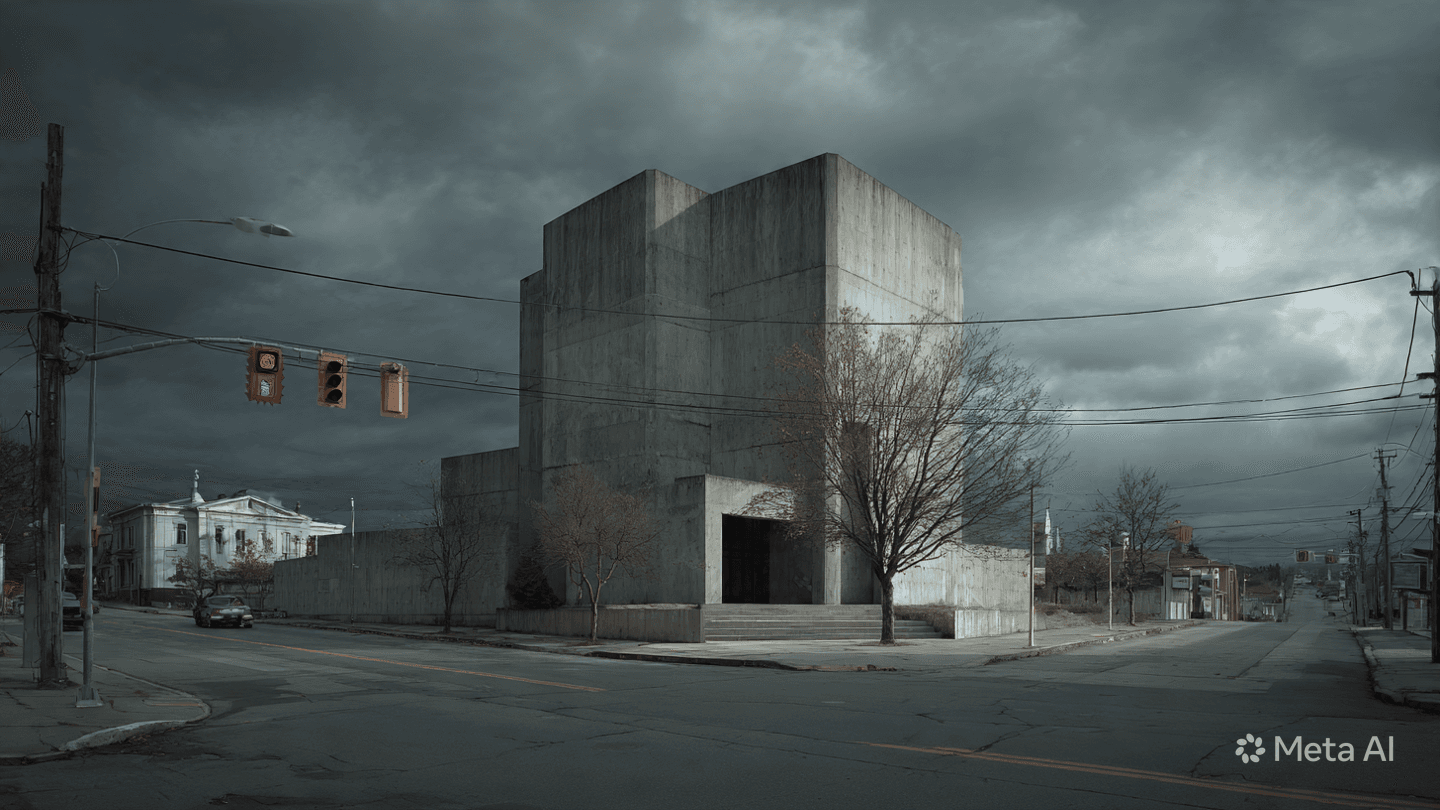
The air outside the facility is heavy, thick with the scent of damp earth and the lingering, intangible cold of the rooms within. It is a place that sits at the terminus of all paths, a quiet island in the middle of a chaotic, shifting city. Here, the noise of the streets fades, replaced by a profound, hollow silence that seems to emanate from the very foundations of the building. For the families who have gathered, this is not merely a location but a destination of last resort, a final, desperate act of seeking in a world that has stopped offering answers.
They arrive with photographs held like talismans, portraits of smiles and moments captured in sunlight, now held up against the gray, indifferent walls of a structure that guards its secrets with a cold, absolute resolve. There is a specific motion to their approach—slow, tentative, as if they fear that a sudden movement might shatter the fragile hope that their loved one is, in fact, not here. It is a ritual of endurance, a testament to the stubborn, human refusal to accept the absence of those who once gave meaning to our days.
One wonders what it is like to stand on that threshold, to know that behind those heavy doors lies the answer to the question you have been asking for days, or weeks, or months. The morgue, in the logic of the living, is an ending; for these families, it is a beginning, the starting point of a process of identification that is as terrifying as it is necessary. The light reflects off the sterile surfaces, highlighting the exhaustion in their eyes, a weariness that goes beyond physical fatigue and settles into the very marrow of their existence.
The interaction with the attendants is marked by a tragic formality—the exchange of names, the verification of dates, the trembling hands that navigate the bureaucratic machinery of the dead. It is a choreography of grief, practiced over and over as more families join the ranks of those waiting. Each person represents a missing piece of the larger puzzle, a story that was interrupted by a force they could neither see nor stop, now reduced to a file number and a storage locker.
Outside, the city continues to move, oblivious to the quiet drama unfolding in the shadows of the morgue. This juxtaposition is perhaps the most painful aspect of the entire ordeal: the realization that the world does not pause for the individual tragedy. Life insists on its own momentum, leaving these families to navigate their loss in a space that feels increasingly disconnected from the reality of the streets outside, where life continues with its own, brutal indifference.
As the evening settles, the queue outside the facility grows, a quiet line of mourners tethered to one another by the shared, agonizing weight of the unknown. They speak in hushed tones, trading fragments of information, checking the lists posted on the doors, and leaning on each other for support. It is a community of the bereaved, formed by the necessity of the moment, bound by the hope that they might find the closure that has been denied to them by the chaos of the broader conflict.
Local authorities have recently expanded the capacity of the city’s mortuary facilities in response to the sustained period of unrest. Families seeking information regarding missing persons have been advised to coordinate with specialized identification teams, though many report that these systems are currently non-functional or severely overwhelmed. Reports indicate that the morgue is operating well beyond its designed storage limit, with decedents awaiting identification in temporary cooling units.
The task of matching the missing to the deceased has become a complex logistical challenge for the medical examiner’s office, complicated further by the sheer volume of unidentified bodies recovered from the areas of recent security operations. Legal and human rights observers are monitoring the identification process to ensure that the remains are handled in accordance with international standards, though they acknowledge that the scale of the crisis has made standard reporting and familial notification processes nearly impossible to maintain.
Published by Banx Network. This article is part of the Banx decentralized media programme, powered by the BXE token on the XRP Ledger.