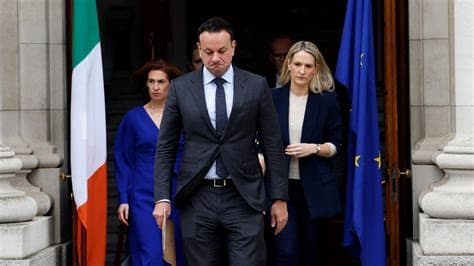
The soft gray of a winter dawn drapes over plazas in Brussels and boulevards in Paris as commuters move between cafes and offices with the calm cadence of another day. Yet beneath the gentle pulse of ordinary life, a subtle tension has settled — one that finds its shape not in the clatter of streets, but in the quiet corridors of summits and the diplomatic language of capitals. In the years since an old ally returned to the helm of power across the Atlantic, Europe has felt a shifting current in its relationship with Washington, a subtle but persistent struggle that seems to tug at the very idea of shared purpose and partnership.
For a generation, the transatlantic bond was both anchor and compass: a rhythmic exchange of ideas, commerce, security cooperation, and shared leadership in global institutions. But now, the cadence feels different. What once moved with the ease of familiar choreography has acquired the tension of a conversation in motion, unsure of its next phrase. In speeches and strategy documents, in tariff threats and strategic recalibrations, a sense of unease has seeped into Europe’s collective consciousness. Leaders speak in terms once reserved for distant geopolitical rivals — not of uneasy allies, but of competing priorities and potential divergence.
This unease has been most visible in the stark decline of European public sentiment toward the United States. Recent polls show that favorable views of Washington have plummeted across France, Germany, Denmark, Italy, Spain, and the United Kingdom, even as citizens acknowledge enduring ties of trade and security. Many now prize European autonomy more highly than preserving traditional transatlantic harmony. These sentiments reflect more than statistical shifts: they gesture toward a continent wrestling with its own identity at a time when global power dynamics feel more diffuse, more contested, and less anchored in old assurances.
Political leaders have voiced similar concerns, urging a recalibration of Europe’s role on the world stage. France’s president has spoken of a moment of “Greenland‑like awakening” — a phrase that captures both the shock of diplomatic strain and the possibility of transformation. In these reflections lies a desire not for rupture, but for a reinvigorated agency: a European Union that is not merely a partner of necessity, but a force capable of shaping its own economic and strategic destiny.
At the Munich Security Conference, a sober report underlined this evolving landscape, urging Europe to assert greater political and military independence in light of policies emanating from Washington that many see as departing from shared liberal democratic norms. What was once a tacit assumption of transatlantic harmony has become a subject of public debate and private strategy sessions; the question now is not merely how Europe should respond, but how it should define its own path in a world where old alliances feel more mutable than they once did.
Amid these larger movements, the metaphor of “power struggle” takes on its own meaning. It is not a word of conflict alone, nor merely of competition. It is a term for the quiet negotiation between history and aspiration, between the rhythms of yesterday and the imperatives of tomorrow. It evokes not only the broad sweep of geopolitics, but the daily choices of policymakers and citizens alike: how much to adapt, how much to preserve, and how to balance the deep roots of shared history with the pressing need for strategic autonomy.
In straight news terms, European resentment toward the administration of U.S. President Donald Trump has grown notably in recent months amid a series of policy moves and rhetoric that many in Europe view as provocative. Opinion polls indicate sharply declining favorable views of the United States across Western Europe. European leaders, including French and other EU officials, have spoken publicly about the need to respond to what they characterize as agitated U.S. policies on issues ranging from trade to defense and digital regulation. Reports from international security forums highlight a growing awareness in Europe that it may need to bolster its strategic and political autonomy in response to a perceived shift in U.S. foreign policy priorities that diverge from long‑established transatlantic cooperation.
AI Image Disclaimer
Visuals are AI‑generated and serve as conceptual representations.
Sources (Media Names Only)
Reuters The Guardian Munich Security Conference
Published by Banx Network. This article is part of the Banx decentralized media programme, powered by the BXE token on the XRP Ledger.